

Resources Categories
INDUSTRY FACT FILE · AGRICULTURE & AGRITECH
Market Landscape and the Drivers of Cybersecurity Demand in Agritech
The business, technology, regulatory, legal and statutory forces that create testing, audit, monitoring and response work for agribusiness, agri-input, farm IoT, marketplace, warehousing, agri-credit and FPO platforms.
|
In this document 1. Market landscape 2. Business drivers 3. Technology drivers 4. Regulatory drivers: Digital Agriculture Mission, RBI, WDRA, CERT-In and DPDP 5. Legal and statutory drivers 6. How the drivers differ by organisation type 7. What this means for buyers and for Codec Networks |
1. Market landscape
Agriculture and allied activities remain India's largest employer, and a PIB note of August 2026 estimates the sector's gross value added at about ₹52 lakh crore in 2025-26. Public policy is digitising the sector's core processes. The Digital Agriculture Mission, approved in September 2024 with an outlay of ₹2,817 crore, is building AgriStack registries that had produced more than 10.31 crore Farmer IDs by August 2026; PM-KISAN pays more than nine crore farmers each instalment; e-NAM links 1,656 mandis; the scheme for 10,000 FPOs, launched in February 2020 with an outlay of ₹6,865 crore, reached its formation target in February 2025; and WDRA's electronic warehouse receipts are backed by a credit guarantee scheme. Around this infrastructure, private firms sell inputs, devices, drone services, market access, storage and credit, and large agribusiness and input groups are digitising procurement, dealer networks and plants.
Cybersecurity demand follows five pressures. Partners: banks and NBFCs, insurers, buyers, exporters and government programmes ask agritech platforms for security evidence, VAPT reports and data handling commitments before they integrate or lend. Regulation: CERT-In's six-hour reporting and audit guidelines, RBI's digital lending rules, AgriStack and scheme integration terms, WDRA accreditation and the DPDP Act turn good practice into obligations. Capital: venture investors and strategic acquirers run technical due diligence on agritech platforms. Threat: the 2020 misuse of official PM-KISAN logins in Tamil Nadu, ransomware against US grain cooperatives at harvest in 2021 and the FBI's 2022 warning on seasonal timing have made the risks concrete. Concentration: one cloud platform, broker or payment flow serves thousands of farmers, so one weakness affects many. Most agritech firms and FPO platforms are lean businesses that rely on external testers, auditors, SOC providers and responders for depth.
|
₹2,817 crore Digital Agriculture Mission outlay (Sep 2024) |
10,000 FPOs formed under the central scheme (Feb 2025) |
₹4.84 lakh crore Cumulative trade on e-NAM to March 2026 |
₹1,000 crore Credit guarantee scheme for e-NWR loans (2024) |
|
Market segment |
Landscape and buying behaviour |
Cybersecurity opportunity |
|
Agribusiness and cooperatives |
Groups and cooperatives digitising procurement, storage, processing and exports |
OT and network assessments, SOC, ransomware readiness |
|
Seed and agri-input companies |
Firms moving dealers, traceability and loyalty onto apps and portals |
Dealer portal and app VAPT, IP protection, supplier assurance |
|
Precision farming and farm IoT |
Venture-funded firms scaling device fleets through FPOs and enterprises |
IoT and firmware testing, cloud review, DPDP |
|
Marketplaces and commodity platforms |
Start-ups and listed platforms handling crop trade and payments |
Payment integration testing, API VAPT, fraud monitoring |
|
Warehousing and agri-credit |
Warehouses, collateral managers, lenders and fintech partners |
Loan app and access reviews, CERT-In audits, SOC |
|
FPOs and cooperatives |
Member organisations adopting accounting, procurement and payment apps |
Vendor assessment, privacy basics, awareness |
2. Business drivers
|
Business driver |
Buying trigger |
Relevant services |
|
Integrating with lenders and insurers |
Partners ask for security questionnaires, VAPT reports and audit evidence |
Platform VAPT, CERT-In empanelled audits, evidence packs |
|
Connecting to AgriStack and public platforms |
Integration terms and consent flows raise data and access questions |
Integration and data flow reviews, access control testing |
|
Raising capital or being acquired |
Investor technical due diligence |
Maturity assessments, ISO 27001 readiness |
|
Scaling device fleets |
Thousands of sensors and gateways on one cloud |
IoT and firmware testing, broker and cloud review |
|
Moving payments onto platforms |
Instant payouts and settlement for crops and inputs |
Payment integration testing, fraud monitoring |
|
Surviving the harvest peak |
Downtime in season costs farmers and buyers most |
Ransomware readiness, SOC, recovery testing |
|
Serving corporate and export buyers |
Supplier security clauses and traceability expectations |
Supplier assurance, data integrity reviews |
3. Technology drivers
|
Technology driver |
Exposure created |
Codec Networks opportunity |
|
Farm sensors, gateways and controllers |
Default passwords, open ports, unsigned firmware |
IoT VAPT, firmware and update reviews |
|
Drone fleets and machinery telematics |
Fleet account takeover, data leaks, API abuse |
Platform and API testing, access reviews |
|
Marketplace and payment integrations |
Unverified callbacks, settlement flaws, account takeover |
Payment integration and API VAPT |
|
Cloud farm and lending platforms |
Open storage, weak identity, shared secrets |
Cloud configuration and exposure assessments |
|
Field agent and farmer mobile apps |
Phished logins, lost devices, insecure storage |
Mobile app testing, MFA and device binding |
|
Warehouse and plant OT |
Flat networks, remote access, ransomware spread |
OT and network assessments, segmentation |
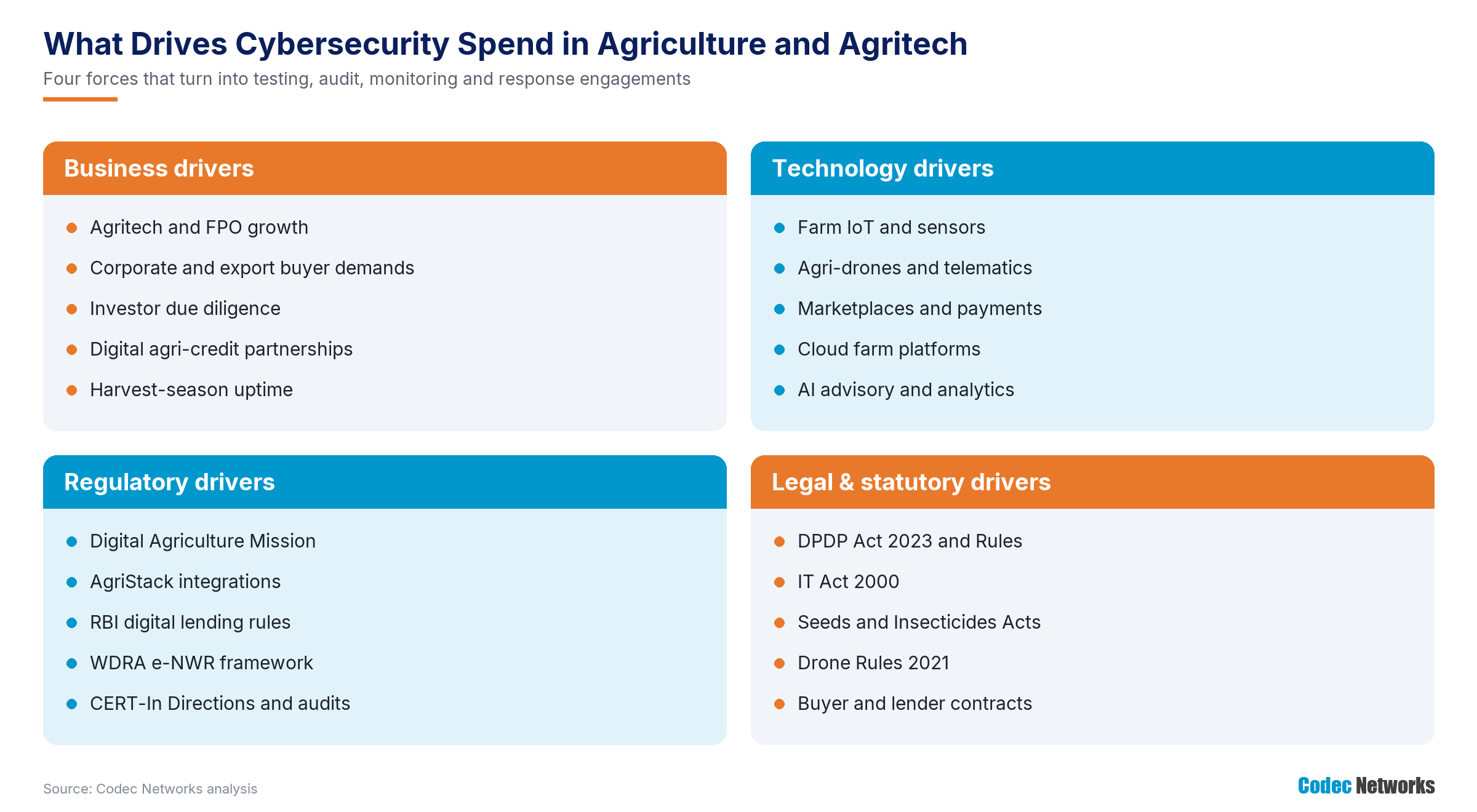
Figure 3: The four groups of drivers behind cybersecurity spending in agriculture and agritech.
4. Regulatory drivers: Digital Agriculture Mission, RBI, WDRA, CERT-In and DPDP
|
Instrument |
Key requirements |
|
Digital Agriculture Mission and AgriStack (2024) |
State-maintained Farmers' Registry, village maps and Crop Sown Registry; integration and consent terms for approved service providers |
|
RBI KCC and digital lending rules |
KCC terms and interest subvention; duties for lenders, lending service providers and loan apps on data, disclosures and grievance redress |
|
WDRA Act 2007 and e-NWR framework |
Warehouse accreditation, negotiable and electronic warehouse receipts, repositories; credit guarantee for e-NWR loans from December 2024 |
|
CERT-In Directions (2022) and audit guidelines (2025) |
Six-hour incident reporting; 180-day ICT logs in India; risk-based independent audits including OT and ICS |
|
Seeds Act 1966, Insecticides Act 1968 and Drone Rules 2021 |
Product, labelling, licensing and record duties for inputs; drone registration, type certification and permissions |
|
DPDP Act 2023 and Rules 2025 |
Notice, consent, safeguards, retention limits and breach intimation for farmer and borrower data; most obligations from May 2027 |
|
Confirm applicability Obligations depend on what you sell, store, lend or operate, your scheme and AgriStack integrations, lending partnerships, WDRA accreditation, input licences, listing status and contracts. The draft Seeds Bill 2025 had been released for comment but, as of October 2026, should be checked for its current status; confirm against the official instruments and your agreements. |
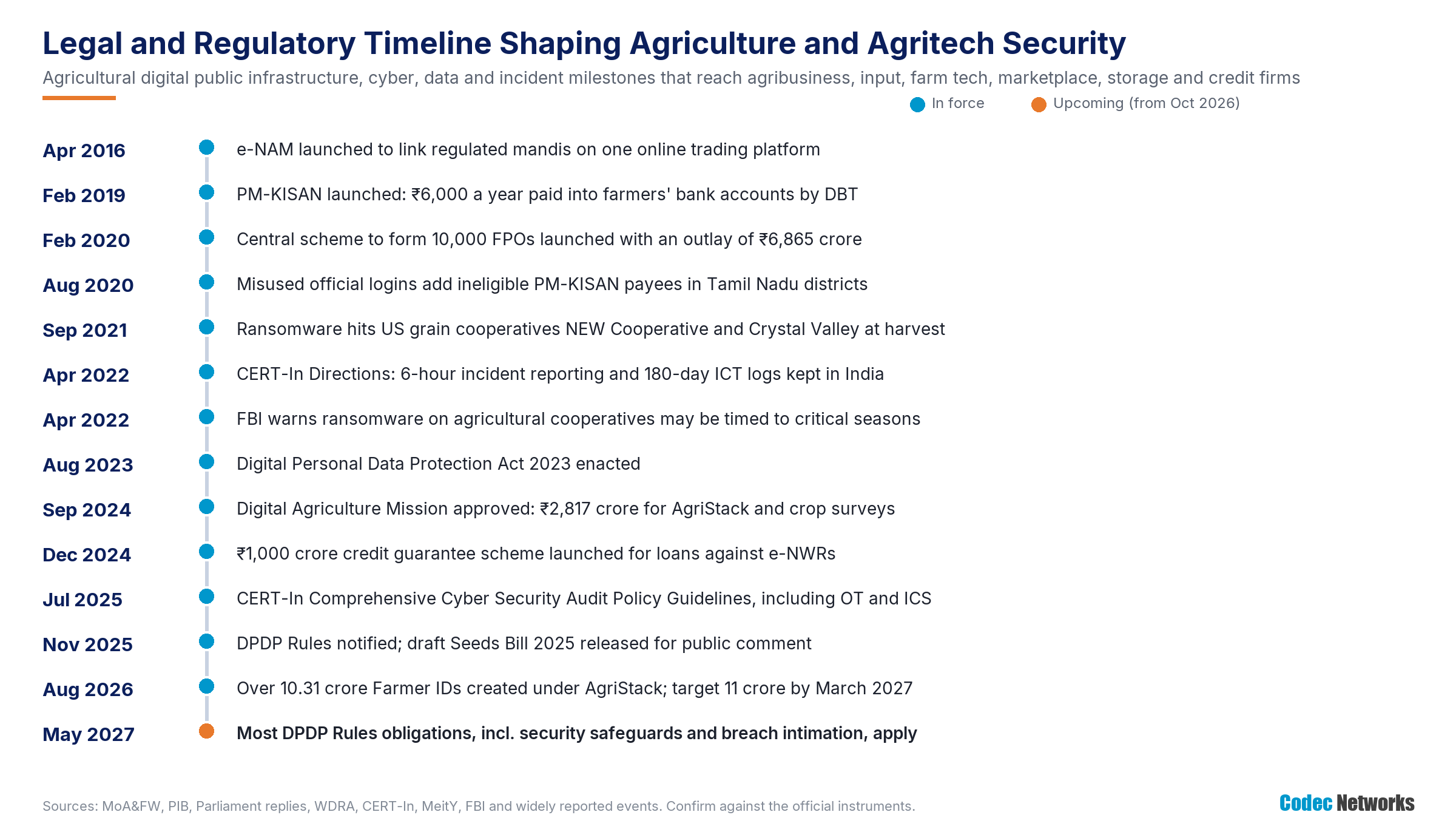
Figure 4: Legal and regulatory timeline shaping agriculture and agritech security, as of October 2026.
5. Legal and statutory drivers
|
Law or obligation |
Relevance |
Demand created |
|
IT Act, 2000 |
Offences such as unauthorised access and identity theft; reasonable security practices |
VAPT, incident response, forensics |
|
DPDP Act, 2023 and Rules, 2025 |
Personal data of farmers, borrowers, dealers and app users |
Privacy programmes, data maps, safeguards |
|
Warehousing (Development and Regulation) Act, 2007 |
Accreditation and negotiable warehouse receipts |
Warehouse system and access reviews |
|
Seeds Act, 1966 and Insecticides Act, 1968 |
Labelling, registration, licensing and records |
Traceability and dealer portal reviews |
|
State agricultural produce marketing laws |
Licensing of markets and trade, including electronic trading |
Platform and integration assurance |
|
Companies Act, 2013 and SEBI LODR (listed firms) |
Board risk responsibility; quarterly cyber incident disclosure |
Board reporting, incident records |
|
Contracts with lenders, buyers and government |
Security, confidentiality, audit and notification clauses |
Assurance reports, supplier reviews |
6. How the drivers differ by organisation type
|
Organisation type |
Dominant business drivers |
Dominant technology drivers |
Principal regulatory drivers |
|
Agribusiness and cooperatives |
Harvest uptime, buyer contracts |
Procurement, ERP, plant and warehouse OT |
CERT-In audits incl. OT, SEBI LODR, DPDP |
|
Seed and agri-input companies |
Dealer growth, brand protection |
Dealer portals, QR codes, breeding data |
Seeds and Insecticides Acts, CERT-In, DPDP |
|
Precision farming and farm IoT |
Fleet scale, investor diligence |
Sensors, gateways, brokers, cloud |
IT Act, DPDP, client contracts |
|
Marketplaces and commodity platforms |
Trade volume, payment partners |
APIs, payment callbacks, apps |
Payment rules, CERT-In, DPDP |
|
Warehousing and agri-credit |
Lender partnerships, receipt finance |
Loan apps, agent devices, e-NWR links |
RBI lending rules, WDRA, CERT-In, DPDP |
|
FPOs and cooperatives |
Member trust, scheme support |
Accounting and payment apps, vendors |
Scheme terms, DPDP, contracts |
7. What this means for buyers and for Codec Networks
|
Customer buying need |
Recommended offering |
Natural recurring engagement |
|
“Our lending partner wants a VAPT report on our app and APIs.” |
App and API VAPT with retest |
Annual assurance cycle |
|
“We have thousands of sensors on one cloud platform.” |
IoT device, firmware and broker assessment |
Review of every new device model and update process |
|
“Our investors want evidence of security maturity.” |
Maturity assessment and ISO 27001 readiness |
Annual maturity reassessment |
|
“We release payouts the moment a payment is confirmed.” |
Payment integration and settlement logic testing |
Testing in every major release |
|
“We are integrating with AgriStack and a state platform.” |
Integration, consent flow and access control review |
Review at each new integration |
|
“We hold lakhs of farmer records.” |
DPDP gap assessment and data map |
Privacy programme and periodic checks |
|
“Something is wrong with our systems in the middle of harvest.” |
Incident response, forensics and root cause analysis |
IR retainer and SOC |
Talk to Codec Networks
|
Contact Codec Networks Pvt. Ltd. New Delhi: 507, 5th Floor, New Delhi House, Barakhamba Road, Connaught Place, New Delhi – 110001 Gurugram: 707, 7th Floor, Silverton Tower, Golf Course Extension Road, Sector 50, Gurugram – 122018, Haryana Landline: 011 430 496 96 | 011 437 522 99 Mobile: +91 99716 76124 | +91 88007 88220 | +91 88003 31124 Email: mktg@codecnetworks.com Web: www.codecnetworks.com |
Note: This document is general industry guidance based on public information available as of October 2026. It is not legal, regulatory, lending, agronomic or scheme eligibility advice. Obligations differ by activity (agribusiness, seed and agri-input manufacture and sale, precision farming and farm IoT, agritech marketplaces and commodity platforms, warehousing, agri-credit or FPO and cooperative services), by the licences, accreditations, scheme integrations and lending partnerships held, by listing status, contracts and the data each organisation handles; confirm them against the official Ministry of Agriculture and Farmers Welfare, state government, WDRA, RBI, NABARD, DGCA, CERT-In, NCIIPC, MeitY and Data Protection Board instruments and your agreements. Testing of farm devices, drones and payment systems is described only as authorised testing in agreed windows and controlled conditions. Incident references are summarised from official statements and widely reported events.