

Resources Categories
INDUSTRY FACT FILE · AGRICULTURE & AGRITECH
Main Products and Services in Agriculture and Agritech
What India's agribusinesses, seed and agri-input companies, farm IoT providers, marketplaces, warehousing and agri-credit platforms, FPOs and cooperatives deliver, the systems behind each, and where those systems create cyber and compliance exposure.
|
In this document 1. How agriculture and agritech businesses create value 2. Products and services by organisation type 3. The farm layer: inputs, devices, drones and field data 4. The market layer: trade, storage, payments and credit 5. The systems behind the products and services 6. Trends that change the attack surface 7. Mapping operations to Codec Networks engagements |
1. How agriculture and agritech businesses create value
|
Revenue stream |
How it works |
Security relevance |
|
Crop and commodity sales |
Produce bought from farmers and FPOs, stored, processed and sold to processors, retailers and exporters |
Procurement and payment systems, harvest-season uptime |
|
Seed and agri-input sales |
Seed, fertiliser and crop protection sold through dealers, cooperatives and online |
Dealer portals, traceability codes, breeding IP |
|
Farm technology subscriptions |
Sensors, irrigation control, telematics and analytics sold per device, acre or season |
Device security, cloud platforms, farmer data |
|
Drone and machinery services |
Spraying, survey and custom hiring sold per acre or hour |
Drone and fleet platforms, booking apps, payments |
|
Marketplace commissions and fees |
Fees on crop trade, input commerce and logistics arranged through platforms |
APIs, payment callbacks, settlement integrity, accounts |
|
Storage, credit and insurance income |
Warehouse rent, interest on KCC, crop and receipt loans, insurance distribution |
Receipt integrity, loan fraud, borrower data |
2. Products and services by organisation type
|
Organisation type |
Main products and services |
Key systems |
|
Agribusiness and agricultural enterprises |
Contract farming, procurement, plantations, processing and exports |
ERP, procurement and weighbridge systems, dryers and plant OT, supplier portals |
|
Seed and agri-input companies |
Seed, fertiliser, crop protection, advisory and dealer programmes |
Breeding and trial data, dealer portals, QR traceability, loyalty apps |
|
Precision farming and farm IoT |
Soil and weather sensing, irrigation automation, farm dashboards |
Sensors, gateways, controllers, message brokers, cloud and mobile apps |
|
Drone and machinery service providers |
Spraying, mapping and custom hiring of equipment |
Drone fleets, ground control apps, telematics, booking and payment apps |
|
Agritech marketplaces and commodity platforms |
Crop trade, input commerce, B2B sourcing, price discovery |
Web and mobile apps, APIs, payment gateways, logistics integrations |
|
Warehousing and agri-credit platforms |
Storage, collateral management, receipt and crop loans |
Warehouse management, sensors, e-NWR links, loan origination apps |
|
FPOs and cooperatives |
Aggregation, input supply, member services, payments |
Member registers, accounting and procurement apps, payment links |
3. The farm layer: inputs, devices, drones and field data
A farm season begins with inputs and information. Seed and agri-input companies sell through networks of distributors and dealers that increasingly order, claim incentives and verify stock through dealer portals and apps, and seed traceability is moving to QR codes on packs linked to central systems such as the Ministry's SATHI portal, with a draft Seeds Bill 2025 proposing traceability through a central portal. Fertiliser sales under direct benefit transfer are recorded on point-of-sale devices with buyer authentication. Behind the counter, seed companies hold breeding and trial data that represent years of investment. These systems decide whether a counterfeit pack can carry a genuine-looking code, whether a dealer can claim incentives for sales never made, and whether a competitor or a departing employee can walk away with trait data.
On the farm, precision agriculture adds a layer of connected devices. Soil moisture and weather sensors report to field gateways, which pass readings over mobile networks to cloud message brokers and dashboards; irrigation controllers and pumps can be switched remotely; tractors and harvesters report location and usage through telematics; and drone operators plan and log spraying and survey missions through ground control apps and fleet platforms under the Drone Rules 2021. Devices are often installed in remote fields, shipped with default passwords, updated rarely and connected to a shared cloud back end that serves every customer. A weakness in one device model or in the broker can expose every farm on the platform, feed false readings into decisions on irrigation and spraying, or allow commands to reach equipment. Security testing here must be authorised, scheduled around field operations and designed so that pumps, controllers and drones are never put at risk.
4. The market layer: trade, storage, payments and credit
After harvest, produce is weighed, graded, stored, traded and paid for, increasingly through platforms. Agribusinesses and cooperatives run procurement centres with weighbridges, moisture meters and dryers connected to ERP and payment systems; agritech marketplaces and e-NAM-linked platforms match farmers and FPOs with buyers; and payments flow through gateways, UPI collections, bank APIs and, for public schemes, direct benefit transfer. The integrity of payment callbacks, settlement logic and payout approvals is the heart of these businesses: a marketplace that trusts a payment confirmation it has not verified can release money for goods that were never paid for. Harvest weeks concentrate volume, so ransomware or an outage then does the most damage, which is why the FBI warned in 2022 that attackers may time attacks to planting and harvest.
Storage and credit complete the chain. WDRA-accredited warehouses issue negotiable warehouse receipts, including electronic receipts through repositories, against which banks lend, supported since December 2024 by a ₹1,000 crore credit guarantee scheme; collateral managers monitor stock with sensors and cameras. Agri-credit platforms and their lending partners originate KCC, crop, equipment and receipt-backed loans through field agents' tablets and farmer apps, drawing on land records, crop data and, increasingly, AgriStack registries with the farmer's consent; RBI's Unified Lending Interface was piloted with KCC and dairy loans among its first products. Every integration adds an API, a credential and a data store holding farmers' identities, landholdings and bank details. Phished agent accounts, forged land or crop documents and exposed borrower data are the typical failures, and RBI's digital lending rules and the DPDP Act make their consequences regulatory as well as financial.
|
Highest-risk moments Sowing and harvest peaks, monsoon-linked advisory and irrigation surges, PM-KISAN and other DBT payout windows, onboarding a new lender, buyer or payment gateway, integrating with AgriStack or other public platforms, rolling out new sensors, gateways or drone fleets, pushing device firmware updates, launching a new app version or API, migrating platforms to a new cloud account, dealer incentive and loyalty campaigns, warehouse receipt pledges at season end and staff or field agent exits are where agriculture and agritech incidents typically begin or escalate. |
5. The systems behind the products and services
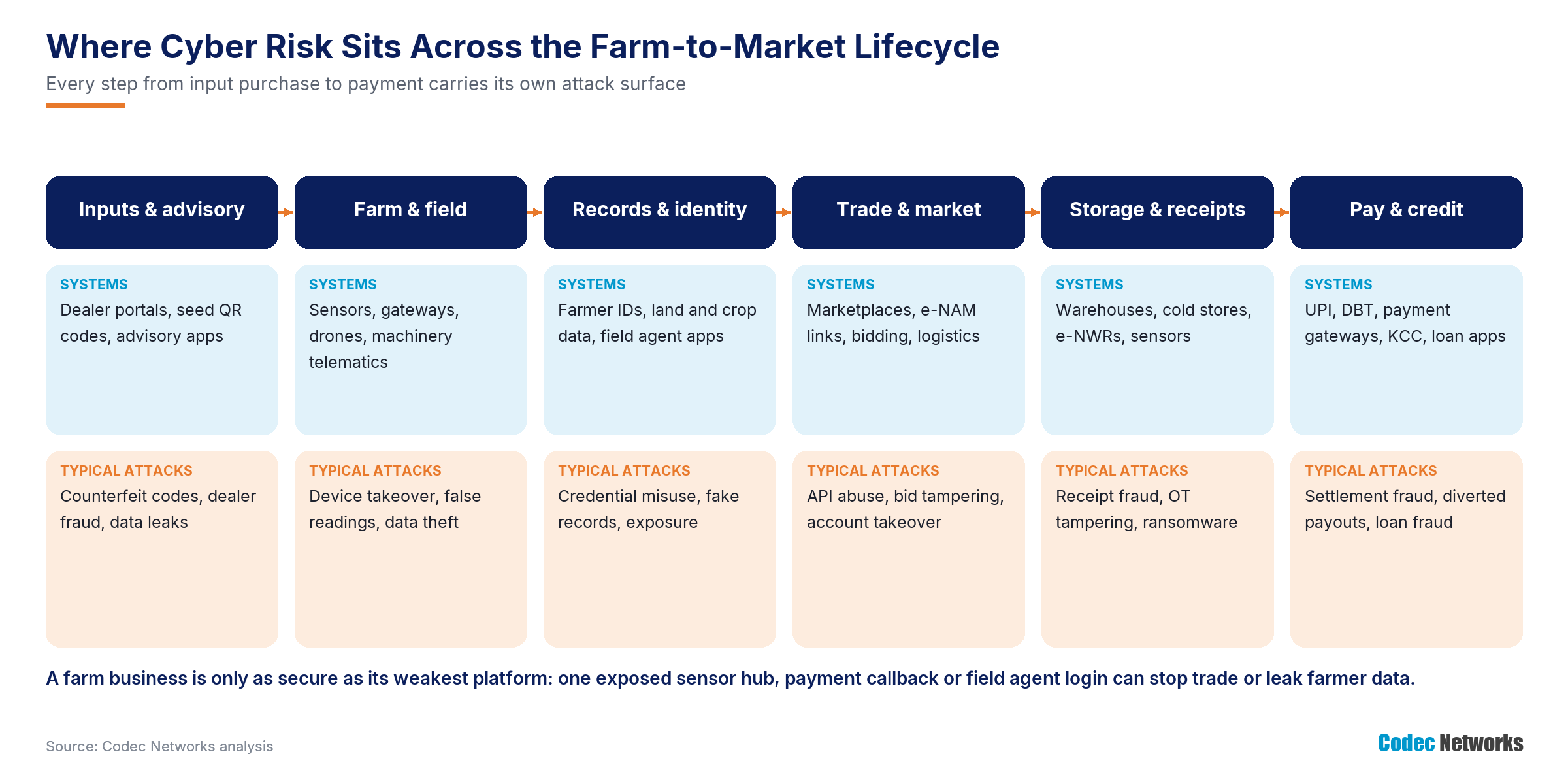
Figure 2: Where cyber risk sits across the farm-to-market lifecycle.
|
Product / service |
Systems that deliver it |
Key cyber and compliance touchpoints |
|
Inputs and advisory |
Dealer portals, QR traceability, fertiliser PoS devices, advisory and loyalty apps |
Code integrity, dealer access control, app and API security, DPDP |
|
Farm and field |
Sensors, field gateways, irrigation controllers, telematics, drone ground control |
Device credentials, firmware integrity, broker security, safe testing |
|
Records and identity |
Farmer IDs, land and crop records, KYC, field agent apps |
Consent, access control, MFA, data minimisation |
|
Trade and market |
Marketplaces, e-NAM links, bidding engines, logistics integrations |
API authorisation, account security, bid integrity, monitoring |
|
Storage and receipts |
Warehouse management, sensors, cameras, e-NWR repository links |
OT segmentation, receipt integrity, ransomware readiness |
|
Payments and credit |
Payment gateways, UPI, DBT links, loan origination and lender APIs |
Callback verification, reconciliation, fraud controls, RBI rules |
6. Trends that change the attack surface
|
Trend |
What is changing |
Security implication |
|
Digital public infrastructure for farms |
AgriStack Farmer IDs, crop survey data and consent-based sharing |
Integrations hold sensitive identity and land data and need strong access control |
|
Precision farming at scale |
Sensors, irrigation automation and telematics reach smallholders through FPOs |
Large fleets of low-cost devices share one cloud back end |
|
Drones in the field |
Spraying and survey drones, Namo Drone Didi and service operators |
Fleet platforms, ground control apps and mission data need protection |
|
Platform trade and payments |
Marketplaces, e-NAM links and instant payments for crops and inputs |
Payment callbacks and settlement logic become fraud targets |
|
Digital agri-credit |
KCC, receipt and crop loans through apps, field agents and ULI |
Loan fraud, phished agents and borrower data exposure |
|
AI advisory and analytics |
Crop, weather, pest and price advice from models and chatbots |
Data quality, model abuse and leakage of farmer data |
7. Mapping operations to Codec Networks engagements
|
If the organisation operates… |
Recommended starting engagement |
|
Procurement centres, warehouses or processing sites |
OT and network assessment, ransomware readiness and recovery testing, managed SOC for harvest season |
|
A seed or agri-input dealer network |
Dealer portal and app VAPT, QR traceability code review, IP protection and access review |
|
Farm sensors, gateways and irrigation control |
IoT device and firmware testing, message broker and cloud review, device identity design |
|
A drone or machinery service business |
Fleet platform and ground control app review, telematics API testing, data handling review |
|
A marketplace or commodity platform |
Payment integration testing, API and account security VAPT, fraud monitoring |
|
An agri-credit or warehouse finance platform |
Loan app and lender API testing, field agent access and MFA review, DPDP programme |
Talk to Codec Networks
|
Contact Codec Networks Pvt. Ltd. New Delhi: 507, 5th Floor, New Delhi House, Barakhamba Road, Connaught Place, New Delhi – 110001 Gurugram: 707, 7th Floor, Silverton Tower, Golf Course Extension Road, Sector 50, Gurugram – 122018, Haryana Landline: 011 430 496 96 | 011 437 522 99 Mobile: +91 99716 76124 | +91 88007 88220 | +91 88003 31124 Email: mktg@codecnetworks.com Web: www.codecnetworks.com |
Note: Descriptions are general and based on public information available as of October 2026. Systems and exposures differ by organisation, crop, region, scheme integration, lending partnership and agreements in force. Testing of farm devices, drones and payment systems is described only as authorised testing in agreed windows and controlled conditions.