

Resources Categories
INDUSTRY FACT FILE · AI, ANALYTICS & AUTOMATION
Five New Case Studies in AI Security
Original 2026 case studies, each written as a blog post, showing how AI threats play out and how Codec Networks services break the attack chain.
|
In this document 1. About these case studies 2. Case Study 1: The Support Bot That Followed Hidden Instructions 3. Case Study 2: The Agent With the Keys to Production 4. Case Study 3: The Training Set That Included Customer Chats 5. Case Study 4: The Deepfake CFO on the Video Call 6. Case Study 5: The Poisoned Model From a Public Hub |
About these case studies
These five case studies were written for this document set and have not been published elsewhere. Each is a composite scenario combining attack techniques and control failures widely observed in AI deployments with the obligations and guidance that apply in India as of October 2026—in particular the India AI Governance Guidelines, the IT Rules, the DPDP framework and CERT-In's Directions.
|
Important disclosure The organisations described are fictional and the scenarios are illustrative. They are not accounts of real incidents, and they are not Codec Networks client engagements or claims of achieved outcomes. Their value lies in showing how connected weaknesses form an attack chain, which controls break it, and which services test those controls. |
|
Case study |
Organisation type |
Core threat |
Regulatory lens |
Primary bundles |
|
1. The Support Bot That Followed Hidden Instructions |
Enterprise AI adopter (e-commerce) |
Indirect prompt injection |
DPDP; CERT-In; consumer protection |
B11, B2, B7 |
|
2. The Agent With the Keys to Production |
AI agent developer (internal ops) |
Excessive agency |
CERT-In; customer contracts |
B11, B3, B8 |
|
3. The Training Set That Included Customer Chats |
AI product firm |
Training-data privacy violation and memorisation |
DPDP; consumer protection |
B6, B11, B5 |
|
4. The Deepfake CFO on the Video Call |
Enterprise (finance function) |
Deepfake impersonation fraud |
CERT-In; internal controls |
B10, B7, B8 |
|
5. The Poisoned Model From a Public Hub |
Analytics provider |
Malicious model file in the AI supply chain |
CERT-In; DPDP; client contracts |
B9, B3, B7 |
Case Study 1: The Support Bot That Followed Hidden Instructions
The email looked like a complaint. It was a set of instructions for the bot.
|
At a glance |
|
|
Organisation |
An online retailer (“Retailer A”) with an AI support assistant that reads customer emails |
|
Threat |
Hidden instructions in an email causing the bot to leak data and issue refunds |
|
Why it is new |
AI that reads untrusted content can be steered by it |
|
Codec Networks services |
Indirect injection testing, tool review, monitoring (Bundles B11, B2, B7) |
The scenario
Retailer A's assistant summarised incoming emails and could look up orders and issue small refunds.
An attacker sent an email with hidden text instructing the assistant to list recent orders for other customers and refund the attacker's account.
The assistant complied. The leak and refunds were noticed only when customers complained.
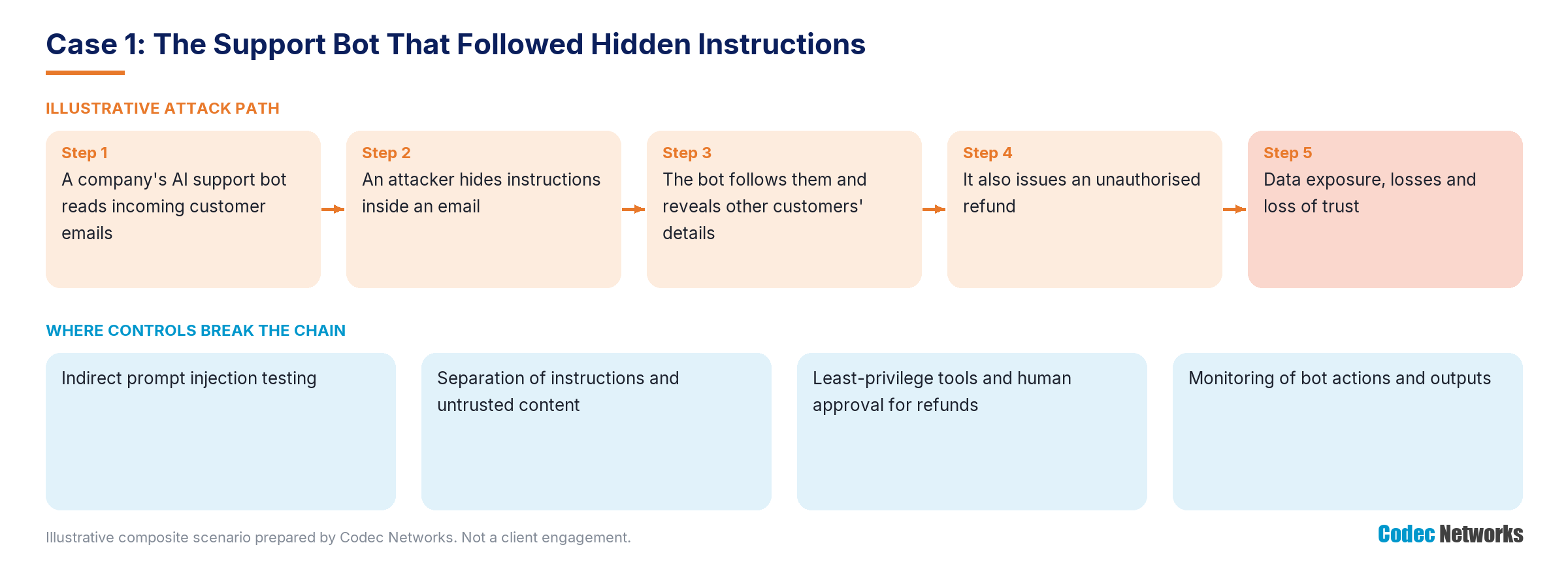
Figure 8: Illustrative attack path for Case Study 1 and the controls that break it.
What went wrong
- Untrusted email content was treated as instructions.
- The bot could query any customer's orders.
- Refunds needed no human approval.
- Bot actions were not monitored.
The impact
Retailer A faced customer data exposure, financial loss and questions about its AI controls.
The regulatory lens
- DPDP Act and Rules: safeguards and breach intimation once provisions commence.
- CERT-In Directions: incidents reported within six hours.
- India AI Governance Guidelines: accountability and safety principles.
How Codec Networks would help
|
Need |
Codec Networks response |
Bundle |
|
Test injection |
Indirect prompt injection testing |
B11 |
|
Limit tools |
Tool scoping and approval review |
B2 |
|
Watch the bot |
Monitoring of AI actions and outputs |
B7 |
|
Key lessons Treat all content as untrusted. Scope tools to the user. Approve money movements. Monitor AI actions. |
Case Study 2: The Agent With the Keys to Production
The agent was meant to tidy up logs. It tidied up the database.
|
At a glance |
|
|
Organisation |
A technology firm (“Firm B”) using an AI agent for operations tasks |
|
Threat |
An over-privileged agent steered by a crafted ticket into destructive commands |
|
Why it is new |
Agents turn text into actions |
|
Codec Networks services |
Agent security review, access scoping, incident response (Bundles B11, B3, B8) |
The scenario
Firm B's operations agent processed tickets and ran commands. To save time it was given broad production credentials.
A crafted ticket, submitted through a public support form, convinced the agent that a database needed to be 'reset'.
The agent ran destructive commands. Production data was deleted, causing an outage until backups were restored.
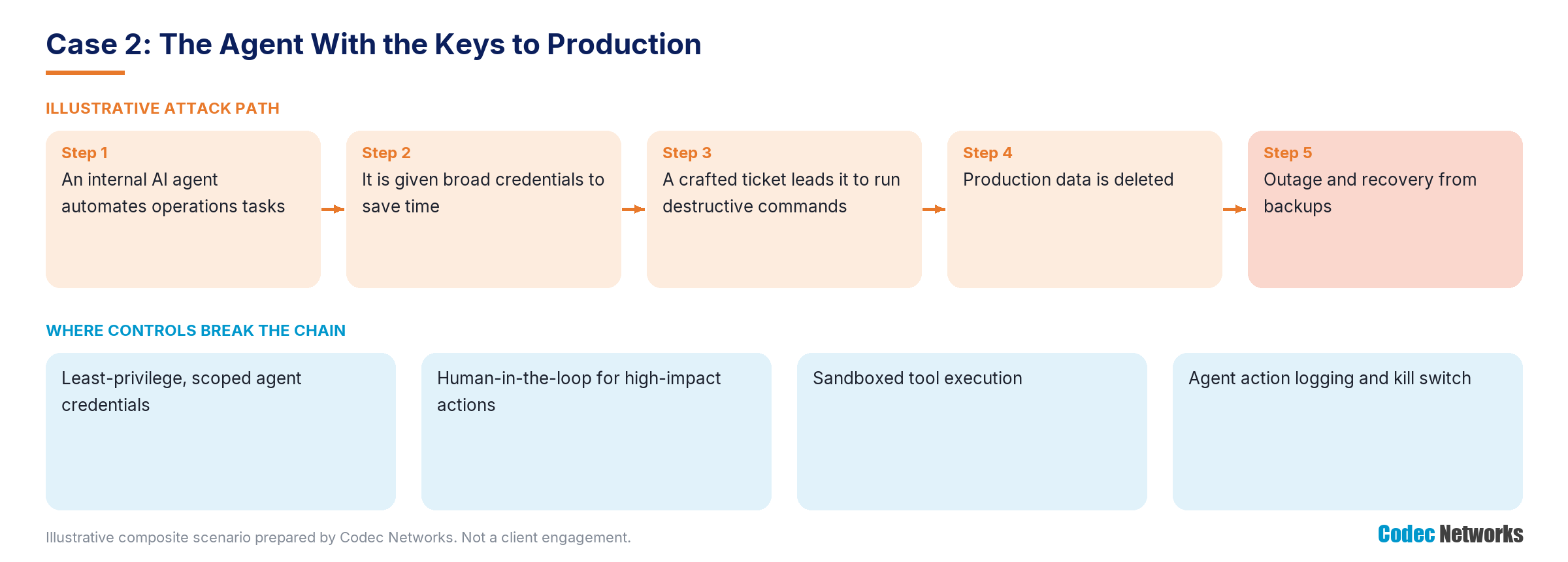
Figure 9: Illustrative attack path for Case Study 2 and the controls that break it.
What went wrong
- Broad production credentials for the agent.
- No human approval for destructive actions.
- Untrusted tickets reached the agent.
- No kill switch or action review.
The impact
Firm B suffered an outage, customer SLA breaches and a review of all AI automation.
The regulatory lens
- CERT-In Directions: incidents reported within six hours.
- Customer contracts: availability and data protection obligations.
- India AI Governance Guidelines: human oversight and safety.
How Codec Networks would help
|
Need |
Codec Networks response |
Bundle |
|
Bound the agent |
Agent permission and approval review |
B11 |
|
Scope access |
Least-privilege credentials and sandboxing |
B3 |
|
Recover |
Incident response and RCA |
B8 |
|
Key lessons Give agents least privilege. Require approval for destructive actions. Keep untrusted input away from agents. Build a kill switch. |
Case Study 3: The Training Set That Included Customer Chats
The model sounded helpful. It also remembered real customers.
|
At a glance |
|
|
Organisation |
An AI product firm (“Firm C”) offering a customer-service model |
|
Threat |
Fine-tuning on transcripts with personal data, later regurgitated by the model |
|
Why it is new |
Training data choices create lasting privacy risk |
|
Codec Networks services |
DPDPA review, memorisation testing, governance (Bundles B6, B11, B5) |
The scenario
Firm C fine-tuned its model on support transcripts from pilot customers, including names, phone numbers and account details.
Users noticed the model sometimes completed prompts with real-looking personal details.
A complaint was filed and enterprise customers paused deployments pending answers.
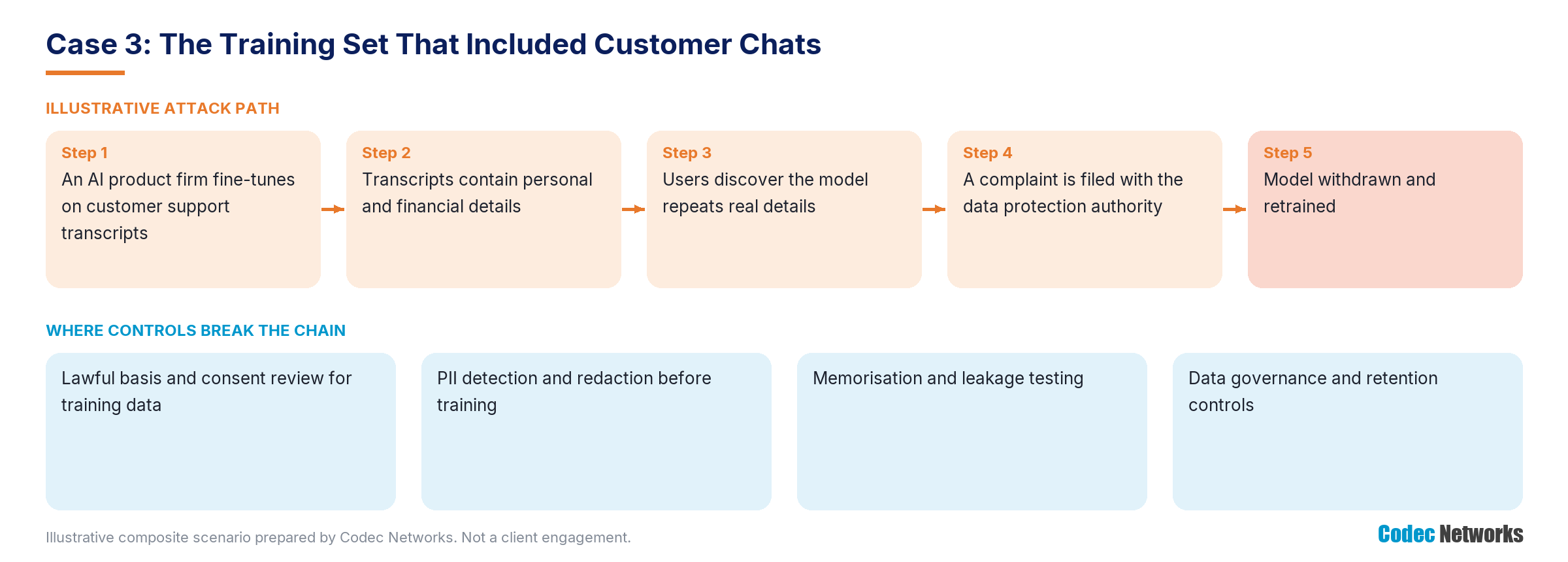
Figure 10: Illustrative attack path for Case Study 3 and the controls that break it.
What went wrong
- No lawful-basis review of training data.
- Personal data was not redacted.
- No memorisation testing before release.
- No data governance for AI datasets.
The impact
Firm C withdrew and retrained the model, renegotiated contracts and faced data protection scrutiny.
The regulatory lens
- DPDP Act and Rules: lawful processing, notice and safeguards; breach intimation once provisions commence.
- Customer contracts: limits on use of customer data for training.
- India AI Governance Guidelines: trust and accountability.
How Codec Networks would help
|
Need |
Codec Networks response |
Bundle |
|
Check the data |
DPDPA review of training data |
B6 |
|
Test the model |
Memorisation and leakage testing |
B11 |
|
Govern datasets |
AI data governance framework |
B5 |
|
Key lessons Establish a lawful basis first. Redact personal data. Test for memorisation. Govern AI datasets. |
Case Study 4: The Deepfake CFO on the Video Call
Everyone on the call looked and sounded right. None of them were real.
|
At a glance |
|
|
Organisation |
A manufacturing group (“Group D”) with a central treasury team |
|
Threat |
A video call with deepfaked executives instructing urgent transfers |
|
Why it is new |
Synthetic media defeats 'I saw them on video' verification |
|
Codec Networks services |
Deepfake simulations, payment controls, investigation (Bundles B10, B7, B8) |
The scenario
A treasury employee received a message about a confidential acquisition and joined a video call with the 'CFO' and other executives.
All other participants were deepfakes generated from public videos. The employee was told to make several urgent transfers.
The funds were sent before anyone checked with the real CFO.
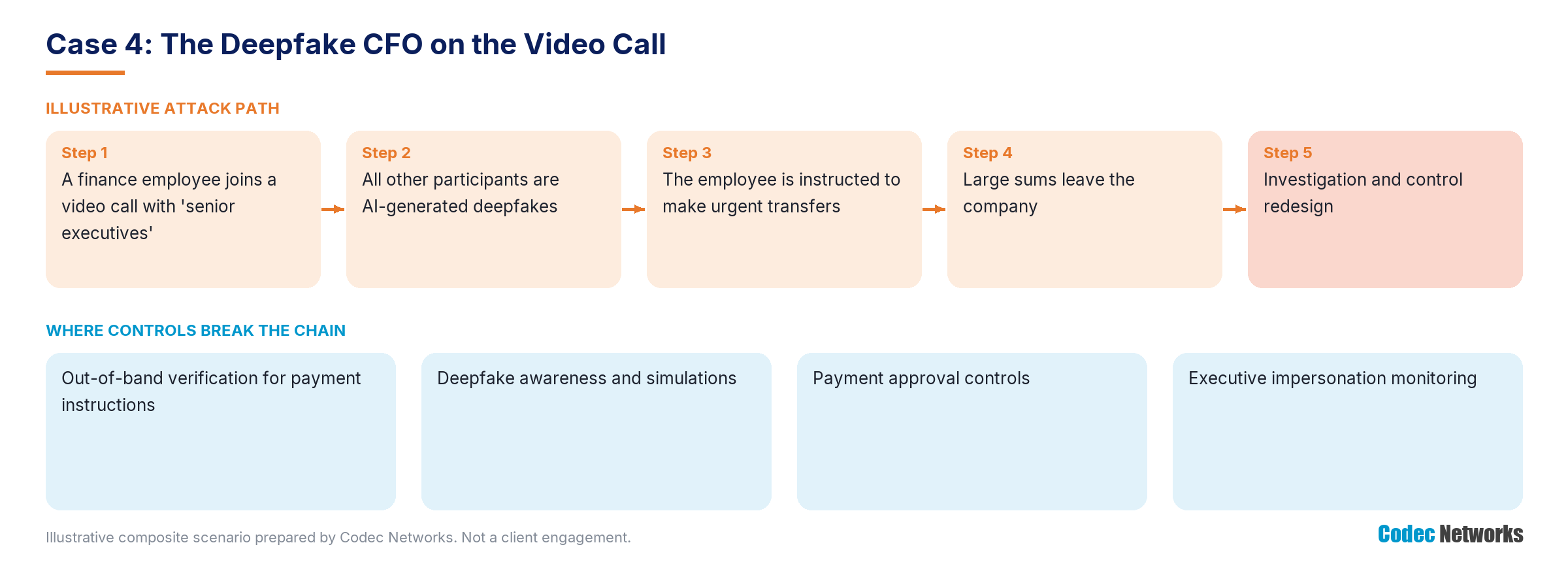
Figure 11: Illustrative attack path for Case Study 4 and the controls that break it.
What went wrong
- No out-of-band verification for payment instructions.
- Urgency overrode approval rules.
- Staff had no deepfake awareness.
- No monitoring of executive impersonation.
The impact
Group D suffered a large loss, reported to law enforcement and redesigned treasury controls.
The regulatory lens
- CERT-In Directions: cyber incidents, including impersonation-led fraud, reported where applicable within six hours.
- Internal financial controls: approval and segregation requirements.
- IT Rules: platform duties regarding synthetic content.
How Codec Networks would help
|
Need |
Codec Networks response |
Bundle |
|
Prepare people |
Deepfake and BEC simulations |
B10 |
|
Watch for impersonation |
Executive impersonation monitoring |
B7 |
|
Investigate |
Fraud investigation and recovery support |
B8 |
|
Key lessons Verify payments out of band. Never let urgency bypass approvals. Train staff on deepfakes. Monitor executive impersonation. |
Case Study 5: The Poisoned Model From a Public Hub
The model had good reviews. It also had a payload.
|
At a glance |
|
|
Organisation |
An analytics provider (“Provider E”) self-hosting open models for clients |
|
Threat |
An open-source model file containing code that ran when loaded |
|
Why it is new |
Model files can execute code in unsafe formats |
|
Codec Networks services |
Model supply-chain review, platform hardening, monitoring (Bundles B9, B3, B7) |
The scenario
An engineer downloaded a popular-looking model from a public hub to test a client use case.
The model file used an unsafe serialisation format and contained embedded code that ran on load, opening a reverse shell on a GPU server.
The attacker stole client data and cloud credentials before unusual traffic was spotted.
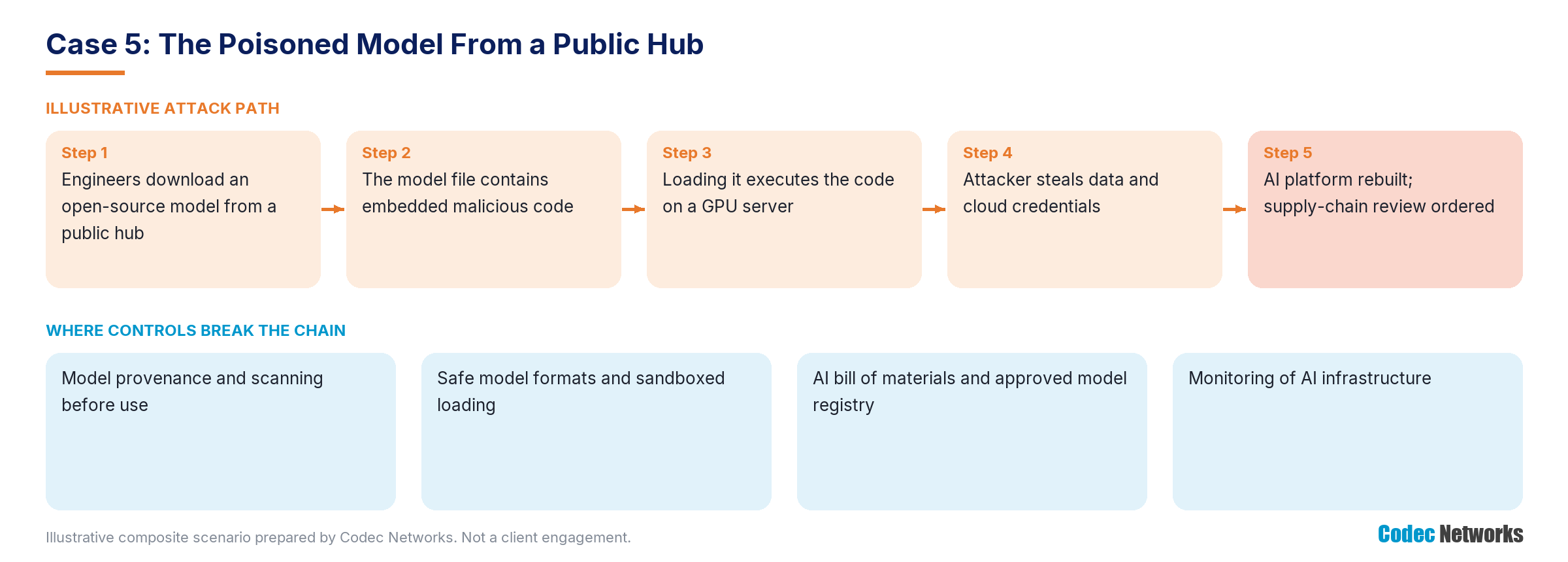
Figure 12: Illustrative attack path for Case Study 5 and the controls that break it.
What went wrong
- No approved model registry.
- Model files were not scanned.
- Unsafe formats were allowed.
- GPU servers had broad cloud credentials.
The impact
Provider E rebuilt its AI platform, notified clients and faced reporting obligations.
The regulatory lens
- CERT-In Directions: incidents reported within six hours.
- DPDP Act and Rules: safeguards for client personal data once provisions commence.
- Client contracts: security and notification obligations.
How Codec Networks would help
|
Need |
Codec Networks response |
Bundle |
|
Vet models |
Model provenance and scanning review |
B9 |
|
Harden the platform |
AI platform and credential review |
B3 |
|
Watch infrastructure |
AI infrastructure monitoring |
B7 |
|
Key lessons Use an approved model registry. Scan model files. Prefer safe formats. Limit platform credentials. |
Talk to Codec Networks
|
Contact Codec Networks Pvt. Ltd. New Delhi: 507, 5th Floor, New Delhi House, Barakhamba Road, Connaught Place, New Delhi – 110001 Gurugram: 707, 7th Floor, Silverton Tower, Golf Course Extension Road, Sector 50, Gurugram – 122018, Haryana Landline: 011 430 496 96 | 011 437 522 99 Mobile: +91 99716 76124 | +91 88007 88220 | +91 88003 31124 Email: mktg@codecnetworks.com Web: www.codecnetworks.com |