

Resources Categories

INDUSTRY FACT FILE · BLOCKCHAIN, WEB3 & VIRTUAL DIGITAL ASSETS
Industry Overview: Blockchain, Web3 and Digital Assets in India
Who runs India's VDA exchanges, custody, Web3 and blockchain platforms, the obligations that apply, who buys cybersecurity in the sector and why each segment needs its own approach.
|
In this document 1. Why blockchain and digital asset security matters now 2. The ecosystem at a glance 3. Categories of blockchain, Web3 and VDA organisations 4. The tax, AML, cyber and data framework at a glance 5. Authorities, infrastructure and ecosystem participants 6. Who buys cybersecurity inside a digital asset business 7. Why each segment needs a different approach 8. How Codec Networks works with blockchain, Web3 and VDA businesses |
|
Sector scope Sector: VDA exchanges and brokers, custodians and wallet providers, Web3 and DeFi projects, enterprise blockchain and tokenisation platforms, NFT and gaming platforms. Primary service proposition: smart contract audits, wallet and node security, blockchain forensics, SOC and compliance support. Banking and fintech have separate fact files. |
1. Why blockchain and digital asset security matters now
India treats crypto-assets and similar tokens as virtual digital assets (VDAs), a category the Finance Act 2022 inserted into the Income-tax Act 1961 as section 2(47A). The same Act taxed income from transferring VDAs at a flat 30% and, from 1 July 2022, required 1% tax to be deducted at source on transfers; the Income-tax Act 2025, in force from 1 April 2026, carries the regime forward. On 7 March 2023 the Ministry of Finance notified the VDA activities that make a business a reporting entity under the Prevention of Money-laundering Act 2002 when carried out for or on behalf of others: exchanging VDAs with fiat currency or with one another, transferring them, safekeeping or administering them or the instruments that control them, and providing financial services for an issuer's offer and sale. The government said in October 2025 that 50 VDA service providers had registered with FIU-IND and that notices had been issued to 25 offshore providers, following earlier notices to nine offshore exchanges in December 2023 and a request to block their websites. Around the exchanges, brokers, custodians and wallet providers sits a wider ecosystem of Web3 and DeFi projects built by Indian developers, NFT and gaming platforms, enterprise and government blockchain applications supported by MeitY's National Blockchain Framework of September 2024, and the Reserve Bank of India's e-rupee pilots, which began with a wholesale pilot in November 2022.
|
50 VDA service providers registered with FIU-IND (Oct 2025) |
US$3.4bn+ Stolen in crypto thefts in 2025 (Chainalysis) |
5 years KYC and transaction records kept by VASPs (CERT-In) |
6 hours To report cyber incidents to CERT-In |
Digital asset businesses are among the most targeted organisations in the world because a stolen key is stolen money, and blockchain transactions cannot be recalled once confirmed. Chainalysis's 2026 Crypto Crime Report estimates that more than US$3.4 billion was stolen in crypto thefts in 2025 and attributes at least US$2.02 billion of it to hackers linked to North Korea. The largest single theft, about US$1.5 billion from the exchange Bybit on or about 21 February 2025, was attributed by the FBI to the North Korean activity it calls TraderTraitor. Investigators found that malicious code had been injected into a third-party multisig wallet interface through a compromised developer machine, so that signers saw a routine transfer while the transaction they approved handed control of the cold wallet to the attacker. Earlier cases follow similar paths. In March 2022 attackers gained control of five of the nine validator keys securing the Ronin bridge and withdrew assets then worth more than US$600 million, a theft the FBI attributed to the Lazarus Group; flaws in smart contract code let attackers drain about US$320 million from the Wormhole bridge in February 2022 and about US$190 million from the Nomad bridge after a faulty upgrade in August 2022. The weakest points are rarely the cryptography itself: they are signing screens, hot wallet servers, exposed credentials, upgrade processes, phished staff and third-party tools.
India has seen the same pattern. On 18 July 2024 WazirX, then one of India's largest exchanges, lost more than US$230 million from a multisig wallet. The exchange said the transaction its signers approved did not match what the custody interface displayed; its custody provider, Liminal, said its own platform had not been breached; and researchers including Elliptic attributed the attack to North Korea-linked actors. The stolen assets were reported to amount to about 45% of the exchange's holdings, withdrawals were frozen, and recovery for users came to depend on a restructuring scheme that the Singapore High Court sanctioned in October 2025. A year later, in July 2025, CoinDCX disclosed that about US$44 million had been taken from an internal operational account used for liquidity provision on a partner exchange, and said customer funds were unaffected and the loss would be covered from its treasury. Regulators have acted on compliance failures too: FIU-IND imposed penalties of ₹18.82 crore on Binance in June 2024 and ₹9.27 crore on Bybit in January 2025 for serving Indian users without registering as reporting entities and for related PMLA contraventions.
The obligations are now detailed and increasingly technical. FIU-IND's AML and CFT Guidelines for reporting entities providing VDA services, updated on 8 January 2026 to replace the March 2023 version, cover registration with FIU-IND, a Principal Officer based in India, customer due diligence with liveness-checked selfies, geo-location and IP capture and penny-drop bank verification, real-time travel rule information for transfers, risk assessment of transfers involving unhosted wallets, no facilitation of mixers or anonymity-enhancing tokens, tamper-proof audit trails and an annual independent audit of AML controls. An FIU-IND circular of 15 September 2025, as widely reported, made a cyber security audit certificate from a CERT-In empanelled auditor a condition of registration and continued registration. CERT-In's Directions of April 2022 require virtual asset service providers, exchanges and custodian wallet providers to keep KYC information and transaction records for five years, besides six-hour incident reporting and 180-day log retention, and CERT-In's audit guidelines of July 2025 set out how independent audits should be run. The DPDP Act 2023 and its Rules cover the large volumes of KYC and personal data these businesses hold, and exchanges serving users abroad also face regimes such as the EU's Markets in Crypto-Assets Regulation and FATF-based travel rules.
|
Key takeaway In digital assets, a security failure is usually an irreversible loss of customer or treasury funds. Protecting keys and signers, auditing every smart contract and upgrade, monitoring every wallet, meeting FIU-IND's registration, audit and AML expectations and reporting incidents within six hours are now licence, banking-partner and customer expectations, not optional extras. |
2. The ecosystem at a glance
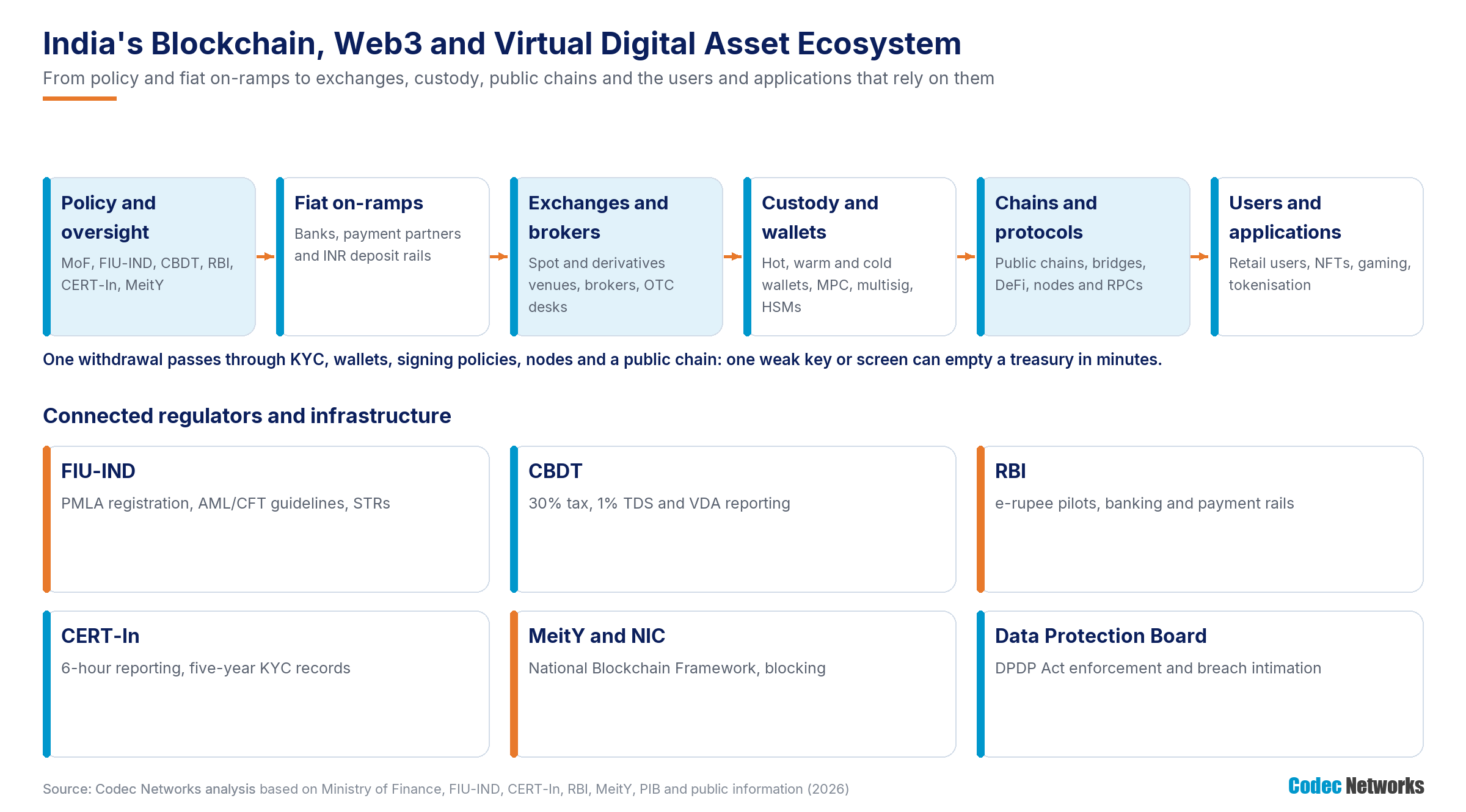
Figure 1: India's blockchain, Web3 and virtual digital asset ecosystem.
3. Categories of blockchain, Web3 and VDA organisations
|
Category |
Who they are |
Typical ownership |
Key regulatory basis |
|
VDA exchanges |
Platforms that match buyers and sellers of VDAs against rupees or other VDAs, including spot and derivatives venues and INR on-ramps |
Private; Indian and offshore |
PMLA reporting entity and FIU-IND registration; Income-tax TDS; CERT-In; DPDP |
|
Brokers, OTC desks and aggregators |
Firms that execute VDA trades for clients through apps, desks or routing to other venues |
Private, often start-ups |
PMLA activity-based registration; FIU-IND Guidelines; CERT-In; DPDP |
|
Custodians and custodial wallet providers |
Organisations that hold or administer VDAs, or the keys that control them, on behalf of clients |
Private; institutional and retail |
PMLA safekeeping activity; CERT-In Directions for custodian wallet providers; contracts |
|
Wallet and node infrastructure providers |
Non-custodial wallets, MPC and multisig tooling, node, RPC and validator operators |
Private, often global |
IT Act; CERT-In; DPDP; PMLA depending on activity; client contracts |
|
Web3 and DeFi projects |
Smart contract protocols for lending, exchange, staking and bridging, and the teams that build and govern them |
Start-ups, foundations and DAOs, often offshore |
Activity-based PMLA assessment; IT Act; CERT-In; overseas regimes |
|
NFT marketplaces and Web3 gaming |
Marketplaces, studios and games that issue or trade tokens and in-game digital assets |
Private; gaming and media firms |
Income-tax VDA rules; PMLA by activity; IT Act; DPDP; online gaming laws |
|
Enterprise blockchain and tokenisation platforms |
Permissioned ledgers for supply chains, trade documents, records and tokenised assets, including government platforms |
Enterprises, consortia, government and PSUs |
Sector regulator rules; IT Act; CERT-In; DPDP; consortium agreements |
|
Blockchain service and security vendors |
Analytics, KYC and travel rule vendors, oracle and bridge operators, auditors and developers |
Private |
Client contracts and outsourcing terms; CERT-In; DPDP |
4. The tax, AML, cyber and data framework at a glance
|
Instrument or expectation |
What it means for blockchain, Web3 and VDA businesses |
|
Income-tax Act (Finance Act 2022; Income-tax Act 2025) |
VDAs defined (section 2(47A) of the 1961 Act); income from transfers taxed at 30%; 1% TDS on transfers from 1 July 2022, with deduction and reporting duties that fall on exchanges and buyers; regime carried forward under the Income-tax Act 2025 from 1 April 2026 |
|
PMLA 2002 and notification of 7 March 2023 |
Exchange, transfer, safekeeping or administration of VDAs, and issuer-related financial services, for others make the provider a reporting entity; client verification, record-keeping and suspicious transaction reporting under Chapter IV |
|
FIU-IND AML & CFT Guidelines for VDA SPs (8 January 2026) |
Registration chapter; Principal Officer based in India; risk assessment at least yearly; CDD with liveness selfie, geo-location, IP and device data and penny drop; real-time travel rule; unhosted wallet monitoring; no facilitation of mixers or anonymity-enhancing tokens; tamper-proof audit trails; annual independent AML audit; monthly reports |
|
FIU-IND registration circular (15 September 2025) |
As reported, a cyber security audit certificate from a CERT-In empanelled auditor is required for registration and continued registration of VDA service providers |
|
CERT-In Directions (28 April 2022) |
Virtual asset service providers, exchanges and custodian wallet providers keep KYC information and financial transaction records for five years; incidents reported within six hours; ICT logs kept for 180 days in India; clocks synchronised |
|
CERT-In Cyber Security Audit Policy Guidelines (25 July 2025) |
Risk-based independent audits by empanelled auditing organisations, with safeguards for auditor independence and for the handling of audit data |
|
IT Act, 2000 |
Offences such as unauthorised access and computer-related fraud; blocking of online content and websites under Section 69A; intermediary due diligence for platforms |
|
DPDP Act 2023 and Rules 2025 |
KYC, identity and transaction data of users; reasonable security safeguards and breach intimation; most obligations from May 2027 |
|
Companies Act 2013 and SEBI LODR (listed groups) |
Board responsibility for risk management; quarterly disclosure of cyber incidents by listed entities |
|
International regimes |
FATF standards on virtual assets and the travel rule; the EU Markets in Crypto-Assets Regulation and similar regimes for platforms serving users abroad |
|
How these apply PMLA obligations follow the activities you carry out for others, not your physical location, so offshore platforms serving Indian users are in scope; CERT-In's Directions apply to body corporates; tax duties depend on who deducts and reports; DPDP applies to personal data. Confirm against the official instruments and your agreements. |
5. Authorities, infrastructure and ecosystem participants
- The Ministry of Finance frames VDA policy and taxation, and FIU-IND registers VDA service providers as reporting entities, issues AML and CFT guidelines, receives suspicious transaction reports and imposes penalties under the PMLA.
- CBDT administers the VDA tax and TDS regime; the Enforcement Directorate investigates money laundering; state police cyber cells handle frauds and thefts reported by users and firms.
- The Reserve Bank of India runs the e-rupee pilots and oversees the banks and payment providers that VDA businesses depend on for rupee deposits and withdrawals.
- CERT-In receives incident reports and issues advisories and audit guidelines; MeitY and NIC run the National Blockchain Framework and act on website blocking requests under the IT Act.
- Exchanges, brokers, custodians and wallet providers hold customer funds and keys; Web3 and DeFi teams, NFT and gaming platforms publish smart contracts and token-based products.
- Banks, payment partners, analytics, KYC and travel rule vendors, node and RPC providers and wallet tooling suppliers sit inside almost every transaction, and their weaknesses become the platform's incidents.
6. Who buys cybersecurity inside a digital asset business
|
Stakeholder |
What they care about |
What they buy |
|
Board, founders and CEO |
FIU registration, banking relationships, solvency after a hack, reputation |
Board briefings, maturity assessments, crisis exercises |
|
CISO and head of security |
Key custody, hot wallet exposure, SOC coverage, CERT-In audits |
CERT-In empanelled audits, VAPT, SOC, incident response retainers |
|
Principal Officer and compliance |
FIU-IND Guidelines, travel rule, unhosted wallets, STRs |
AML control reviews, record and log reviews, on-chain screening reviews |
|
CTO, protocol and engineering leads |
Secure smart contracts, upgrades, APIs, apps and nodes |
Smart contract audits, API and mobile testing, secure SDLC |
|
Treasury and custody operations |
Wallet architecture, signing policies, key ceremonies |
Wallet, MPC, multisig and HSM reviews, key ceremony support |
|
Head of risk and fraud |
Account takeover, mule accounts, market abuse by bots |
Fraud scenario testing, SOC use cases, investigations |
|
Data protection officer and legal |
DPDP obligations, KYC retention, law enforcement requests |
Privacy programmes, data discovery, evidence handling |
7. Why each segment needs a different approach
|
Organisation type |
Highest-consequence risk |
Starting point for assurance |
|
VDA exchanges |
Hot wallet or signer compromise draining customer funds |
CERT-In empanelled audit, wallet and signing review, red team of withdrawal paths, SOC |
|
Brokers and OTC desks |
Operational wallets and API keys outside core controls |
Wallet inventory, secrets review, API testing, monitoring |
|
Custodians and wallet providers |
Key, MPC share or HSM compromise; insider misuse |
Key ceremony and custody architecture review, PAM, SOC |
|
Web3 and DeFi projects |
Exploitable logic in contracts and upgrades |
Smart contract audit, fuzzing, upgrade and admin-key review |
|
NFT and gaming platforms |
Phished admins, drainer links, fake mints |
Community account security, brand monitoring, app and contract testing |
|
Enterprise blockchain and tokenisation |
Member node or certificate compromise; access control flaws |
Chaincode and access review, node hardening, member security baselines |
8. How Codec Networks works with blockchain, Web3 and VDA businesses
Codec Networks is a CERT-In empanelled information security auditing organisation, empanelled with NICSI for application audit and compliance services (start-up category), and certified to ISO 9001:2015, ISO/IEC 27001:2022 and ISO/IEC 20000-1:2018. For blockchain, Web3 and VDA businesses we deliver smart contract audits for Ethereum, Solana and Polygon projects using manual review with tools such as Slither, Mythril and fuzzing, DeFi economic, oracle and upgrade risk reviews, hot, warm and cold wallet, MPC, multisig, HSM and signing policy reviews, VAPT of exchange web and mobile apps, APIs, nodes, RPCs and cloud estates, red teaming of withdrawal paths, CERT-In empanelled cyber security audits that support FIU-IND registration, reviews of AML, travel rule and record-keeping controls under the FIU-IND Guidelines, ISO 27001 and SOC 2 readiness, DPDP programmes for KYC data, 24x7 managed SOC with on-chain and wallet monitoring and transaction simulation tools such as Tenderly, and blockchain and crypto forensics with Chainalysis-supported fund tracing after a theft. Each proposal confirms auditor eligibility and independence against FIU-IND's, CERT-In's and the client's requirements. Codec Networks works strictly on security and compliance and does not advise on any token, asset or investment.
Talk to Codec Networks
|
Contact Codec Networks Pvt. Ltd. New Delhi: 507, 5th Floor, New Delhi House, Barakhamba Road, Connaught Place, New Delhi – 110001 Gurugram: 707, 7th Floor, Silverton Tower, Golf Course Extension Road, Sector 50, Gurugram – 122018, Haryana Landline: 011 430 496 96 | 011 437 522 99 Mobile: +91 99716 76124 | +91 88007 88220 | +91 88003 31124 Email: mktg@codecnetworks.com Web: www.codecnetworks.com |
Note: This document is general industry guidance based on public information available as of October 2026. It is not legal, tax, regulatory or investment advice, and nothing in it recommends or endorses any virtual digital asset, token, exchange or platform. Obligations differ by activity (exchange, transfer, safekeeping or issuer-related services), FIU-IND registration status, the users and countries served, listing status, contracts and the data each organisation handles; confirm them against the official Ministry of Finance, FIU-IND, CBDT, CERT-In, RBI, MeitY and Data Protection Board instruments and your agreements. Incident references are summarised from official statements and widely reported events; attributions are those made by the authorities or researchers named.