

Resources Categories

INDUSTRY FACT FILE · CHEMICALS, FERTILIZERS & PROCESS INDUSTRIES
Market Landscape and the Drivers of Cybersecurity Demand in Chemicals and Fertilizers
The business, technology, safety, regulatory, legal, statutory and customer forces that create cybersecurity, audit and assurance work for chemical, fertilizer, agrochemical and process companies.
|
In this document 1. Market landscape 2. Business drivers 3. Technology drivers 4. Regulatory drivers: CERT-In, safety regulators, the Fertiliser Control Order, SEBI and DPDP 5. Legal and statutory drivers 6. How the drivers differ by company type 7. What this means for buyers and for Codec Networks |
1. Market landscape
India's chemical and fertilizer industry is large, strategic and increasingly export-oriented: the sixth-largest chemical producer globally, the second-largest fertilizer producer and consumer, and a growing destination for specialty chemical and contract manufacturing as global customers diversify supply. Fertilizer PSUs and cooperatives, listed chemical groups, global subsidiaries and thousands of mid-sized process operators run hazardous continuous plants under safety regulation, while subsidy, dealer and customer systems tie revenue to IT.
Cybersecurity demand follows four pressures. Safety: control and safety systems are reachable by vendors and contractors, and TRITON showed attackers target them. Continuity: ransomware has halted chemical companies and a fertilizer producer that cannot reconcile PoS data cannot claim subsidy. Compliance: CERT-In expects independent audits that include OT, listed companies disclose incidents and DPDP arrives in 2027. Customers: pharma, FMCG, automotive and export customers audit supplier security before and during contracts.
|
6th India's rank among global chemical producers |
2nd India's rank in fertilizer production and consumption |
6 hours Incident reporting to CERT-In |
May 2027 Most DPDP obligations take effect |
|
Market segment |
Landscape and buying behaviour |
Cybersecurity opportunity |
|
Fertilizer PSUs and cooperatives |
Large plants, subsidy dependence, public ownership, possible NCIIPC notification |
OT programmes, ERP and integration resilience, CII-aligned audits, SOC |
|
Listed chemical groups |
Multi-plant estates, Boards and audit committees, SEBI disclosure, global customers |
IEC 62443 assessments, SIS security, red teaming, Board reporting |
|
Specialty chemicals and CDMOs |
Global customer audits, valuable formulations, batch plants |
Customer assurance, IP protection, OT review |
|
Agrochemical and paint companies |
Large dealer networks, seasonal cash, farmer and dealer data |
Portal and payment security, DPDP, SOC |
|
Mid-sized process operators |
Single plants, outsourced IT, legacy DCS |
Baseline OT review, vendor access, backups |
|
Distributors and dealers |
Logistics, blending, PoS and credit |
Portal security, BEC controls, data protection |
2. Business drivers
|
Business driver |
Buying trigger |
Relevant services |
|
Process safety and licence to operate |
A cyber incident affecting control or safety systems is a safety event |
SIS and OT security, cyber in PSM |
|
Production continuity |
Continuous plants cannot stop and restart cheaply |
Resilience, segmentation, vendor controls |
|
Seasonal supply and subsidy |
Dispatch, PoS reconciliation and claims must run in season |
ERP and integration resilience, continuity planning |
|
Protection of formulations |
Competitors and states target recipes and process know-how |
Data classification, DLP, insider risk |
|
Customer and export contracts |
Pharma, FMCG, auto and EU customers require security evidence |
ISO 27001, IEC 62443, audit readiness |
|
Board accountability and disclosure |
Listed companies disclose incidents; Boards own risk |
Board advisory, incident records, audits |
|
Insurance and lenders |
Insurers scrutinise OT controls after major incidents |
Control validation, ransomware readiness |
3. Technology drivers
|
Technology driver |
Exposure created |
Codec Networks opportunity |
|
DCS, PLCs and SIS |
Tampering with control and safety logic |
OT and SIS assessments |
|
Vendor remote support |
Standing access into engineering networks |
Remote access brokering, vendor assessments |
|
ERP, DBT/PoS and dealer integrations |
Revenue stops when integrations stop |
Integration security, backups, continuity |
|
LIMS, ELN and formulation systems |
Recipe theft and falsified quality data |
Data protection, integrity controls |
|
Digital plant, APC and IIoT |
Plant-to-cloud connections |
IIoT assessment, DMZ design |
|
Contractor devices and media |
Malware during turnarounds |
Device and media controls |
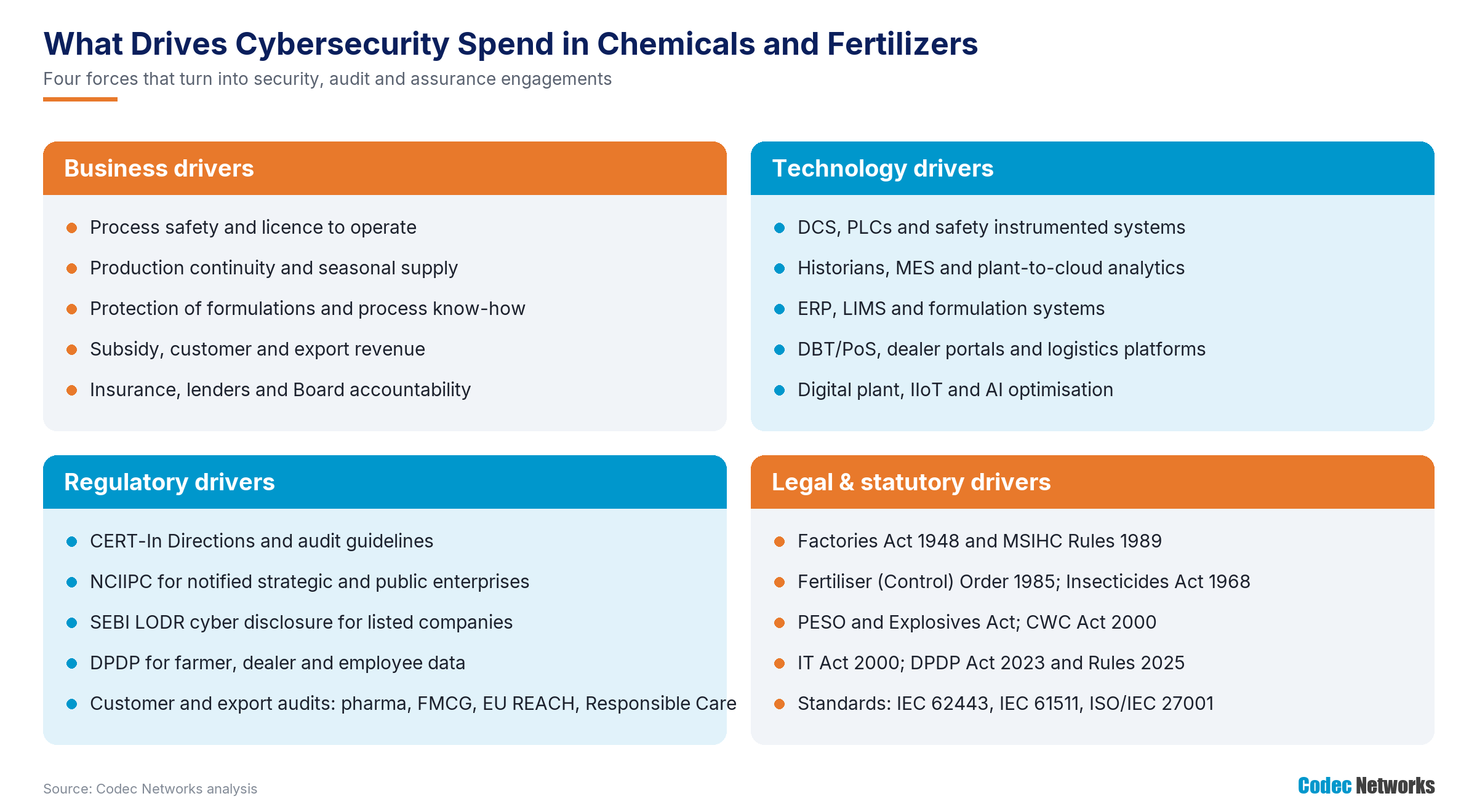
Figure 3: The four groups of drivers behind cybersecurity spending in chemicals and fertilizers.
4. Regulatory drivers: CERT-In, safety regulators, the Fertiliser Control Order, SEBI and DPDP
|
Instrument |
Key requirements |
|
CERT-In Directions (2022) and audit guidelines (2025) |
Six-hour incident reporting; 180-day ICT logs; risk-based independent audits covering IT and OT/ICS |
|
Factories Act 1948; MSIHC Rules 1989; Chemical Accidents Rules 1996; PESO |
Safety reports, emergency plans and licences for hazardous plants that depend on secure control and safety systems |
|
Fertiliser (Control) Order 1985; DBT in fertilizers |
Quality, pricing and distribution control; subsidy on PoS-authenticated sales data |
|
Insecticides Act 1968 and CIB&RC |
Registration and quality obligations for agrochemicals; data integrity in regulatory dossiers |
|
NCIIPC (IT Act Section 70A) |
Protection of notified protected systems, relevant to strategic and public enterprises |
|
SEBI LODR; DPDP Act 2023 and Rules 2025 |
Quarterly cyber incident disclosure for listed companies; farmer, dealer and employee data safeguards from May 2027 |
|
Confirm applicability Obligations depend on products, quantities, licences, listing status and any NCIIPC notifications. Confirm against the official instruments and your contracts. |
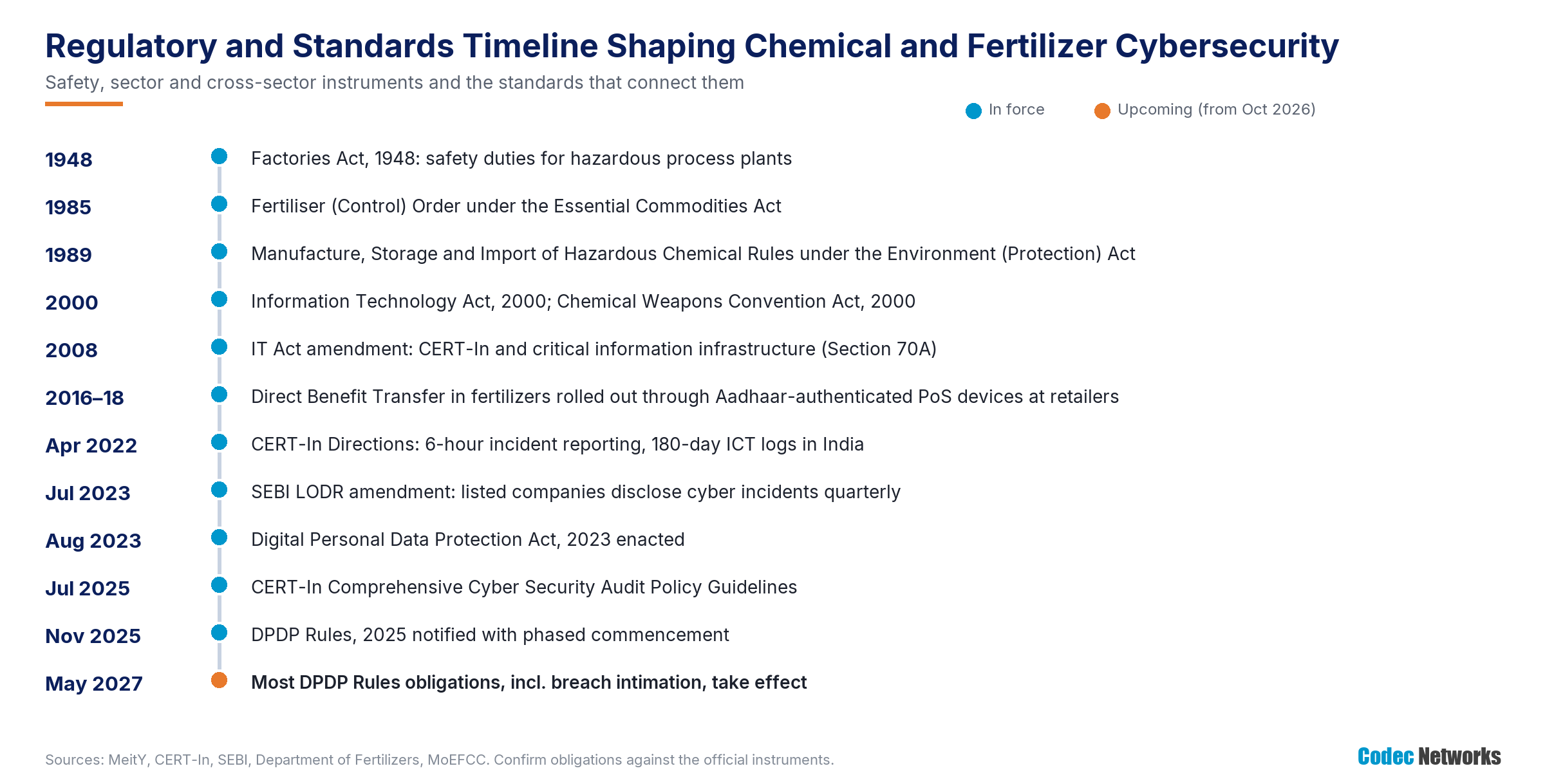
Figure 4: Regulatory and standards timeline shaping chemical and fertilizer cybersecurity, as of October 2026.
5. Legal and statutory drivers
|
Law or obligation |
Relevance |
Demand created |
|
IT Act, 2000 and CERT-In Directions |
Incident reporting, logging and protected systems |
SOC, logging, audits and incident response |
|
Factories Act, 1948 and MSIHC Rules, 1989 |
Safety of hazardous process plants and storage |
SIS and OT security, cyber in safety management |
|
Essential Commodities Act and Fertiliser (Control) Order, 1985 |
Fertilizer quality, pricing and distribution |
ERP, PoS and dispatch data integrity |
|
Insecticides Act, 1968 |
Agrochemical registration and quality |
Regulatory data integrity |
|
Chemical Weapons Convention Act, 2000 |
Declarations for scheduled chemicals |
Data integrity and confidentiality |
|
Companies Act, 2013 and SEBI LODR |
Board risk responsibility; disclosure for listed entities |
Board reporting, incident records |
|
DPDP Act, 2023 and Rules, 2025; customer contracts |
Farmer, dealer and employee data; customer security clauses |
Privacy programmes; independent testing and evidence |
6. How the drivers differ by company type
|
Company type |
Dominant business drivers |
Dominant technology drivers |
Principal regulatory drivers |
|
Fertilizer producers |
Supply in season, subsidy cash flow, safety |
DCS and SIS estates, ERP and DBT integration |
FCO and DBT, Factories Act, CERT-In, NCIIPC where notified |
|
Bulk chemicals |
Continuity, safety, margins |
Legacy DCS, utilities, vendor access |
MSIHC, PESO, CERT-In, SEBI LODR |
|
Specialty and CDMOs |
Customer trust, IP, exports |
Batch control, LIMS, formulation systems |
Customer audits, REACH, CERT-In |
|
Agrochemicals and paints |
Dealer revenue, brand, farmer data |
Dealer portals, apps, batch plants |
Insecticides Act, DPDP, CERT-In |
|
Process operators |
Keeping brand-owner contracts |
Customer-specified controls, small IT |
Customer contracts, Factories Act, CERT-In |
7. What this means for buyers and for Codec Networks
|
Customer buying need |
Recommended offering |
Natural recurring engagement |
|
“Could someone change a set-point from outside?” |
OT risk assessment and vendor access review |
Annual OT reviews and access recertification |
|
“Are our safety systems isolated?” |
SIS security review |
Periodic reviews within PSM |
|
“If ERP went dark in season, could we dispatch and claim?” |
ERP and integration resilience review |
Annual resilience testing |
|
“Our pharma customer is auditing our security.” |
ISO 27001 and IEC 62443 gap assessment, evidence pack |
Annual recertification support |
|
“Turnaround contractors flood the plant.” |
Third-party access programme |
Per-turnaround controls |
|
“We need 24x7 monitoring that includes the plant.” |
IT/OT SOC |
Continuous monitoring |
|
“We need an independent cyber audit.” |
CERT-In-aligned IT/OT audit |
Annual audits |
Talk to Codec Networks
|
Contact Codec Networks Pvt. Ltd. New Delhi: 507, 5th Floor, New Delhi House, Barakhamba Road, Connaught Place, New Delhi – 110001 Gurugram: 707, 7th Floor, Silverton Tower, Golf Course Extension Road, Sector 50, Gurugram – 122018, Haryana Landline: 011 430 496 96 | 011 437 522 99 Mobile: +91 99716 76124 | +91 88007 88220 | +91 88003 31124 Email: mktg@codecnetworks.com Web: www.codecnetworks.com |
Note: This document is general industry guidance based on public information available as of October 2026. It is not legal, safety or regulatory advice. Obligations differ by product, licence, listing status and customers; confirm them against the official CERT-In, MeitY, SEBI, NCIIPC, MoEFCC, Department of Fertilizers and safety-regulator instruments and your contracts.