

Resources Categories

INDUSTRY FACT FILE · CHEMICALS, FERTILIZERS & PROCESS INDUSTRIES
Main Products and Services in Chemicals, Fertilizers and Process Industries
What India's chemical, fertilizer, agrochemical and process companies make and deliver, the plant, laboratory, enterprise and distribution systems behind each activity, and where those systems create cybersecurity, safety and compliance exposure.
|
In this document 1. How chemical and fertilizer companies earn their money 2. Products and services by company type 3. The process plant: DCS, PLCs, safety systems and tank farms 4. The enterprise layer: ERP, LIMS, subsidy integrations and dealer portals 5. The systems behind the products and services 6. Trends that change the attack surface 7. Mapping operations to Codec Networks engagements |
1. How chemical and fertilizer companies earn their money
|
Revenue stream |
How it works |
Security relevance |
|
Fertilizer sales and subsidy |
Product sold to dealers at controlled prices; subsidy claimed on PoS-authenticated sales |
ERP, integration and PoS data integrity; continuity in season |
|
Bulk and commodity chemical sales |
Continuous production sold to industrial customers and traders |
Plant uptime; pricing and contract data |
|
Specialty and contract manufacturing |
Custom molecules and formulations for pharma, FMCG, auto and global customers |
Recipe confidentiality; customer audits; quality data integrity |
|
Agrochemical sales |
Technicals and formulations sold through distributors and dealers |
Dealer portals, seasonal cash flows, farmer data |
|
Paints, gases and materials |
Branded and industrial products through dealers and direct supply |
Multi-site plants, logistics, dealer systems |
|
Exports |
Supply to regulated markets |
REACH and customer compliance; shipment and documentation systems |
2. Products and services by company type
|
Company type |
Main products and services |
Key systems |
|
Fertilizer producers |
Urea, DAP, NPK, complexes, micronutrients |
Large DCS estates, ammonia and urea unit SIS, ERP, DBT/PoS integration, dealer portals |
|
Bulk and commodity chemicals |
Chlor-alkali, soda ash, acids, polymers |
DCS, PLCs, SIS, utilities automation, ERP, trading systems |
|
Specialty chemicals and CDMOs |
Intermediates, performance chemicals, custom synthesis |
Batch control, recipe and formulation systems, LIMS, ELN, customer portals |
|
Agrochemicals |
Crop protection technicals and formulations |
Batch plants, formulation systems, dealer portals, field and farmer apps |
|
Paints, coatings and gases |
Coatings, adhesives, industrial and specialty gases |
Multi-site batch plants, tinting systems, cylinder and bulk logistics platforms |
|
Process operators and distributors |
Toll manufacturing, blending, distribution |
Customer-specified controls, ERP, logistics and dealer systems |
3. The process plant: DCS, PLCs, safety systems and tank farms
A continuous chemical or fertilizer plant is controlled by a distributed control system (DCS) and PLCs that run reactors, compressors, columns and furnaces, protected by safety instrumented systems (SIS) that bring the process to a safe state and by alarm and interlock logic. Engineering workstations configure these systems; historians feed production data to IT; analysers and laboratory systems certify quality; and tank farms, loading bays and utilities have their own automation.
Much of this estate is long-lived and vendor-maintained: DCS generations run for decades, protocols carry no authentication, and automation vendors and integrators keep remote access for support. Turnarounds bring hundreds of contractors and their devices into the plant. Digital plant initiatives add IIoT sensors, advanced process control, optimisation analytics and cloud dashboards that connect the plant floor outward.
4. The enterprise layer: ERP, LIMS, subsidy integrations and dealer portals
Above the plant, ERP runs procurement, production planning, dispatch, invoicing and payments; LIMS, electronic lab notebooks and formulation systems hold recipes, process parameters and quality records; and dealer portals, logistics platforms and customer systems move product to market. For fertilizer producers, ERP also feeds the Department of Fertilizers' DBT integration, where subsidy is released against Aadhaar-authenticated point-of-sale data from retailers—so an ERP outage in sowing season stalls both dispatch and cash.
Agrochemical and paint companies run large dealer and distributor networks through portals, apps and seasonal credit; specialty companies and CDMOs exchange designs, specifications and quality data with global customers under strict confidentiality and audit regimes.
|
Highest-risk moments Vendor remote sessions into the DCS, turnaround contractors and USB media, engineering workstations with access to safety systems, ERP and subsidy integrations in peak season, bulk exports of recipes from formulation systems and dealer-portal bank-detail changes are where chemical and fertilizer incidents typically begin or escalate. |
5. The systems behind the products and services
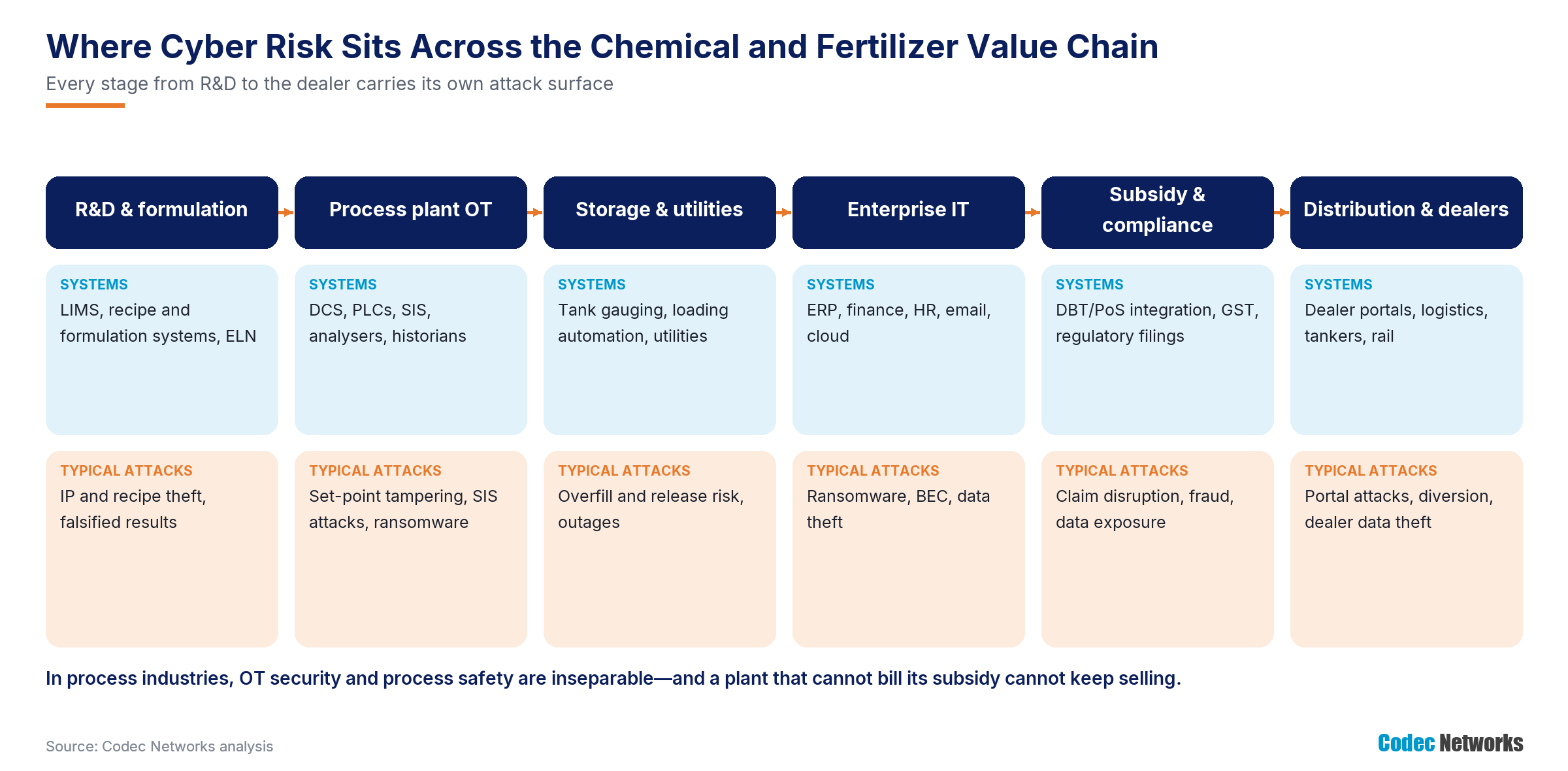
Figure 2: Where cyber risk sits across the chemical and fertilizer value chain.
|
Product / service |
Systems that deliver it |
Key cyber and compliance touchpoints |
|
R&D and formulation |
LIMS, ELN, recipe and formulation systems |
Data classification, access reviews, DLP, LIMS integrity |
|
Process plant |
DCS, PLCs, SIS, analysers, historians |
OT assessment, SIS isolation, engineering workstation controls, OT monitoring |
|
Storage and utilities |
Tank gauging, loading automation, utilities control |
Automation assessment, integrity checks, segmentation |
|
Enterprise IT |
ERP, finance, HR, email, cloud |
EDR, backups, identity, SOC, DPDP |
|
Subsidy and compliance |
DBT/PoS integration, GST, environmental and regulatory filings |
Integration security, continuity planning, data integrity |
|
Distribution and dealers |
Dealer portals, apps, logistics and tanker tracking |
Portal and payment testing, BEC controls, dealer data protection |
6. Trends that change the attack surface
|
Trend |
What is changing |
Security implication |
|
Digital plant and APC |
Advanced process control, optimisation analytics, IIoT and cloud dashboards |
More plant-to-cloud connections to secure |
|
Vendor remote support |
OEMs and integrators supporting DCS and SIS remotely |
Standing access as a primary risk |
|
Subsidy and dealer digitisation |
DBT, PoS, dealer portals and farmer apps |
Revenue tied to integration and data integrity; DPDP scope |
|
Global customer audits |
Pharma, FMCG and auto customers auditing supplier security |
Evidence-based assurance replaces informal practice |
|
Regulatory formalisation |
CERT-In audit guidelines, SEBI disclosure, DPDP |
Independent audits that include OT |
|
Safety-cyber convergence |
IEC 61511 and IEC 62443 treated together |
Cyber risk inside process safety management |
7. Mapping operations to Codec Networks engagements
|
If the company operates… |
Recommended starting engagement |
|
Continuous process plants with DCS and SIS |
OT risk assessment, SIS security review, vendor access controls |
|
ERP with subsidy, dispatch or dealer integrations |
ERP and integration security, backup and continuity planning |
|
Formulation, LIMS and recipe systems |
Data classification, DLP, access reviews, LIMS integrity |
|
Dealer and distributor networks |
Portal and payment testing, BEC controls, DPDP programme |
|
Turnarounds with many contractors |
Third-party access programme, media controls, segmented access |
|
Digital plant and IIoT programmes |
IIoT and plant-to-cloud security assessment before go-live |
Talk to Codec Networks
|
Contact Codec Networks Pvt. Ltd. New Delhi: 507, 5th Floor, New Delhi House, Barakhamba Road, Connaught Place, New Delhi – 110001 Gurugram: 707, 7th Floor, Silverton Tower, Golf Course Extension Road, Sector 50, Gurugram – 122018, Haryana Landline: 011 430 496 96 | 011 437 522 99 Mobile: +91 99716 76124 | +91 88007 88220 | +91 88003 31124 Email: mktg@codecnetworks.com Web: www.codecnetworks.com |
Note: Descriptions are general and based on public information available as of October 2026. Systems and exposures differ by plant and company.