

Resources Categories
INDUSTRY FACT FILE · CREDIT INFORMATION & FINANCIAL DATA
Industry Overview: Credit Information and Financial Data in India
Who holds India's credit and identity data, how they are regulated, who buys cybersecurity inside them and why each needs a distinct approach.
|
In this document 1. Why credit data security matters now 2. The ecosystem at a glance 3. Categories of credit and financial data players 4. The regulatory framework at a glance 5. Government, regulated and private participants 6. Who buys cybersecurity inside a credit data firm 7. Why each player type needs a different approach 8. How Codec Networks works with credit data firms |
|
Sector scope Sector: credit information and financial data — credit information companies (credit bureaus), credit analytics firms, KYC utilities and KYC registration agencies, and financial data processors. Primary service proposition: data access controls, privacy, IT audit, API testing and data integrity and leakage assessments. Lenders, payment firms and account aggregators are covered in separate fact files. |
1. Why credit data security matters now
Credit bureaus and financial data firms hold some of the most valuable personal data in the economy: identity details, loan and card histories, repayment behaviour and enquiry records for individuals and businesses. That data decides who gets credit and at what price—so its confidentiality, accuracy and integrity matter to borrowers, lenders and regulators alike.
|
Fortnightly Credit data reported by credit institutions to CICs |
31 Jul 2026 RBI cyber and technology risk Directions, incl. CICs |
6 hours To report cyber incidents to CERT-In |
May 2027 Most DPDP obligations take effect |
Since January 2025, credit institutions report credit information to credit information companies (CICs) every fortnight, and reports are increasingly delivered through APIs to lenders and fintech platforms. Faster, more connected data flows increase the opportunity for bulk theft, unauthorised pulls and tampering.
On 31 July 2026 the Reserve Bank of India issued a set of Directions on cybersecurity, technology risk, resilience and assurance that, as reported, include a Direction for CICs. Together with CICRA 2005, the DPDP Act and CERT-In's Directions, they make data security a governance obligation, not just an IT task.
|
Key takeaway For a credit data firm, a breach is not only a privacy incident. Stolen reports fuel loan fraud and scams, and tampered data corrupts lending decisions across the system. Access, integrity and leakage controls are the core of the business. |
2. The ecosystem at a glance
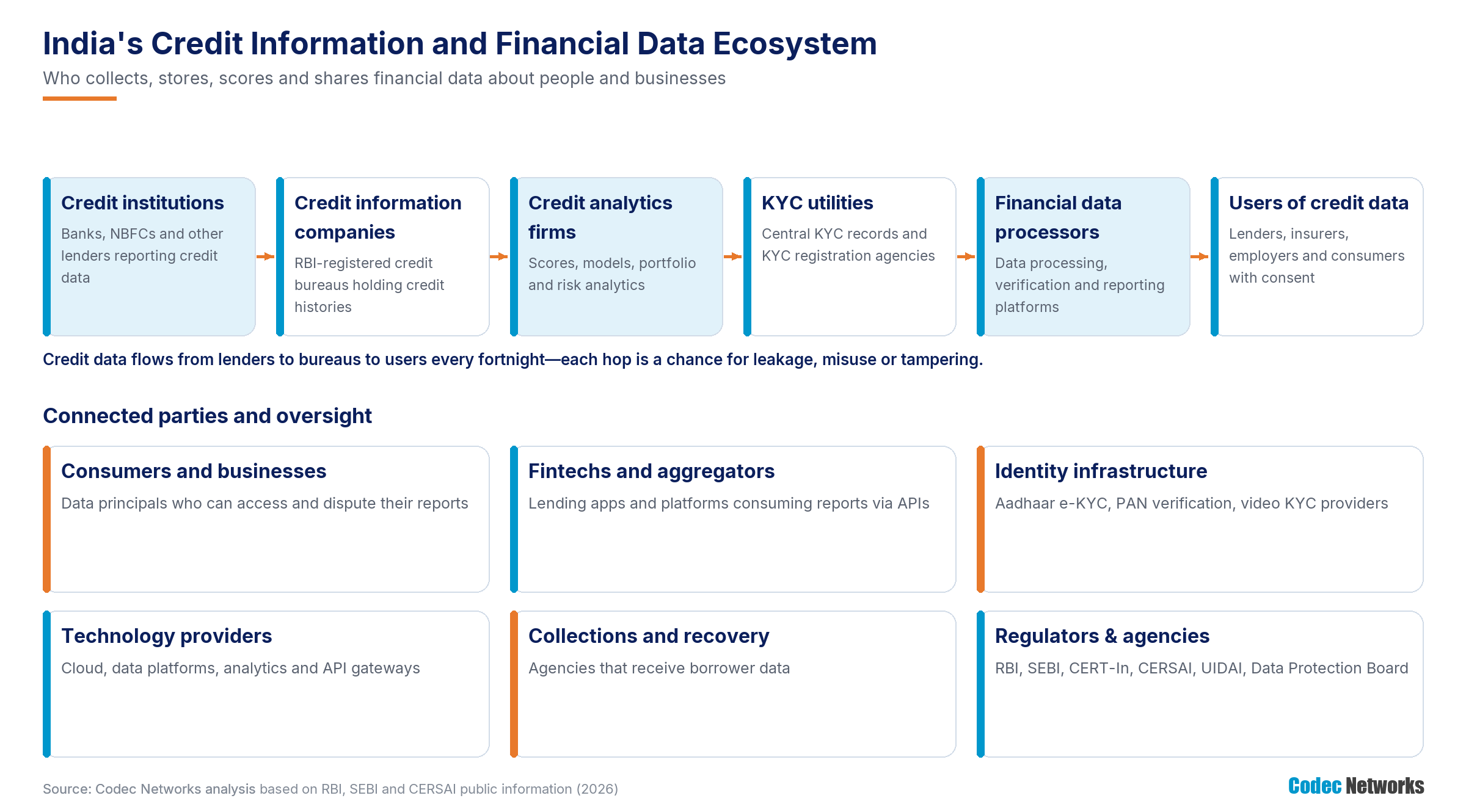
Figure 1: India's credit information and financial data ecosystem.
3. Categories of credit and financial data players
|
Category |
Who they are |
Typical ownership |
Key regulatory basis |
|
Credit information companies (CICs) |
Credit bureaus that collect credit data from lenders and provide reports and scores |
Private companies registered with the RBI |
CICRA 2005; CIC Regulations 2006; RBI Directions |
|
Credit analytics firms |
Score, model and portfolio analytics providers to lenders |
Private analytics and technology companies |
Contracts with CICs and lenders; DPDP; flow-down of RBI outsourcing rules |
|
Central KYC Records Registry |
Central repository of KYC records for regulated entities |
Operated by CERSAI |
PML Act and PML (Maintenance of Records) Rules |
|
KYC registration agencies (KRAs) |
Hold KYC records of securities-market investors |
Entities registered with SEBI |
SEBI KRA Regulations; SEBI CSCRF |
|
Financial data processors |
Verification, data processing, reporting and bureau-integration platforms |
Indian and international technology firms |
Client contracts; DPDP; CERT-In Directions |
|
Identity and e-KYC service providers |
Aadhaar authentication, PAN verification and video KYC services |
Licensed entities and technology vendors |
UIDAI rules; client regulator requirements |
|
Report consumers |
Lenders, insurers and fintechs pulling reports with consent |
Regulated entities and their partners |
CICRA; RBI Directions; DPDP |
4. The regulatory framework at a glance
|
Instrument |
Key requirements |
|
CICRA 2005 and CIC Regulations 2006 |
Registration of CICs with the RBI; rules on collection, accuracy, access and disclosure of credit information Security safeguards and privacy principles for CICs, credit institutions and specified users |
|
RBI CIC and credit reporting Directions (2025) |
Consolidated Directions for CICs on governance and operations Credit institutions report credit information to CICs fortnightly |
|
RBI cyber, technology risk and assurance Directions (31 July 2026) |
A set of Directions for regulated entities, including, as reported, a Direction for CICs Covers cybersecurity, technology risk management, resilience and assurance |
|
SEBI CSCRF and KRA Regulations |
Cybersecurity and cyber resilience framework for SEBI-regulated entities, including KRAs |
|
CERT-In Directions (28 April 2022) |
Cyber incidents reported within six hours; ICT logs kept for a rolling 180 days in India |
|
DPDP Act 2023 and DPDP Rules 2025 |
Consent and purpose limitation, reasonable security safeguards and breach intimation; most obligations from May 2027 |
|
Verify the Directions RBI's July 2026 Directions are summarised from public sources. Confirm the applicable Direction, scope and timelines against the official RBI text. |
5. Government, regulated and private participants
- The RBI registers and regulates CICs under CICRA and supervises the credit institutions that report to them.
- SEBI regulates KYC registration agencies; CERSAI operates the Central KYC Records Registry.
- UIDAI governs Aadhaar authentication and e-KYC used in onboarding.
- Lenders and fintechs both supply and consume credit data, and are often the weakest link in member security.
- Private analytics and technology firms process large volumes of bureau and KYC data under contract.
6. Who buys cybersecurity inside a credit data firm
|
Stakeholder |
What they care about |
What they buy |
|
Board and risk committee |
Regulatory standing, data trust, resilience |
Board advisory, audits, crisis exercises |
|
CISO |
Access control, leakage, incidents |
VAPT, SOC, DLP and insider programmes |
|
CTO and data engineering |
Secure APIs, pipelines and data platforms |
API testing, cloud and data-lake reviews |
|
Chief data officer |
Data quality, integrity and governance |
Integrity assessments, data governance |
|
Compliance and internal audit |
RBI, SEBI and CICRA requirements |
IS audits, gap assessments, evidence |
|
Data protection officer |
Consent, purpose limits, DPDP readiness |
Privacy programme, data inventory |
|
Member and partner management |
Security of lenders and vendors connected to the platform |
Member assurance and vendor assessments |
7. Why each player type needs a different approach
|
Player type |
Highest-consequence risk |
Starting point for assurance |
|
Credit bureau (CIC) |
Bulk exfiltration, member credential abuse, data tampering |
API and member access testing, integrity reviews, SOC |
|
Credit analytics firm |
Insider exports and analytics-environment leakage |
Data access reviews, DLP, sandbox controls |
|
KYC utility / KRA |
Identity data leakage and unauthorised access |
Access reviews, CSCRF assessment, VAPT |
|
Financial data processor |
Cloud misconfiguration and third-party exposure |
Cloud reviews, vendor assurance, leakage testing |
|
Reporting lender |
Tampered submission files, credential theft |
Submission integrity and member security reviews |
|
Report consumer (fintech) |
Consent misuse and API key leakage |
API security, secrets management, consent review |
8. How Codec Networks works with credit data firms
Codec Networks is a CERT-In empanelled information security auditing organisation certified to ISO 9001:2015, ISO/IEC 27001:2022 and ISO/IEC 20000-1:2018. For credit data firms we deliver IS audits and gap assessments, data access control reviews, API security testing, data integrity and leakage assessments, privacy programmes and managed SOC.
Talk to Codec Networks
|
Contact Codec Networks Pvt. Ltd. New Delhi: 507, 5th Floor, New Delhi House, Barakhamba Road, Connaught Place, New Delhi – 110001 Gurugram: 707, 7th Floor, Silverton Tower, Golf Course Extension Road, Sector 50, Gurugram – 122018, Haryana Landline: 011 430 496 96 | 011 437 522 99 Mobile: +91 99716 76124 | +91 88007 88220 | +91 88003 31124 Email: mktg@codecnetworks.com Web: www.codecnetworks.com |
Note: This document is general industry guidance based on public information available as of October 2026. RBI 2026 Direction details are summarised from reported sources. Confirm obligations against the official RBI, SEBI, CERT-In and MeitY instruments before making compliance decisions.