

Resources Categories

INDUSTRY FACT FILE · DEFENCE & STRATEGIC INDUSTRIES
Main Products and Services in Defence and Strategic Industries
What India's defence PSUs, private manufacturers, suppliers, research organisations, start-ups and space and electronics firms deliver, the systems behind each, and where those systems create cyber and compliance exposure.
|
In this document 1. How defence and strategic organisations create value 2. Products and services by organisation type 3. The design layer: engineering data, software and firmware 4. The production layer: plants, suppliers, test and sustainment 5. The systems behind the products and services 6. Trends that change the attack surface 7. Mapping operations to Codec Networks engagements |
1. How defence and strategic organisations create value
|
Revenue stream |
How it works |
Security relevance |
|
Platform and system contracts |
Aircraft, ships, vehicles, missiles, radars and weapons supplied under DAP contracts |
Bid data, designs, programme schedules and contract documents |
|
Sub-systems and components |
Parts, assemblies, electronics and materials supplied to DPSUs and primes |
Drawings received from customers, supplier portals, quality records |
|
Development and technology transfer |
Design and development with DRDO and partners; licensed production |
Source code, technical data packages, test results |
|
Exports |
Equipment, spares and services sold to more than 80 countries |
Export-controlled data, customer communications, end-user documents |
|
Maintenance, repair and spares |
Lifecycle support, overhaul, upgrades and spares for the armed forces |
Field data, remote support, spares authenticity |
|
Space and electronics services |
Satellites, ground systems, launch services and strategic electronics |
Firmware, ground segment networks, mission data |
2. Products and services by organisation type
|
Organisation type |
Main products and services |
Key systems |
|
Defence PSUs |
Aircraft, helicopters, warships, submarines, electronics, missiles and munitions |
PLM and CAD, ERP, MES, test benches, isolated design networks |
|
Ordnance successor companies |
Ammunition, armoured vehicles, weapons, optics, parachutes and troop equipment |
ERP, plant control systems, quality and inventory systems |
|
Private defence primes |
Platforms, systems integration, artillery, vehicles, drones and electronics |
PLM, ERP, MES, partner portals, export and JV systems |
|
MSME suppliers |
Precision machining, castings, forgings, cables, PCBs and sub-assemblies |
Email, file servers, CAM software, CNC machines, small ERP |
|
R&D and strategic organisations |
Design, prototypes, simulation, trials and technology transfer |
Research networks, simulation clusters, test ranges, data stores |
|
Defence start-ups |
Drones, counter-drone, AI, sensors, secure communications and cyber products |
Cloud development, code repositories, build pipelines, firmware |
|
Space and strategic electronics |
Satellites, payloads, ground stations, radar, EW and secure devices |
Embedded firmware, ground segment, component supply chains |
3. The design layer: engineering data, software and firmware
A modern defence product is as much data as metal. A radar, a drone or an armoured vehicle begins as requirements, models and drawings in CAD and product lifecycle management systems, grows through simulation, embedded software and firmware, and is proven through test data and trial reports. That engineering information is the most valuable thing a defence organisation holds: with it, an adversary can understand a system's capabilities and limitations, copy it or plan countermeasures. It is also the information most widely shared, because DPSUs and primes must send drawings and specifications to suppliers, receive technical data packages from DRDO and foreign partners, and exchange test results with the armed forces.
Software has become central to almost every system. Flight controls, fire control, communications, sensors and drones depend on code and firmware that are written by internal teams, start-ups and suppliers, often using open-source components and cloud build services. If source code is stolen, vulnerabilities can be found offline; if a build pipeline is tampered with, altered firmware can reach units in the field. SMLDI 2025 asks licensed companies to classify data and control how classified information is handled, stored and transmitted, but secure development, code signing and software bills of materials are what give programme managers confidence that what was delivered is what was designed.
4. The production layer: plants, suppliers, test and sustainment
The production layer joins IT, operational technology and people. Factories run ERP, manufacturing execution systems, CNC machines, robotic cells, test benches and calibration systems, increasingly connected for planning, quality data and remote vendor support. Ransomware that crosses from IT into the shop floor can stop lines and miss delivery milestones, while an infected laptop at a test bench can carry malware between networks. Rheinmetall's statement that strict separation kept a 2023 ransomware attack away from its military business is the clearest public argument for segmentation in the sector.
Behind every prime stands a long tail of suppliers. A single programme may involve hundreds of MSMEs that receive drawings by email, store them on shared drives and use small IT teams or none at all. Thales's statement that data published in 2022 came partly from a partner's account on a collaboration portal shows that the weakest account in the ecosystem can expose a prime. Sustainment adds field service laptops, remote support and spares supply, where counterfeit or tampered components are a real risk, and export customers add their own security and audit expectations. Supplier assurance, controlled data exchange and monitoring of partner access are therefore core controls, not paperwork.
|
Highest-risk moments Bid submission and contract negotiation, transfer of technical data packages to production partners, onboarding of new suppliers and start-ups, trials and test campaigns, factory automation and ERP or MES upgrades, joint ventures and export deals with foreign partners, migration of design tools to new systems or cloud, periods of regional tension that bring hacktivist and espionage surges, and staff exits from sensitive programmes are where defence industry incidents typically begin or escalate. |
5. The systems behind the products and services
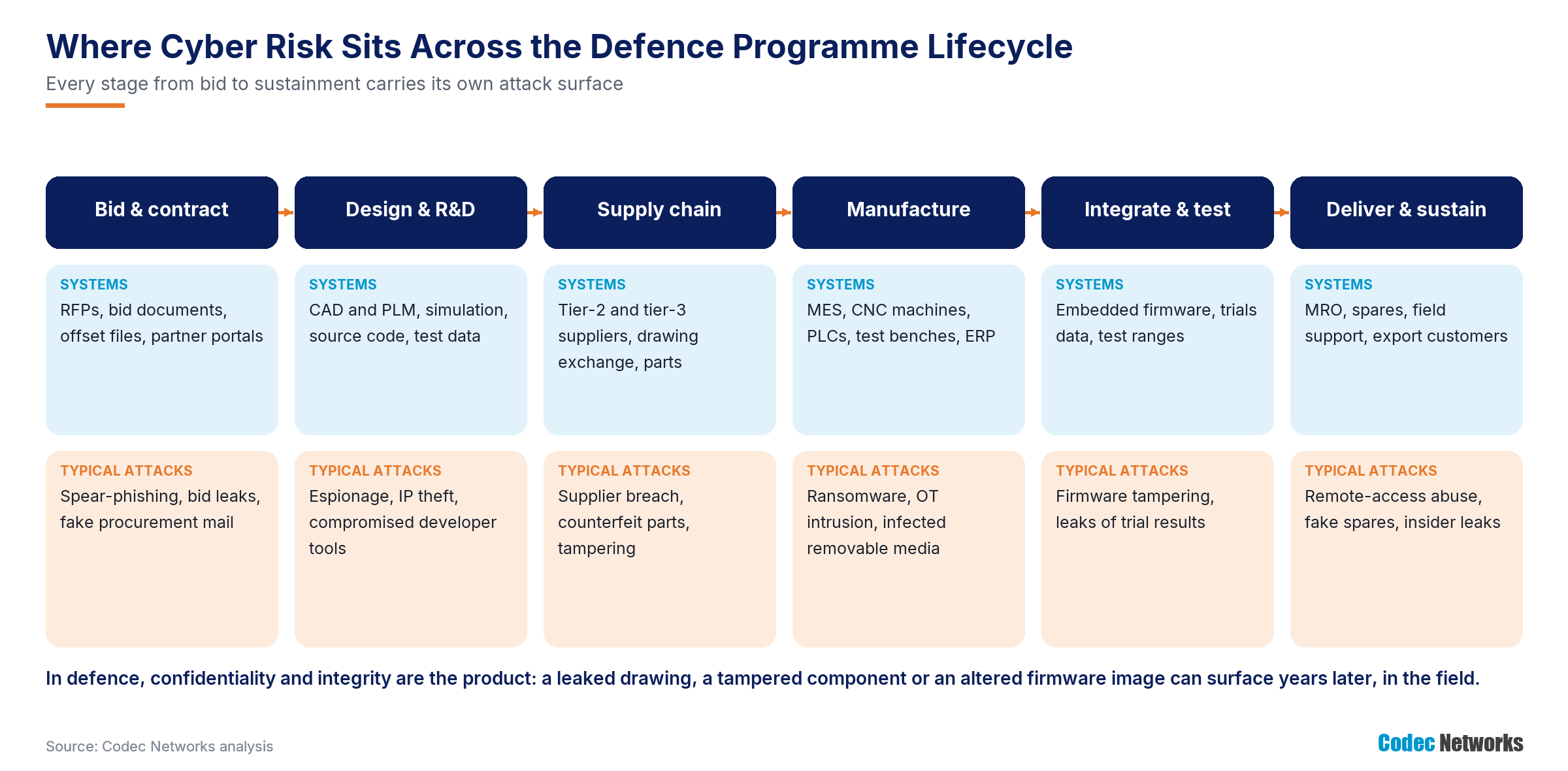
Figure 2: Where cyber risk sits across the defence programme lifecycle.
|
Product / service |
Systems that deliver it |
Key cyber and compliance touchpoints |
|
Bid and contract |
RFP responses, bid documents, offset and partner files |
Bid confidentiality, phishing defence, data classification |
|
Design and R&D |
CAD, PLM, simulation clusters, code repositories |
Isolated networks, access control, insider monitoring, secure SDLC |
|
Supply chain |
Supplier email, portals, drawing exchange, quality records |
Supplier assessments, secure exchange, contract clauses |
|
Manufacture |
ERP, MES, CNC machines, PLCs, test benches |
IT–OT segmentation, remote-access control, backups, SOC |
|
Integrate and test |
Embedded firmware, trial instrumentation, test data |
Code signing, verified builds, trial data protection |
|
Deliver and sustain |
MRO systems, field laptops, spares, export documentation |
Counterfeit controls, remote support security, export data handling |
6. Trends that change the attack surface
|
Trend |
What is changing |
Security implication |
|
Indigenisation at scale |
More design and production moves to Indian industry and MSMEs |
Controlled data spreads to many more organisations |
|
Private sector growth |
Private firms produce about a quarter of output and nearly half of exports |
New entrants need security programmes quickly |
|
Software-defined systems |
Drones, sensors and platforms depend on code and firmware |
Secure development and firmware integrity become critical |
|
Smart factories |
MES, robotics and connected test benches |
Ransomware and OT intrusion can stop lines |
|
Global supply roles |
Indian firms supply foreign primes and export customers |
DFARS, CMMC and partner audits apply |
|
Security as a licence condition |
SMLDI 2025 links cyber controls to licensed production |
Gap assessments, audits and monitoring needed |
7. Mapping operations to Codec Networks engagements
|
If the organisation operates… |
Recommended starting engagement |
|
Design networks, PLM or classified engineering data |
Restricted environment assessment under clearance procedures, access and data-transfer control review |
|
Software, firmware or drone and sensor products |
Secure SDLC review, source code and firmware assessment, build pipeline and code-signing review |
|
Factories, test benches or OT networks |
OT assessment, IT–OT segmentation review, remote-access review, backup and recovery testing |
|
A supplier base that receives drawings and specifications |
Tiered supplier security assessments, secure exchange design and contract clauses |
|
Work for US or other foreign primes |
NIST SP 800-171 readiness and data segregation review |
|
An industrial licence for defence items |
SMLDI 2025 cyber gap assessment, policies, CISO support and log readiness for MoD integration |
Talk to Codec Networks
|
Contact Codec Networks Pvt. Ltd. New Delhi: 507, 5th Floor, New Delhi House, Barakhamba Road, Connaught Place, New Delhi – 110001 Gurugram: 707, 7th Floor, Silverton Tower, Golf Course Extension Road, Sector 50, Gurugram – 122018, Haryana Landline: 011 430 496 96 | 011 437 522 99 Mobile: +91 99716 76124 | +91 88007 88220 | +91 88003 31124 Email: mktg@codecnetworks.com Web: www.codecnetworks.com |
Note: Descriptions are general and based on public information available as of October 2026. Systems and exposures differ by organisation, programme and licence category.