

Resources Categories

INDUSTRY FACT FILE · FINTECH
Market Landscape and the Drivers of Cybersecurity Demand in Fintech
The business, technology, regulatory, legal and statutory forces that create cybersecurity, audit and assurance work for fintech companies.
|
In this document 1. Market landscape 2. Business drivers 3. Technology drivers 4. Regulatory drivers 5. Legal and statutory drivers 6. How the drivers differ by fintech model 7. What this means for buyers and for Codec Networks |
1. Market landscape
Indian fintech has matured from a startup wave into an ecosystem of scale-ups, listed companies, licensed data intermediaries and technology vendors serving regulated finance. Regulation has shifted from 'regulate the activity' to 'regulate the regulated partner and the data'—which places fintech security squarely in partner due diligence.
|
500 mn+ AA consents fulfilled (Sahamati, Sept 2026) |
1,100+ Regulated entities live on the AA ecosystem |
2 RBI-recognised SROs: FACE (fintech) and Sahamati (AAs) |
6 hours To report specified incidents to CERT-In |
|
Market segment |
Landscape and buying behaviour |
Cybersecurity opportunity |
|
Scale-ups and listed fintechs |
Multiple partners and products; Board, investor and public scrutiny |
Continuous testing, red teaming, SOC, Board reporting |
|
Growth-stage fintechs |
Rapid releases, lean security teams, many partner questionnaires |
Release-based testing, DevSecOps, managed SOC, evidence packs |
|
Seed and early-stage startups |
Need to pass first bank or NBFC partner diligence |
Pre-launch VAPT, cloud quick review, ISO 27001 / SOC 2 readiness |
|
Licensed NBFC-AAs and NBFC-P2Ps |
Direct RBI obligations including 2026 cyber Directions |
Applicability assessments, IS audits, consent and API testing |
|
Fintech SaaS and API vendors |
Sell to banks and NBFCs that must audit them |
Secure SDLC, SBOM, tenant isolation, client assurance packs |
2. Business drivers
|
Business driver |
Buying trigger |
Relevant services |
|
Partner onboarding |
A bank or NBFC sends a security questionnaire or audit request |
Partner-ready evidence pack, VAPT, ISO 27001 / SOC 2 |
|
Fund-raising and M&A |
Investors run technical and cyber due diligence |
Cyber maturity assessment, remediation roadmap |
|
Enterprise sales |
Corporate clients require assurance before integrating |
SOC 2 readiness, penetration testing, policies |
|
Fraud losses |
Synthetic identities, ATO and mule rings |
Fraud simulations, analytics, investigations |
|
Brand and app-store trust |
Incidents and fake apps damage ratings and growth |
Brand monitoring, incident readiness |
|
Release velocity |
Security must not slow weekly or daily releases |
DevSecOps integration, automated testing |
3. Technology drivers
|
Technology driver |
Exposure created |
Codec Networks opportunity |
|
API-first architecture |
Broken authorisation, data oversharing, insecure webhooks |
API security testing and gateway review |
|
Cloud-native platforms |
Misconfiguration, leaked keys, over-privileged roles |
Cloud posture assessment, secrets management review |
|
Open-source and SDKs |
Vulnerable or malicious dependencies |
Software composition analysis, SBOM, SDK review |
|
Digital public infrastructure |
Consent abuse, KYC data handling, DigiLocker and CKYCR integration risk |
Consent-flow and integration testing |
|
AI and LLMs |
Prompt injection, data leakage, model manipulation |
AI/LLM security testing and governance |
|
CI/CD pipelines |
Pipeline compromise and insecure deployments |
Pipeline security review and hardening |
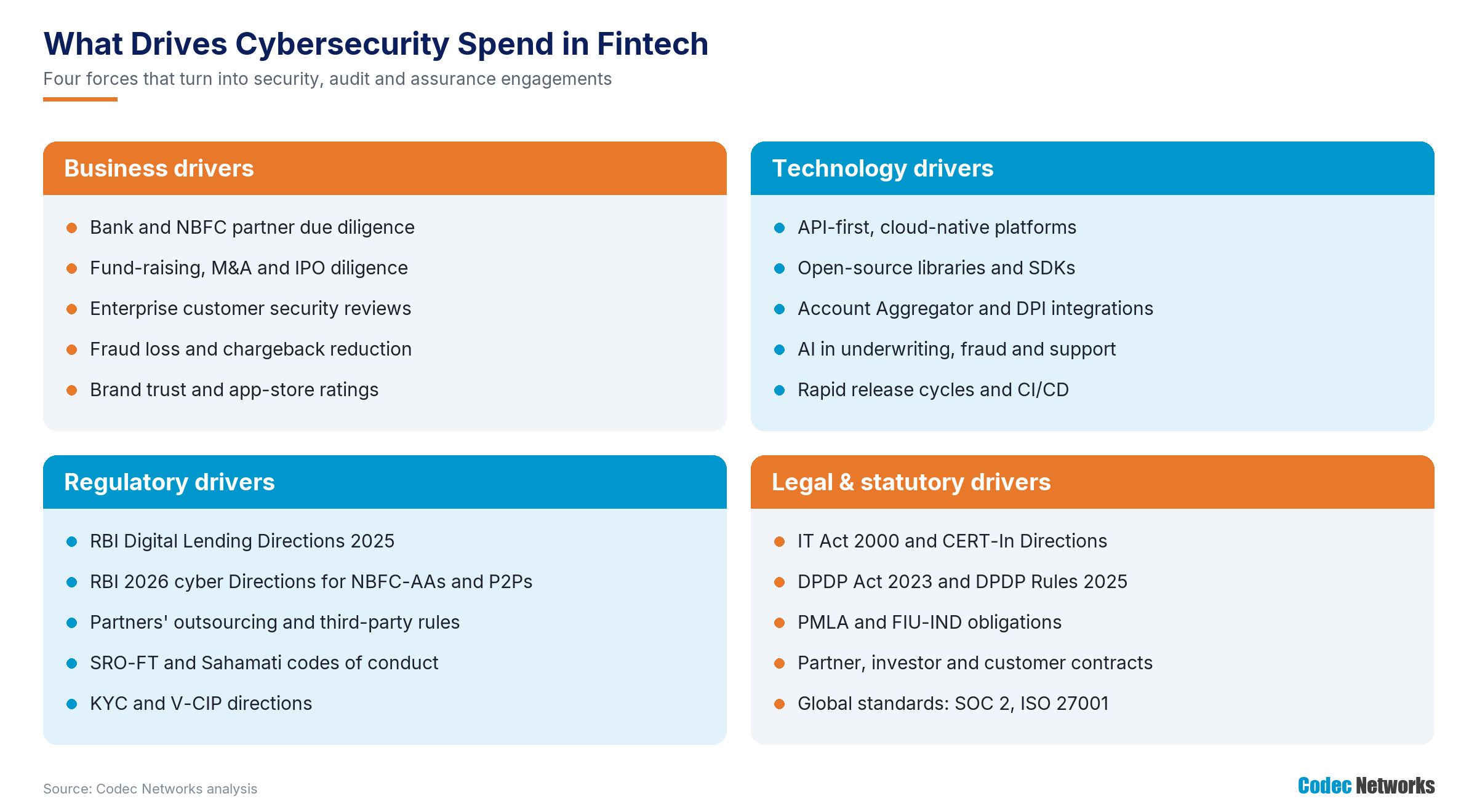
Figure 3: The four groups of drivers behind cybersecurity spending in fintech.
4. Regulatory drivers
Most fintech cybersecurity obligations arrive through one of three routes: direct licensing, the regulated partner's obligations, or cross-sector law.
|
Instrument |
Applies to |
Key cybersecurity relevance |
|
RBI (Digital Lending) Directions, 2025 (8 May 2025) |
Banks and NBFCs, and through them their LSPs and DLAs |
Lender accountability for LSPs; DLA reporting on CIMS; restrictions on borrower-data collection, storage and sharing; multi-lender transparency |
|
RBI NBFC – Cybersecurity, Technology: Risk, Resilience and Assurance Framework Directions, 2026 (31 July 2026) |
All NBFCs, including NBFC-AAs and NBFC-P2Ps |
Board-approved policies; requirements by layer and size (Base Layer NBFCs below or above ₹500 crore); cyber incidents to RBI on DAKSH within six hours |
|
RBI cybersecurity Directions for banks (31 July 2026) |
Commercial banks, SFBs, payments banks, UCBs—fintechs' partners |
Third-party IT and cyber arrangements need audit and RBI access rights; requirements flow down to fintech partners |
|
RBI Managing Risks in Outsourcing Directions, 2025 |
Regulated entities outsourcing to fintechs |
Due diligence, contracts, monitoring, audit and access rights |
|
RBI Master Direction for NBFC-Account Aggregators (2016, as updated) |
NBFC-AAs |
Consent framework, data handling and technology standards (ReBIT specifications) |
|
RBI Master Directions for NBFC-P2P (2017, as amended) |
NBFC-P2P platforms |
Platform operation, fund-flow and data requirements |
|
RBI framework for SROs in fintech (2024) |
Fintech members of recognised SROs |
Codes of conduct and standards set by FACE; Sahamati for the AA ecosystem |
|
RBI KYC directions (including V-CIP) |
Regulated entities and their KYC vendors |
Secure customer identification and record keeping |
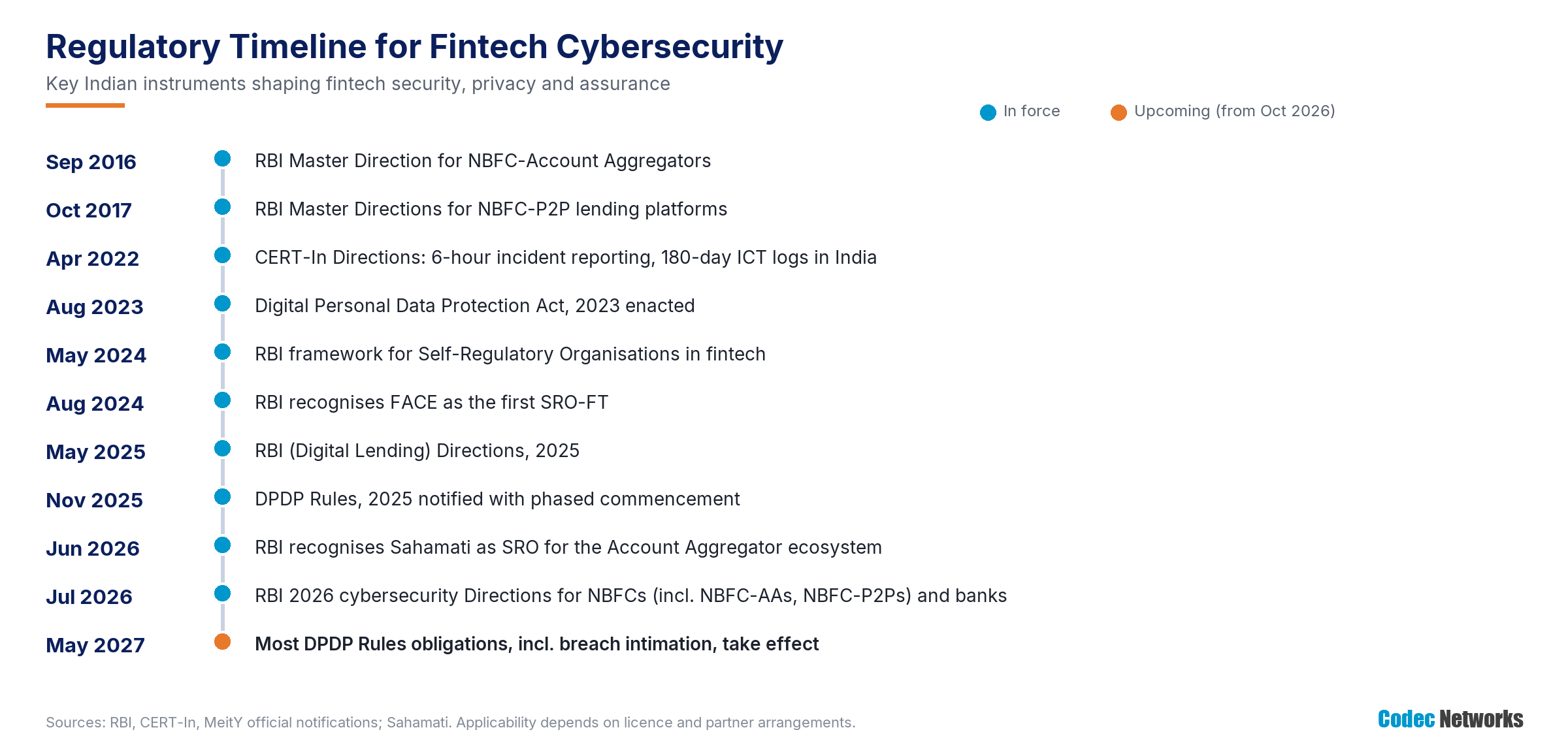
Figure 4: Regulatory timeline for fintech cybersecurity, as of October 2026.
5. Legal and statutory drivers
|
Law or obligation |
Relevance to fintechs |
Demand created |
|
IT Act, 2000 and CERT-In Directions (28 April 2022) |
6-hour reporting of specified incidents; 180-day ICT log retention in India; clock synchronisation; point of contact |
Logging assurance, incident readiness, SOC |
|
Digital Personal Data Protection Act, 2023 and Rules, 2025 |
Consent, notices, purpose limitation, safeguards and breach intimation; most obligations from May 2027; consent-manager provisions earlier |
Privacy programmes, DPIA, consent review, breach workflows |
|
Prevention of Money Laundering Act, 2002 |
Reporting-entity obligations for licensed entities and support to partners |
Transaction monitoring and KYC system reviews |
|
Contracts |
Partner agreements, investor covenants, enterprise customer terms |
Audit rights, security questionnaires, SOC 2 / ISO 27001 evidence |
|
Consent managers under DPDP The DPDP Rules provide for registered consent managers, with those provisions commencing about a year after notification (November 2026). Fintechs building consent experiences should track how these interact with the Account Aggregator framework. |
6. How the drivers differ by fintech model
|
Model |
Dominant business drivers |
Dominant technology drivers |
Principal regulatory drivers |
|
Lending technology / LSP |
Lender partnerships, fraud, growth |
APIs, AI underwriting, apps |
Digital Lending Directions via lenders; DPDP; CERT-In |
|
Account Aggregator |
Ecosystem trust, scale |
Consent platforms, cryptography |
NBFC-AA directions; 2026 NBFC cyber Directions; Sahamati |
|
Embedded finance |
Conversion, partner trust |
SDKs, apps, partner APIs |
Partners' rules; DPDP; CERT-In |
|
API / BaaS provider |
Enterprise and bank sales |
Multi-tenant cloud |
Clients' outsourcing rules; SOC 2 / ISO; DPDP |
|
P2P lending |
Investor and borrower trust |
Marketplace platform, escrow |
NBFC-P2P directions; 2026 NBFC cyber Directions |
|
Fintech SaaS |
Bank and NBFC client retention |
CI/CD, multi-tenant cloud |
Clients' cybersecurity Directions and audits |
7. What this means for buyers and for Codec Networks
|
Customer buying need |
Recommended offering |
Natural recurring engagement |
|
“A bank partner sent us a security questionnaire.” |
Partner-ready assurance pack |
Annual refresh and per-partner support |
|
“We release every week.” |
DevSecOps and release-based testing |
Continuous testing retainer |
|
“Our cloud is growing faster than our controls.” |
Cloud posture assessment |
Continuous cloud assurance |
|
“We are an AA or P2P platform.” |
Applicability assessment against the 2026 NBFC Directions |
Annual IS audit and reassessment |
|
“Fraudsters are beating our onboarding.” |
Fraud and deepfake simulations |
Quarterly simulation campaigns |
|
“We must be ready for DPDP.” |
Privacy and consent programme |
Periodic reviews and breach drills |
Talk to Codec Networks
|
Contact Codec Networks Pvt. Ltd. New Delhi: 507, 5th Floor, New Delhi House, Barakhamba Road, Connaught Place, New Delhi – 110001 Gurugram: 707, 7th Floor, Silverton Tower, Golf Course Extension Road, Sector 50, Gurugram – 122018, Haryana Landline: 011 430 496 96 | 011 437 522 99 Mobile: +91 99716 76124 | +91 88007 88220 | +91 88003 31124 Email: mktg@codecnetworks.com Web: www.codecnetworks.com |
Note: This document summarises regulatory and legal instruments as published up to October 2026. It is not legal advice. Obligations depend on each company's licence, partner arrangements and activities; confirm against current official instruments.