

Resources Categories

INDUSTRY FACT FILE · HOSPITALITY, TRAVEL & TOURISM
Market Landscape and the Drivers of Cybersecurity Demand in Hospitality and Travel
The business, technology, payment, data, tax, immigration and legal forces that create cybersecurity, audit and assurance work for hotels, travel platforms, tour operators, restaurants and venues.
|
In this document 1. Market landscape 2. Business drivers 3. Technology drivers 4. Regulatory drivers: CERT-In, DPDP, RBI and PCI DSS, immigration reporting, GST and SEBI 5. Legal and statutory drivers 6. How the drivers differ by business type 7. What this means for buyers and for Codec Networks |
1. Market landscape
India's hospitality and travel market is large and recovering unevenly: foreign tourist arrivals reached 9.95 million in 2024, still below 2019, while domestic travel set records with close to 295 crore tourist visits and tourism foreign exchange earnings of about ₹2.93 lakh crore. Hotel chains are expanding through management contracts and franchises, OTAs dominate air and a growing share of hotel distribution, QSR chains and cloud kitchens scale through apps and aggregators, and convention centres and venues compete for international events. Several of the largest hotel, travel and restaurant groups are listed.
Cybersecurity demand follows four pressures. Trust: guests hand over passports and cards, and breaches at Marriott, Sabre, MGM and Otelier show how far the damage spreads. Continuity: ransomware sends hotels back to paper keys and bills at peak season. Compliance: DPDP arrives in 2027, RBI tokenisation and PCI DSS v4.0.1 govern payments, Form C continues under the 2025 immigration law, CERT-In expects independent audits and listed groups disclose incidents. Contracts: brands, owners, OTAs, card schemes and corporate clients require security evidence before and during relationships.
|
9.95 m Foreign tourist arrivals in 2024 |
~295 crore Domestic tourist visits in 2024 |
6 hours Incident reporting to CERT-In |
May 2027 Most DPDP obligations take effect |
|
Market segment |
Landscape and buying behaviour |
Cybersecurity opportunity |
|
Hotel chains and management companies |
Multi-property brands, shared platforms, owner relationships, listed Boards |
DPDP programmes, vendor assurance, SOC across properties, brand monitoring |
|
Hotel owners and franchisees |
Single or few properties, brand standards, thin IT |
Property assessments, Wi-Fi testing, backups, awareness |
|
OTAs and booking platforms |
High-volume apps and APIs, payments at scale, investor scrutiny |
Application and API testing, bot defence, PCI DSS, SOC |
|
Tour operators and DMCs |
Partner-heavy, deposit flows, traveller documents |
Payment verification, partner programme, DPDP |
|
Restaurant and QSR chains |
Many outlets, PoS and delivery integrations, franchising |
PoS and app testing, PCI DSS scoping, SOC |
|
Event venues and attractions |
Conference networks, ticketing, access control |
Wireless testing, segmentation, event monitoring |
2. Business drivers
|
Business driver |
Buying trigger |
Relevant services |
|
Guest trust and brand reputation |
A breach of passports or cards is a brand event across every property |
DPDP programme, data protection, brand monitoring |
|
Peak-season continuity |
Outages at check-in, PoS or booking engines cost immediate revenue |
Resilience, segmentation, playbooks |
|
Brand and owner contracts |
Brand standards and owner audits require evidence |
Standards audits, evidence packs |
|
Payment integrity |
Chargebacks, skimming and refund fraud erode margins |
PCI DSS readiness, fraud controls |
|
Corporate and MICE clients |
Corporate clients assess venue security before events |
Wi-Fi testing, event security |
|
Board accountability and disclosure |
Listed groups disclose incidents; Boards own risk |
Board advisory, incident records |
|
Insurance |
Cyber insurers scrutinise controls and vendor exposure |
Control validation, ransomware readiness |
3. Technology drivers
|
Technology driver |
Exposure created |
Codec Networks opportunity |
|
Booking engines, apps and OTA APIs |
Account takeover, scraping, payment abuse |
Application and API testing, bot defence |
|
Cloud PMS and channel managers |
Multi-property data concentrated in vendors |
Vendor assurance, access monitoring |
|
Payment gateways and PoS |
Card data exposure and skimming |
PCI DSS, payment flow testing |
|
Guest and conference Wi-Fi |
Shared networks reaching guests and property systems |
Wireless testing, segmentation |
|
Loyalty platforms and partner redemptions |
Credential stuffing and points fraud |
Fraud analytics, MFA, API testing |
|
Digital keys, IoT and building systems |
Door locks, IPTV and BMS reachable from guest networks |
IoT and building system reviews |
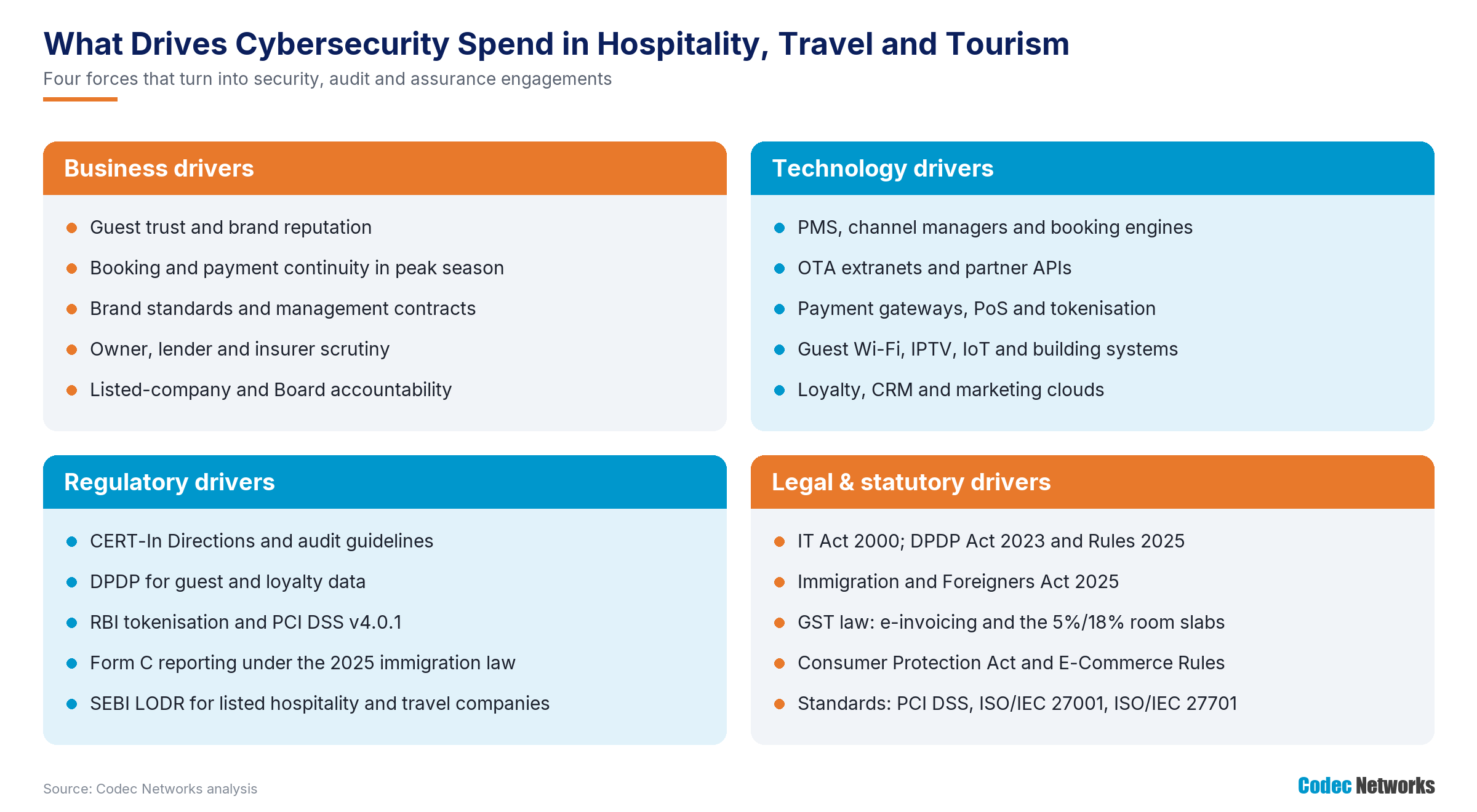
Figure 3: The four groups of drivers behind cybersecurity spending in hospitality and travel.
4. Regulatory drivers: CERT-In, DPDP, RBI and PCI DSS, immigration reporting, GST and SEBI
|
Instrument |
Key requirements |
|
CERT-In Directions (2022) and audit guidelines (2025) |
Six-hour incident reporting; 180-day ICT logs; risk-based independent audits covering IT, cloud and applications |
|
DPDP Act 2023 and Rules 2025 |
Notices, safeguards, retention limits and breach intimation for guest, loyalty and employee data; most obligations from May 2027 |
|
RBI card-on-file tokenisation; PCI DSS v4.0.1 |
No merchant storage of card data since October 2022; payment environment controls and validation |
|
Immigration and Foreigners Act 2025; Form C |
Reporting of foreign guests to the Bureau of Immigration within 24 hours; secure handling of identity data |
|
GST law: e-invoicing and the September 2025 rate change |
E-invoicing above the turnover threshold; 5 per cent and 18 per cent room slabs from 22 September 2025—finance system integrity |
|
SEBI LODR; Consumer Protection (E-Commerce) Rules 2020 |
Quarterly cyber incident disclosure for listed companies; platform duties for online travel sellers |
|
Confirm applicability Obligations depend on payment role, whether foreign guests are accommodated, turnover, listing status and brand, owner and OTA contracts. Confirm against the official instruments and your contracts. |
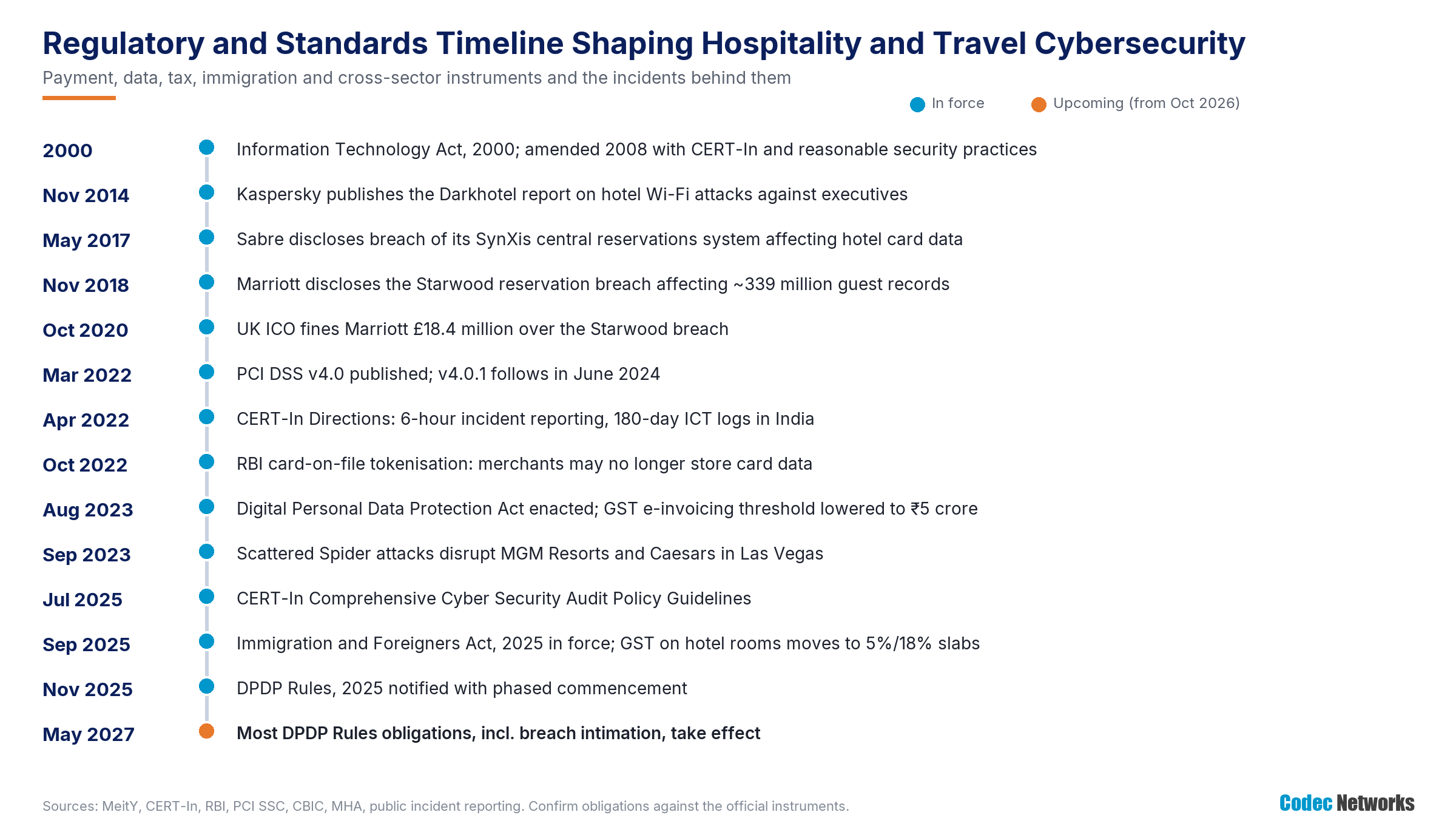
Figure 4: Regulatory and standards timeline shaping hospitality and travel cybersecurity, as of October 2026.
5. Legal and statutory drivers
|
Law or obligation |
Relevance |
Demand created |
|
IT Act, 2000 and CERT-In Directions |
Reasonable security practices, incident reporting and logging |
SOC, logging, audits and incident response |
|
DPDP Act, 2023 and Rules, 2025 |
Guest, loyalty, employee and CCTV data |
Privacy programmes, data mapping, breach readiness |
|
Payment and Settlement Systems Act, 2007; RBI directions |
Card tokenisation and payment aggregator rules |
PCI DSS readiness, payment flow testing |
|
Immigration and Foreigners Act, 2025 |
Form C reporting of foreign guests |
Identity data handling and secure reporting |
|
GST law and e-invoicing notifications |
Invoice integrity and reporting |
Finance system security |
|
Consumer Protection Act, 2019 and E-Commerce Rules, 2020 |
Duties of online travel sellers and marketplaces |
Platform security, grievance and data controls |
|
Companies Act, 2013 and SEBI LODR; contracts |
Board risk responsibility; disclosure; brand and OTA clauses |
Board reporting, incident records, evidence packs |
6. How the drivers differ by business type
|
Business type |
Dominant business drivers |
Dominant technology drivers |
Principal regulatory drivers |
|
Hotel chains |
Brand trust, owner relations, disclosure |
PMS, central reservations, loyalty, vendors |
DPDP, PCI DSS, Form C, SEBI LODR, CERT-In |
|
Hotel owners |
Occupancy, brand standards, costs |
Property IT, Wi-Fi, PoS, keys |
Brand standards, PCI DSS, DPDP, CERT-In |
|
OTAs and platforms |
Growth, conversion, trust |
Apps, APIs, payments, cloud |
RBI tokenisation, E-Commerce Rules, DPDP, CERT-In |
|
Tour operators |
Partner trust, deposits, documents |
Booking systems, partner portals |
DPDP, CERT-In, Ministry of Tourism recognition |
|
Restaurants and venues |
Throughput, events, delivery |
PoS, apps, Wi-Fi, ticketing |
PCI DSS, FSSAI, DPDP, CERT-In |
7. What this means for buyers and for Codec Networks
|
Customer buying need |
Recommended offering |
Natural recurring engagement |
|
“Where is every passport and card we have collected?” |
DPDP data mapping and programme |
DPO support and annual reviews |
|
“Could a phished extranet login reach our guests?” |
OTA and distribution account review, phishing simulation |
Quarterly simulations and monitoring |
|
“Will our booking engine and app survive peak season?” |
Application, API and bot-resistance testing |
Pre-release and quarterly testing |
|
“Are we PCI DSS compliant after tokenisation?” |
PCI DSS v4.0.1 scoping and readiness |
Annual validation support |
|
“Is our conference Wi-Fi ready for a corporate client?” |
Wireless penetration test and segmentation review |
Pre-event testing |
|
“Someone is running a fake booking site in our name.” |
Brand monitoring and takedown |
Continuous monitoring |
|
“We need 24x7 monitoring across properties.” |
Managed SOC |
Continuous monitoring |
Talk to Codec Networks
|
Contact Codec Networks Pvt. Ltd. New Delhi: 507, 5th Floor, New Delhi House, Barakhamba Road, Connaught Place, New Delhi – 110001 Gurugram: 707, 7th Floor, Silverton Tower, Golf Course Extension Road, Sector 50, Gurugram – 122018, Haryana Landline: 011 430 496 96 | 011 437 522 99 Mobile: +91 99716 76124 | +91 88007 88220 | +91 88003 31124 Email: mktg@codecnetworks.com Web: www.codecnetworks.com |
Note: This document is general industry guidance based on public information available as of October 2026. It is not legal, tax or regulatory advice. Obligations differ by business model, payment role, listing status, brand and owner contracts and the data held; confirm them against the official CERT-In, MeitY, RBI, PCI SSC, MHA, CBIC, Ministry of Tourism and SEBI instruments and your contracts.