

Resources Categories
INDUSTRY FACT FILE · LOGISTICS, WAREHOUSING & SUPPLY CHAINS
Industry Overview: Logistics, Warehousing and Supply Chains in India
Who moves and stores India's goods—3PLs, couriers, forwarders, fleets, warehouses and platforms—the obligations that apply, who buys cybersecurity and why each type of operator needs a distinct approach.
|
In this document 1. Why logistics cybersecurity matters now 2. The ecosystem at a glance 3. Categories of logistics, warehousing and supply chain companies 4. The regulatory, platform and customer framework at a glance 5. Government, platform and private participants 6. Who buys cybersecurity inside a logistics company 7. Why each type of operator needs a different approach 8. How Codec Networks works with logistics companies |
|
Sector scope Sector: 3PL and 4PL providers, express and courier companies, freight forwarders and customs brokers, trucking and fleet operators, warehouse and fulfilment operators, cold storage and cold chain, and supply-chain platforms. Primary service proposition: fleet and IoT security, partner API testing, warehouse OT assurance, SOC and continuity planning. Ports and shipping, railways, aviation and retail have separate fact files. |
1. Why logistics cybersecurity matters now
Logistics is the circulatory system of the Indian economy. The DPIIT–NCAER assessment released in 2025 puts India's logistics cost at 7.97% of GDP, or about ₹24 lakh crore, in 2023-24, and national policy—PM Gati Shakti (October 2021) and the National Logistics Policy with its Unified Logistics Interface Platform (September 2022)—is explicitly aimed at bringing that cost down through integration and digitisation. The scale is visible in the platforms: a record 14.06 crore e-way bills were generated in March 2026, roughly 98% of national highway tolls are now collected electronically through FASTag, and India's largest integrated logistics company handled 107 million shipments in October 2025 with a single-day peak of 7.2 million. Behind those numbers sit global and Indian 3PLs, express and courier networks, freight forwarders and customs brokers, hundreds of thousands of trucking operators, warehouse developers with close to 500 million square feet of stock in the top eight markets, cold-chain specialists and a fast-growing layer of supply-chain platforms.
|
7.97% Of GDP: India's logistics cost in FY24 (DPIIT–NCAER) |
14.06 crore E-way bills generated in March 2026, a record |
US$250–300 m Maersk's loss from NotPetya (2017) |
6 hours To report cyber incidents to CERT-In |
Every one of those businesses now runs on connected systems. Transport management systems plan and track loads; warehouse management systems, sorters, automated storage and retrieval systems and scanners run the hubs; telematics, FASTag and driver apps sit on every vehicle; EDI and APIs connect shippers, carriers, marketplaces and government platforms such as the e-way bill system, ICEGATE and ULIP; and customer portals and tracking apps expose shipment data to millions of consignees. Supply-chain SaaS providers host much of this for many customers at once. Each integration is a path an attacker can use, and the sector's operations cannot pause while it is closed: cargo accrues demurrage at ports, perishable goods spoil and peak-season cut-offs are missed.
The consequences are well documented. In June 2017 NotPetya destroyed Maersk's network; the company rebuilt 4,000 servers and 45,000 PCs in ten days and put the cost at US$250–300 million. In February 2022 Expeditors shut down most of its global systems after a cyberattack and later reported about US$40 million in demurrage charges and US$20 million in recovery costs. In December 2021 Hellmann Worldwide Logistics was hit by ransomware, had data published by the attackers and warned customers to expect fraudulent payment-change emails. In November 2024 a ransomware attack on supply-chain software provider Blue Yonder disrupted Starbucks' scheduling across about 11,000 stores and Morrisons' warehouse systems. In June 2025 KNP Logistics, a 158-year-old UK haulier, went into administration after a guessed password reportedly let ransomware in, with about 730 jobs lost.
In India the obligations are cross-sector but real. CERT-In's Directions require cyber incidents to be reported within six hours and ICT logs to be retained for 180 days; its 2025 audit policy guidelines expect risk-based independent audits that cover OT and cloud as well as IT; transport is a critical sector under NCIIPC, so notified systems carry protected-system duties; listed logistics companies disclose cyber incidents quarterly under SEBI's LODR Regulations; MoRTH notifications govern vehicle location tracking devices under AIS 140; GST and Customs systems depend on the integrity of e-way bill and ICEGATE credentials; and the DPDP Act and Rules will govern consignee, driver, rider and employee data, with most obligations taking effect in May 2027. On top of that, shippers—manufacturers, retailers, marketplaces and EU customers under NIS2—now audit their logistics partners' cybersecurity before awarding contracts.
|
Key takeaway In logistics, cybersecurity is operational continuity, payment integrity and customer trust in one. The platforms, the partners connected to them, the fleets and warehouses they control and the consignee data they hold must be protected together. |
2. The ecosystem at a glance
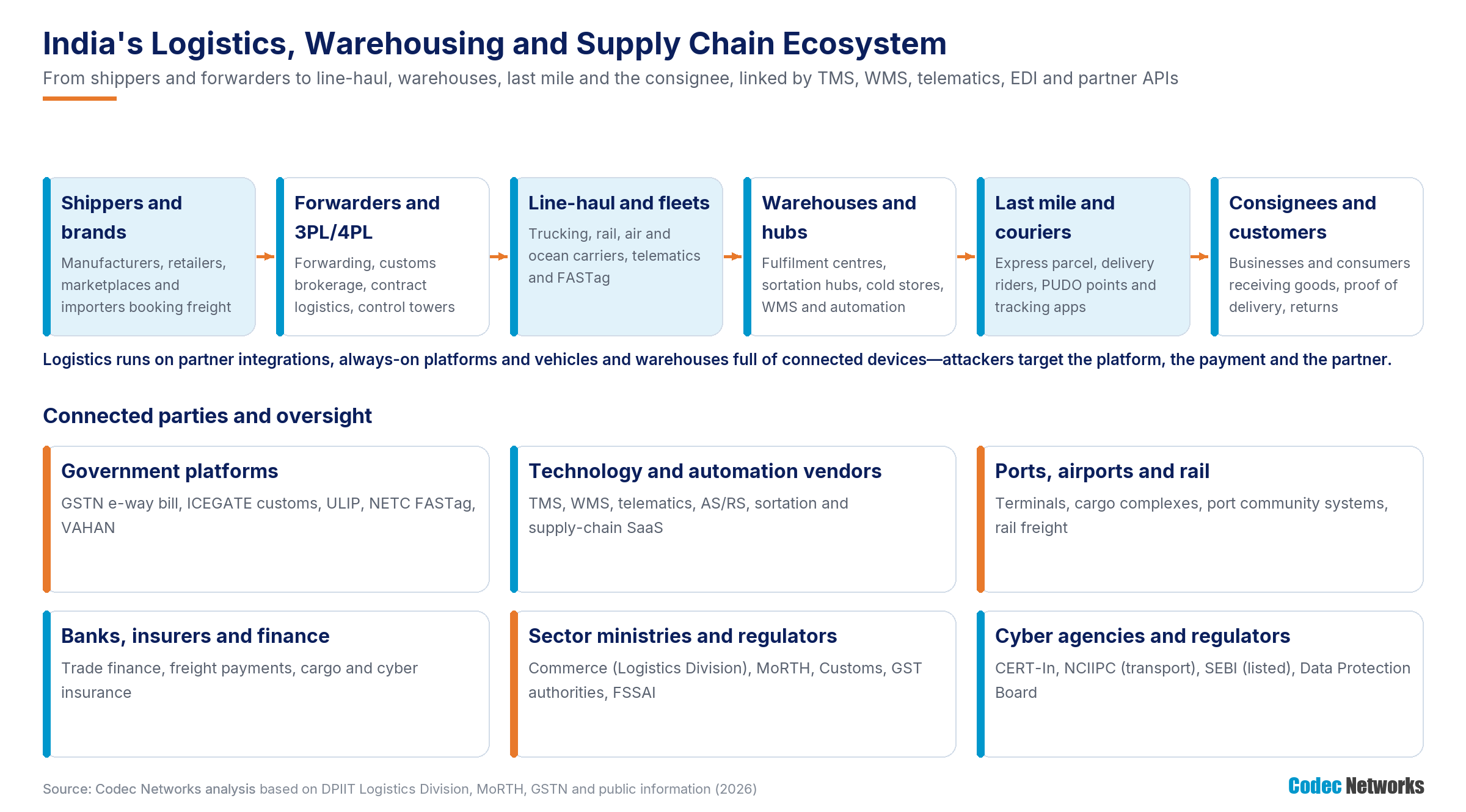
Figure 1: India's logistics, warehousing and supply chain ecosystem.
3. Categories of logistics, warehousing and supply chain companies
|
Category |
Who they are |
Typical ownership |
Key regulatory basis |
|
3PL and 4PL providers |
Contract logistics, integrated transport and warehousing, control towers for shippers |
Global and Indian groups, listed and private |
CERT-In; SEBI LODR (listed); shipper contracts; DPDP |
|
Express and courier companies |
Parcel networks, sortation hubs, last-mile delivery for e-commerce and B2B |
Listed and venture-backed Indian companies, global integrators |
CERT-In; SEBI LODR (listed); DPDP for consignee data; marketplace contracts |
|
Freight forwarders and customs brokers |
Ocean and air freight, customs filing, trade documentation |
Global forwarders, Indian mid-sized firms |
Customs Act and ICEGATE access rules; CERT-In; shipper contracts; DPDP |
|
Trucking and fleet operators |
Full-truckload and part-load line-haul, specialised and hazardous cargo |
Fragmented: large fleets to single-truck owners |
Motor Vehicles Act and MoRTH AIS 140 notifications; GST e-way bill; CERT-In |
|
Warehouse and fulfilment operators |
Grade A parks, fulfilment centres, bonded warehouses, automation |
Developers, REIT-backed platforms, 3PLs |
CERT-In; Customs (bonded); state warehousing laws; shipper contracts |
|
Cold storage and cold chain |
Temperature-controlled storage and transport for food and pharma |
Specialist operators, FMCG and pharma captives |
FSSAI and pharma GDP requirements; CERT-In; DPDP |
|
Supply-chain platforms and aggregators |
Freight marketplaces, visibility and control-tower SaaS, fleet tech |
Venture-backed technology companies |
CERT-In; DPDP as processors; customer contracts |
|
Last-mile and hyperlocal delivery |
Rider fleets, PUDO networks, OTP-based delivery |
Platform companies and delivery partners |
CERT-In; DPDP; labour and platform rules |
4. The regulatory, platform and customer framework at a glance
|
Instrument or expectation |
What it means for logistics companies |
|
CERT-In Directions (28 April 2022) |
Cyber incidents reported within six hours of noticing them; ICT logs kept for a rolling 180 days in India; clock synchronisation; designated point of contact |
|
CERT-In audit policy guidelines (25 July 2025) |
Risk-based, independent cyber audits covering IT, OT/ICS, cloud and applications—warehouse automation and telematics platforms included—with closure of findings |
|
NCIIPC (IT Act Section 70A) |
Transport is a critical sector; systems notified as protected systems carry additional duties—more likely for ports, airports, rail and national platforms than for private operators |
|
SEBI LODR Regulations (listed companies) |
Cyber security incidents, breaches and loss of data disclosed in the quarterly corporate governance report since July 2023 |
|
DPDP Act 2023 and DPDP Rules 2025 |
Notice, consent, safeguards, retention and breach intimation for consignee, driver, rider, customer and employee personal data; most obligations from May 2027 |
|
MoRTH vehicle tracking notifications (AIS 140) |
Vehicle location tracking devices and emergency buttons mandated for public service vehicles from April 2018 and extended to hazardous goods vehicles; devices and back-end platforms hold location data |
|
GST and Customs systems (e-way bill, ICEGATE) |
E-way bills required for movement of goods above thresholds; customs filings through ICEGATE; credentials and integrations must be protected against misuse |
|
National Logistics Policy and ULIP (September 2022) |
Policy framework and API platform integrating government logistics systems; participants connect through APIs under data-sharing agreements |
|
Shipper, insurer and international requirements |
Security questionnaires and audits from manufacturers, retailers and marketplaces; NIS2 supply-chain clauses from EU customers; cyber and cargo insurance conditions; ISO/IEC 27001 and IEC 62443 as reference standards |
|
How these apply Most Indian obligations are cross-sector and depend on size, listing status and notifications; transport and customs rules depend on what you move and file; shipper requirements depend on your contracts. Confirm against the official instruments and your contracts. |
5. Government, platform and private participants
- The Logistics Division of DPIIT administers the National Logistics Policy, ULIP and PM Gati Shakti coordination; MoRTH governs vehicles, tracking devices and FASTag through NHAI and IHMCL.
- GSTN and CBIC run the e-way bill and ICEGATE systems; FSSAI and pharma regulators set cold-chain requirements; NCIIPC protects notified transport systems; SEBI governs listed-company disclosure; MeitY and CERT-In set cyber obligations.
- Global and Indian 3PLs, express networks and forwarders operate the integrated services; ports, airports and rail provide the gateways (covered in separate fact files).
- Trucking operators and fleet aggregators form a fragmented base where a few large fleets coexist with hundreds of thousands of small owners.
- Warehouse developers and REIT-backed platforms build Grade A capacity; automation vendors supply AS/RS, sorters and robots with remote maintenance access.
- Supply-chain SaaS, telematics and freight-tech providers host TMS, WMS, visibility and fleet platforms for many customers at once—and concentrate risk accordingly.
6. Who buys cybersecurity inside a logistics company
|
Stakeholder |
What they care about |
What they buy |
|
Board, CEO and CFO |
Operational continuity, fraud losses, shipper trust, disclosure |
Board advisory, resilience programmes, crisis exercises |
|
CIO and CISO |
Platform security, audits, shipper questionnaires |
VAPT, audits, SOC, GRC programmes |
|
COO and hub or network heads |
Hub uptime, cut-offs, automation, vendor access |
Warehouse OT assessments, segmentation, playbooks |
|
Fleet and transport managers |
Telematics, driver apps, FASTag, cargo security |
Fleet and IoT assessments, access controls |
|
Product and engineering |
Portals, APIs, tracking and driver apps |
API testing, secure SDLC, bot defences |
|
Finance and treasury |
Freight payments, invoice fraud, BEC |
Payment controls, BEC simulation, mailbox monitoring |
|
Customs, compliance and legal |
ICEGATE and GST credentials, DPDP, contracts |
Access reviews, privacy programmes, disclosure support |
|
Sales and key account management |
Shipper audits and questionnaires, NIS2 flow-down |
ISO 27001 and questionnaire readiness |
7. Why each type of operator needs a different approach
|
Operator type |
Highest-consequence risk |
Starting point for assurance |
|
3PL or 4PL provider |
Ransomware across multi-client WMS and TMS; shipper audit failure |
Segmentation, backup testing, shipper assurance, SOC |
|
Express or courier company |
Consignee data scraping through APIs; fake delivery scams |
API and app testing, rate limiting, brand monitoring |
|
Freight forwarder or customs broker |
Freight payment fraud and customs credential theft |
Email and payment controls, access reviews, SOC |
|
Trucking or fleet operator |
Telematics compromise enabling cargo theft or immobilisation |
Fleet and IoT assessment, platform access controls |
|
Warehouse or fulfilment operator |
Automation vendor access and flat networks halting a site |
OT assessment, vendor access brokering, OT monitoring |
|
Cold-chain operator |
Tampered temperature monitoring and spoilage |
Monitoring integrity review, segmentation, alerting |
|
Supply-chain platform |
Being the single point of failure for many customers |
Secure SDLC, cloud posture, assurance reports for customers |
8. How Codec Networks works with logistics companies
Codec Networks is a CERT-In empanelled information security auditing organisation certified to ISO 9001:2015, ISO/IEC 27001:2022 and ISO/IEC 20000-1:2018. For logistics companies we deliver fleet and IoT security assessments covering telematics, driver apps and remote commands, partner API, EDI and portal testing, warehouse OT assurance for WMS, AS/RS, sorters and PLCs using operations-aware methods, 24x7 logistics SOC with BEC and API abuse detection, continuity and recovery planning with tested restores and manual-operation playbooks, supply-chain SaaS and vendor risk programmes and DPDP privacy programmes for consignee and driver data—connected from finding to closure and planned around peak seasons.
Talk to Codec Networks
|
Contact Codec Networks Pvt. Ltd. New Delhi: 507, 5th Floor, New Delhi House, Barakhamba Road, Connaught Place, New Delhi – 110001 Gurugram: 707, 7th Floor, Silverton Tower, Golf Course Extension Road, Sector 50, Gurugram – 122018, Haryana Landline: 011 430 496 96 | 011 437 522 99 Mobile: +91 99716 76124 | +91 88007 88220 | +91 88003 31124 Email: mktg@codecnetworks.com Web: www.codecnetworks.com |
Note: This document is general industry guidance based on public information available as of October 2026. It is not legal, safety or regulatory advice. Obligations differ by company size, listing status, services, customers and any NCIIPC notifications; confirm them against the official CERT-In, MeitY, SEBI, NCIIPC, MoRTH, GST and Customs instruments and your shipper and platform contracts.