

Resources Categories
INDUSTRY FACT FILE · LOGISTICS, WAREHOUSING & SUPPLY CHAINS
Main Products and Services in Logistics, Warehousing and Supply Chains
What India's 3PLs, couriers, forwarders, fleets, warehouses and platforms sell and deliver, the transport, warehouse, partner and government systems behind each service, and where those systems create cybersecurity and compliance exposure.
|
In this document 1. How logistics companies earn their money 2. Products and services by operator type 3. The operations layer: TMS, WMS, automation and fleets 4. The integration layer: partner APIs, EDI, government platforms and apps 5. The systems behind the products and services 6. Trends that change the attack surface 7. Mapping operations to Codec Networks engagements |
1. How logistics companies earn their money
|
Revenue stream |
How it works |
Security relevance |
|
Freight and transport services |
Line-haul, FTL, PTL and express transport charged per shipment, weight or trip |
TMS and telematics availability; load and route data; FASTag and fuel cards |
|
Warehousing and fulfilment |
Storage, handling, pick-pack and value-added services charged per pallet, order or square foot |
WMS and automation uptime; inventory integrity; shipper data |
|
Freight forwarding and customs brokerage |
Booking, documentation and customs clearance for imports and exports |
Carrier and customs integrations; filing credentials; demurrage exposure |
|
Last-mile and express delivery |
Parcel delivery for marketplaces, D2C brands and B2B, incl. COD and returns |
Rider apps, OTP delivery, consignee data, COD reconciliation |
|
Supply-chain platforms and services |
Visibility, control towers, freight marketplaces and fleet SaaS sold as subscriptions |
Multi-tenant cloud security; API trust; customer assurance |
|
Cold chain and specialised logistics |
Temperature-controlled, hazardous and project cargo at premium rates |
Monitoring integrity; compliance records; specialised fleets |
2. Products and services by operator type
|
Operator type |
Main products and services |
Key systems |
|
3PL and 4PL providers |
Integrated transport, warehousing, control towers and managed supply chains |
Multi-client WMS and TMS, control-tower platforms, shipper EDI and APIs |
|
Express and courier companies |
Parcel pickup, sortation, line-haul and last-mile delivery, returns |
Sortation automation, tracking platforms, rider apps, merchant APIs |
|
Freight forwarders and customs brokers |
Ocean and air bookings, documentation, customs clearance, trade finance support |
Freight management systems, ICEGATE filing, carrier portals, email-heavy workflows |
|
Trucking and fleet operators |
FTL and PTL transport, specialised and hazardous cargo |
Telematics, FASTag, fuel cards, driver apps, load boards |
|
Warehouse and fulfilment operators |
Storage, fulfilment, bonded warehousing, value-added services |
WMS, AS/RS, sorters, scanners, yard systems, building management |
|
Cold storage and cold chain |
Temperature-controlled storage and transport |
Temperature monitoring and IoT, refrigeration controls, compliance records |
3. The operations layer: TMS, WMS, automation and fleets
A logistics operation is run by a small number of platforms that everything depends on. The transport management system plans loads, assigns vehicles and tracks shipments; the warehouse management system receives, stores, picks and ships; and in modern hubs the WMS drives automation—conveyors and sorters controlled by PLCs, automated storage and retrieval systems, scanners, dimensioning systems and increasingly robots. Yard management, dock scheduling and building management systems complete the site. On the road, telematics units, FASTag, fuel cards and driver apps turn every vehicle into a connected endpoint reporting location, speed and status to a cloud platform that can often also send commands.
Much of this estate is operated under pressure and by partners. Sorters and AS/RS are maintained by automation vendors with remote access; telematics is bought from fleet-technology providers; and many operators run TMS and WMS as multi-tenant SaaS. Hubs cannot stop for maintenance windows in peak season, networks that began in a single depot have grown flat across sites, and the same credentials often reach office IT, WMS and PLCs.
4. The integration layer: partner APIs, EDI, government platforms and apps
Above the operations sits the integration layer that makes logistics a network business. EDI and APIs connect shippers, carriers, marketplaces, customs brokers and government platforms—the e-way bill system, ICEGATE, ULIP, FASTag and VAHAN. Customer portals and tracking pages expose shipment status to consignees; merchant APIs let marketplaces and D2C brands book and track; and rider and driver apps carry OTPs, addresses and cash-on-delivery data. Billing, settlement and freight-payment workflows run largely on email and ERP, which is why business email compromise is the sector's most common fraud.
Supply-chain SaaS adds concentration risk. One provider's platform may run planning, warehousing or visibility for hundreds of customers; when Blue Yonder was hit by ransomware in November 2024, retailers on two continents reverted to manual scheduling and warehouse processes. For Indian operators, the integration layer is both the growth engine and the widest door.
|
Highest-risk moments Peak seasons when hubs run at capacity and change freezes are bypassed, onboarding of new shippers, merchants and carriers with API keys, automation upgrades and vendor remote sessions, email-driven payment changes, customs and e-way bill credential sharing, telematics platform rollouts and the migration of TMS or WMS to cloud or SaaS are where logistics incidents typically begin or escalate. |
5. The systems behind the products and services
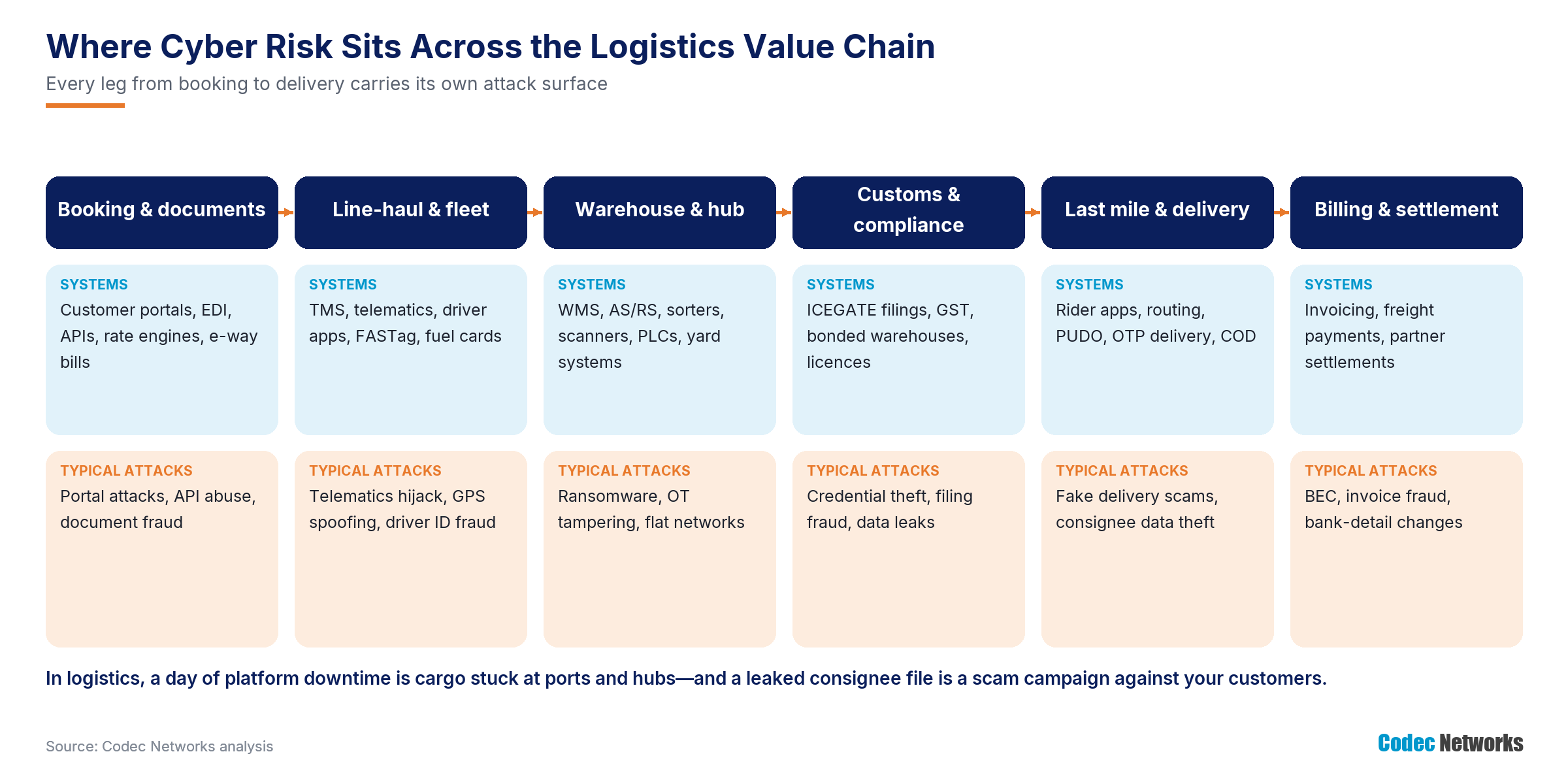
Figure 2: Where cyber risk sits across the logistics value chain.
|
Product / service |
Systems that deliver it |
Key cyber and compliance touchpoints |
|
Booking and documents |
Customer portals, EDI, rate engines, e-way bill and document systems |
Portal and API testing, document integrity, access reviews |
|
Line-haul and fleet |
TMS, telematics platforms, driver apps, FASTag, fuel cards |
Fleet and IoT assessment, platform authentication, data minimisation |
|
Warehouse and hub |
WMS, AS/RS, sorters, PLCs, scanners, yard and building systems |
OT assessment, segmentation, vendor access brokering, OT monitoring |
|
Customs and compliance |
ICEGATE filings, GST systems, bonded warehouse records, licences |
Credential controls, filing monitoring, DPDP for personal data |
|
Last mile and delivery |
Rider apps, routing, PUDO systems, OTP and COD workflows |
App testing, consignee data protection, scam monitoring |
|
Billing and settlement |
ERP, invoicing, freight payment and partner settlement |
BEC controls, payment verification, mailbox monitoring, SOC |
6. Trends that change the attack surface
|
Trend |
What is changing |
Security implication |
|
Digital public infrastructure |
ULIP, e-way bill, FASTag and ICEGATE integrations deepen |
Government API credentials and integrations become critical assets |
|
Warehouse automation and robotics |
AS/RS, sorters, AMRs and dimensioning in Grade A hubs |
OT security and vendor access move into logistics |
|
Telematics and connected fleets |
Tracking, remote commands, driver scoring and fuel integration on every vehicle |
Fleet IoT becomes a target for theft and disruption |
|
Supply-chain SaaS and control towers |
TMS, WMS and visibility consumed as multi-tenant services |
Concentration risk; customer assurance and provider due diligence |
|
E-commerce and quick-commerce volumes |
Peaks of millions of parcels a day with OTP delivery and COD |
Consignee data at scale; scams that exploit real shipment data |
|
Shipper and regulatory formalisation |
Questionnaires, NIS2 flow-down, CERT-In audits, DPDP |
Evidence-based assurance replaces informal practice |
7. Mapping operations to Codec Networks engagements
|
If the company operates… |
Recommended starting engagement |
|
Trucks, telematics or driver apps |
Fleet and IoT security assessment; platform access and remote-command controls |
|
Portals, merchant or carrier APIs and EDI |
Partner API and portal testing; key scoping, rate limiting and monitoring |
|
Automated warehouses, sorters or AS/RS |
Warehouse OT assessment, segmentation design, vendor access brokering |
|
Freight payments and invoice-heavy email workflows |
BEC controls, payment verification procedures, mailbox monitoring, simulation |
|
Multi-client TMS and WMS or supply-chain SaaS |
Cloud posture and tenant isolation review, secure SDLC, customer assurance reports |
|
Consignee, driver and rider personal data |
DPDP programme, data minimisation, scam monitoring |
Talk to Codec Networks
|
Contact Codec Networks Pvt. Ltd. New Delhi: 507, 5th Floor, New Delhi House, Barakhamba Road, Connaught Place, New Delhi – 110001 Gurugram: 707, 7th Floor, Silverton Tower, Golf Course Extension Road, Sector 50, Gurugram – 122018, Haryana Landline: 011 430 496 96 | 011 437 522 99 Mobile: +91 99716 76124 | +91 88007 88220 | +91 88003 31124 Email: mktg@codecnetworks.com Web: www.codecnetworks.com |
Note: Descriptions are general and based on public information available as of October 2026. Systems and exposures differ by operator and site.