

Resources Categories
INDUSTRY FACT FILE · MARITIME, PORTS & SHIPPING
Main Products and Services in Maritime, Ports and Shipping
What India's ports, terminals, shipping companies, shipyards and waterway operators deliver, the OT, cargo, ship, enterprise and partner systems behind each service, and where those systems create cybersecurity, safety and compliance exposure.
|
In this document 1. How ports and shipping companies earn their money 2. Products and services by organisation type 3. The operational layer: terminal OT, marine systems and ships 4. The commercial layer: TOS, PCS 1x, customs links and customer platforms 5. The systems behind the products and services 6. Trends that change the attack surface 7. Mapping operations to Codec Networks engagements |
1. How ports and shipping companies earn their money
|
Revenue stream |
How it works |
Security relevance |
|
Cargo handling |
Container, bulk, break-bulk and liquid handling charged per move or tonne |
Crane and yard uptime, TOS integrity, billing accuracy |
|
Vessel-related charges |
Port dues, pilotage, berth hire, towage |
VTS, berth planning and billing systems |
|
Concession and lease income |
Terminal concessions, land and warehousing leases |
Concession reporting, shared port systems |
|
Freight and charter |
Liner, tramp and offshore services; ship management fees |
Booking platforms, fleet IT, ship systems, charter data |
|
Shipbuilding and repair |
Newbuild contracts, dry-dock repairs, conversions |
Design and PLM data, yard OT, customer confidentiality |
|
Logistics and value-added services |
CFS, ICD, warehousing, coastal and inland transport |
Customs integrations, partner portals, e-way bill |
2. Products and services by organisation type
|
Organisation type |
Main products and services |
Key systems |
|
Ports and port authorities |
Berths, channels, pilotage, port infrastructure, concessions |
VTS, port management systems, PCS 1x, billing, SCADA for utilities and gates |
|
Terminal operators |
Container, bulk, liquid and Ro-Ro handling, storage, gate services |
TOS, crane and RTG control, gate automation and OCR, yard planning, billing |
|
Shipping lines and managers |
Liner and tramp services, ship technical and crew management |
Booking and documentation platforms, fleet management, ship OT, satcom |
|
Shipyards |
Newbuilds, repairs, conversions, offshore structures |
CAD/PLM, project ERP, yard OT, customer data rooms |
|
Inland waterways and coastal |
Barge, Ro-Ro and coastal cargo and passenger services |
Terminal and vessel systems, river information services, ticketing |
|
Port services and platforms |
Pilotage, towage, dredging, bunkering, trade platforms |
Dispatch systems, vessel automation, PCS and logistics platforms |
3. The operational layer: terminal OT, marine systems and ships
A modern terminal is a networked machine. Quay cranes and rubber-tyred gantries carry PLCs and remote diagnostics; automated gates read licence plates and container numbers; conveyors, ship-loaders and tank farms run on SCADA; and vessel traffic services, pilotage and port radio manage the approaches. Many of these systems are supplied and maintained by global OEMs through permanent remote links, and terminals built decades ago still run controllers and protocols with no authentication.
Ships bring their own estate: ECDIS and radar, GNSS and AIS, integrated bridge and engine-room automation, cargo and ballast control, and satellite links that now connect the ship to the owner, the manager, the OEM and the port. GNSS spoofing and jamming in the Gulf and Red Sea in 2025 showed that navigation inputs can be manipulated without touching the ship at all, and the IMO and IACS now treat cyber as part of ship safety.
4. The commercial layer: TOS, PCS 1x, customs links and customer platforms
The commercial layer decides what moves. The terminal operating system holds the position and status of every container and drives cranes, yard equipment and gates; the Port Community System PCS 1x connects ports, customs, shipping lines, forwarders, CFSs and transporters for vessel, cargo, delivery and payment messages; customs filings flow through CBIC systems; and customer portals issue delivery orders, nominate trucks and settle invoices. Shipping lines run booking, documentation and tracking platforms that customers and partners integrate with through APIs.
Behind these sit ERP, finance, HR and email; cloud analytics and digital twins; and personal data on customers, drivers, crew, seafarers and visitors that the DPDP Act and Rules will govern from May 2027. DP World Australia's 2023 incident and the Port of Nagoya's 2023 ransomware showed that when these systems stop, the terminal stops—even if every crane is intact.
|
Highest-risk moments OEM remote sessions into crane, gate or SCADA networks, TOS upgrades and go-lives, delivery-order and truck-nomination changes on portals, ship software updates by USB or satcom, dredging and construction contractors on port networks, settlement bank-detail changes and the first hours of a terminal network incident are where port and shipping incidents typically begin or escalate. |
5. The systems behind the products and services
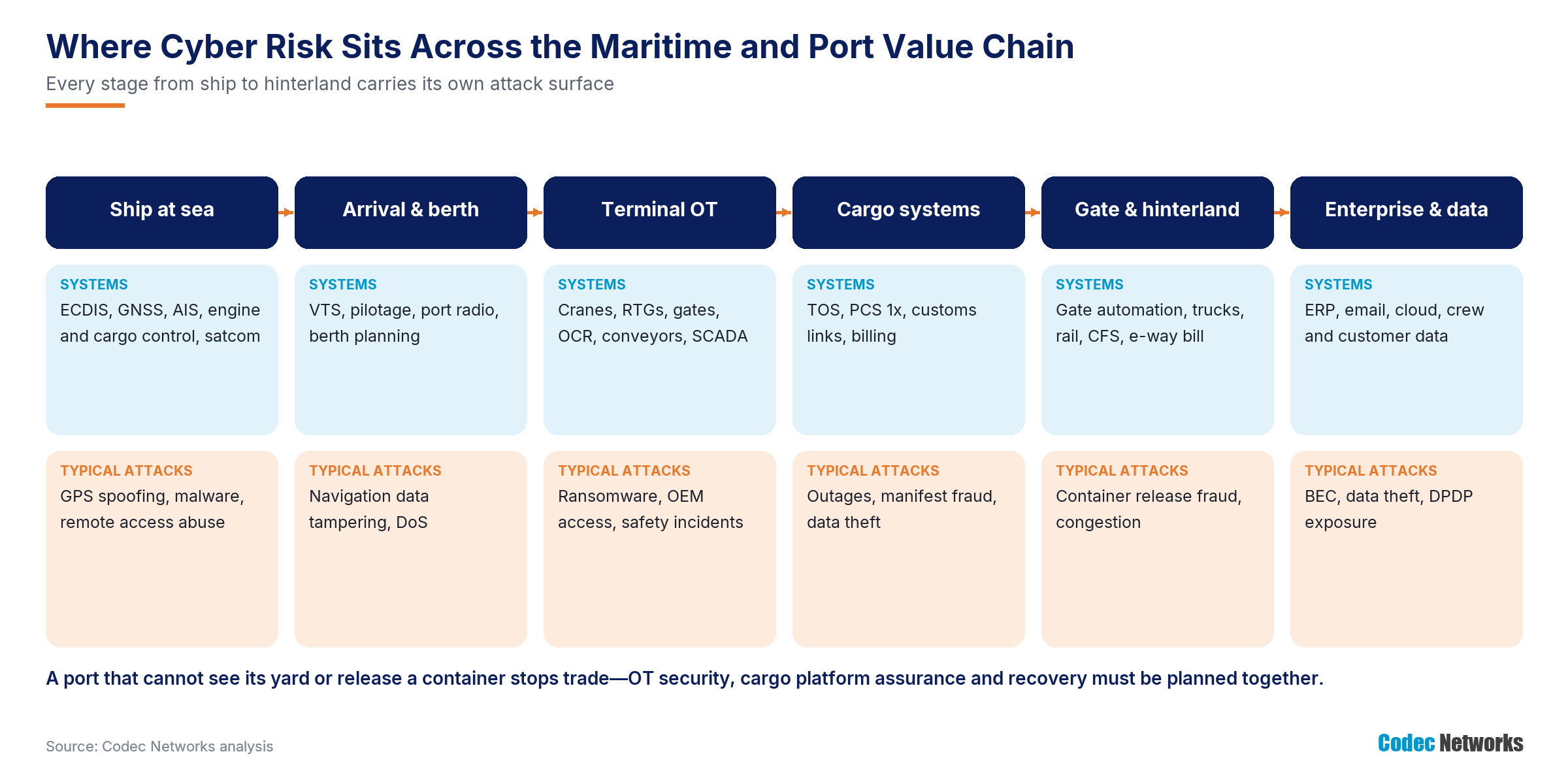
Figure 2: Where cyber risk sits across the maritime and port value chain.
|
Product / service |
Systems that deliver it |
Key cyber and compliance touchpoints |
|
Ship at sea |
ECDIS, GNSS, AIS, engine and cargo control, satcom |
Ship cyber risk assessment, GNSS integrity, remote access control |
|
Arrival and berth |
VTS, pilotage, port radio, berth planning |
Marine OT review, availability, data integrity |
|
Terminal OT |
Cranes, RTGs, gates, OCR, conveyors, SCADA |
OT assessment, segmentation, OEM access, OT monitoring |
|
Cargo systems |
TOS, PCS 1x, customs links, billing |
Platform and API testing, backups, fraud controls |
|
Gate and hinterland |
Gate automation, truck appointment, rail, CFS, e-way bill |
Release verification, partner access, anomaly detection |
|
Enterprise and data |
ERP, email, cloud, customer, crew and driver data |
EDR, identity, SOC, DPDP |
6. Trends that change the attack surface
|
Trend |
What is changing |
Security implication |
|
Terminal automation |
Automated cranes, gates and yard equipment; remote operations |
More networked OT and OEM connections to secure |
|
Digital trade platforms |
PCS 1x, customs single windows, customer APIs |
Platform availability and fraud resistance matter |
|
Connected ships |
Satcom bandwidth, remote diagnostics, fleet software updates |
Ship-to-shore access as a primary risk |
|
New ports and capacity |
Sagarmala projects, new terminals, Vadhavan |
Security by design at go-live |
|
Regulatory formalisation |
MSC.428(98), UR E26/E27, CERT-In audits, new 2025 Acts |
Audits that include ships and OT |
|
Navigation interference |
GNSS spoofing and jamming in chokepoints |
Integrity monitoring and bridge procedures |
7. Mapping operations to Codec Networks engagements
|
If the organisation operates… |
Recommended starting engagement |
|
Container, bulk or liquid terminals with automation |
Terminal OT assessment, segmentation design, OEM access controls |
|
A TOS, PCS integration or customer portals |
Cargo platform and API testing, fraud-resistance review, backup and restore testing |
|
Ships under ISM with class surveys |
MSC.428(98) cyber risk assessment, UR E26/E27 readiness, bridge and engine-room reviews |
|
Port-wide shared systems and VTS |
Marine OT and shared services review, CII-aligned controls |
|
Shipyard design and project environments |
Data classification, subcontractor access, threat hunting |
|
Many OEMs, contractors and partners with access |
Third-party access programme and joint exercises |
Talk to Codec Networks
|
Contact Codec Networks Pvt. Ltd. New Delhi: 507, 5th Floor, New Delhi House, Barakhamba Road, Connaught Place, New Delhi – 110001 Gurugram: 707, 7th Floor, Silverton Tower, Golf Course Extension Road, Sector 50, Gurugram – 122018, Haryana Landline: 011 430 496 96 | 011 437 522 99 Mobile: +91 99716 76124 | +91 88007 88220 | +91 88003 31124 Email: mktg@codecnetworks.com Web: www.codecnetworks.com |
Note: Descriptions are general and based on public information available as of October 2026. Systems and exposures differ by port, terminal and fleet.