

Resources Categories

INDUSTRY FACT FILE · MEDIA, ENTERTAINMENT & DIGITAL PLATFORMS
Threat Landscape: Top Cyber Threats Facing Media and Digital Platforms
The 18 most relevant cyber threats, attacks and industry challenges for broadcasters, streaming services, news publishers, ad-tech firms, studios, gaming companies and platforms, and the impact each one has on content, audiences and brands.
|
In this document 1. The threat picture in numbers 2. Top 18 threats, attacks and challenges 3. Threat relevance by media segment 4. Five priority threats in depth 5. Impact on broadcasters, platforms, audiences, talent and partners 6. How regulation turns incidents into business events 7. Questions every leadership team should ask |
1. The threat picture in numbers
|
₹22,400 crore Lost to piracy in India in 2023 (EY-IAMAI) |
~576,000 Roku accounts accessed by credential stuffing (2024) |
125 GB Twitch source code and payout data leaked (2021) |
6 hours To report incidents to CERT-In |
Media attracts an unusually wide range of attackers. Pirates want content before or during release; fraudsters want subscriber, player and creator accounts that can be resold or emptied; ransomware groups know that a channel cannot stay off air and a studio cannot miss a release; scammers borrow the faces of anchors and stars for investment and betting frauds; hacktivists and state actors deface news sites and hijack channels at politically sensitive moments; and data brokers harvest audience data through apps, SDKs and ad tech. The attack surface spans internet-facing apps used by crores of people, broadcast networks built for uptime rather than security, content supply chains that pass through dozens of vendors, and the personal accounts of journalists, producers and talent.
Recent events show the pattern. The Sony Pictures attack of 2014 leaked unreleased films and email; TV5Monde was taken off air by a destructive attack in April 2015; Twitch's October 2021 leak exposed source code and creator payouts after a server configuration error; Sinclair's October 2021 ransomware disrupted local stations and advertising; Insomniac Games' internal files were leaked by the Rhysida group in December 2023 after a ransom demand reported at about US$2 million; and Roku reported about 576,000 accounts accessed through credential stuffing in April 2024. In India, the EY-IAMAI report put 2023 piracy losses at about ₹22,400 crore, MIB has appointed nodal officers to act on piracy complaints, and the Delhi High Court has granted repeated orders protecting actors' personality rights against AI-generated misuse.
2. Top 18 threats, attacks and challenges
The list below is a practical assessment framework, not a statistical ranking. Priority varies by business model, technology exposure and existing controls.
|
# |
Threat / attack / challenge |
Typical scenario |
Most exposed |
Potential impact |
|
1 |
Ransomware halting playout or operations |
Scheduling, playout, newsroom or post-production servers encrypted |
Broadcasters, studios, post houses |
Channels off air, missed releases, lost advertising |
|
2 |
Pre-release content leaks |
Cuts, episodes or tracks stolen from vendors, screeners or asset stores |
Studios, OTT services, labels |
Lost box-office and licensing value, partner disputes |
|
3 |
Live-stream piracy and restreaming |
Live sport and premieres captured and restreamed through apps and channels |
OTT services, broadcasters, DPOs |
Lost subscriptions and rights value |
|
4 |
Credential stuffing and account takeover |
Leaked passwords replayed against login APIs at scale |
OTT, gaming, news paywalls |
Account resale, fraud, churn, support cost |
|
5 |
API and app vulnerabilities |
Broken authorisation, exposed endpoints and weak smart-TV and mobile apps |
OTT, gaming, creator platforms |
Data exposure, content access without payment |
|
6 |
Subscriber and player data breaches |
Databases, support tools or cloud storage exposing audience records |
DPOs, OTT, gaming, ad tech |
DPDP breach intimation, loss of trust |
|
7 |
Deepfakes and impersonation |
Synthetic video and voice of anchors, stars and executives used in scams |
News publishers, broadcasters, studios, talent |
Audience fraud, reputational harm, takedown burden |
|
8 |
Social and channel account hijack |
Session-token theft or phishing used to seize channels and pages |
News publishers, creators, broadcasters |
Scam streams, lost audiences, brand damage |
|
9 |
DDoS during live events |
Volumetric and application-layer attacks at peak demand |
OTT, news sites, game servers |
Outages before record audiences, refunds |
|
10 |
Malvertising and ad fraud |
Compromised ad tags serving malware; bots inflating impressions |
Publishers, ad-tech firms, advertisers |
Audience harm, advertiser losses, brand safety |
|
11 |
Vendor and post-production compromise |
Dubbing, VFX, subtitling or cloud vendors breached |
Studios, OTT services, broadcasters |
Leaks and ransomware through the supply chain |
|
12 |
DRM, CAS and key compromise |
Licence servers, keys or conditional access weakened or extracted |
OTT services, DPOs |
Mass piracy, TRAI audit findings |
|
13 |
Children's data and tracking |
Apps, games and SDKs profiling minors without verifiable consent |
Gaming, kids' OTT profiles, ad tech |
DPDP violations, parental backlash |
|
14 |
Payment and subscription fraud |
Stolen cards, promo abuse, refund fraud and fake subscription offers |
OTT, gaming, news subscriptions |
Chargebacks, revenue loss, customer harm |
|
15 |
Source code and game asset theft |
Repositories, build systems and unreleased assets stolen and leaked |
Gaming studios, platforms |
Cheats, clones, spoiled launches |
|
16 |
Business email compromise in payments |
Spoofed producers, agents or licensors redirecting payments |
Studios, production houses, event firms |
Direct financial loss, disputes |
|
17 |
Weak detection and response |
No monitoring of broadcast, platform or vendor activity |
Most media businesses |
Late discovery; missed 6-hour reporting |
|
18 |
Backup and recovery failure |
Backups online, untested or encrypted with playout and asset stores |
Broadcasters, studios, post houses |
Days off air, lost archives |
3. Threat relevance by media segment
The matrix is a qualitative guide for prioritising the first round of security reviews.
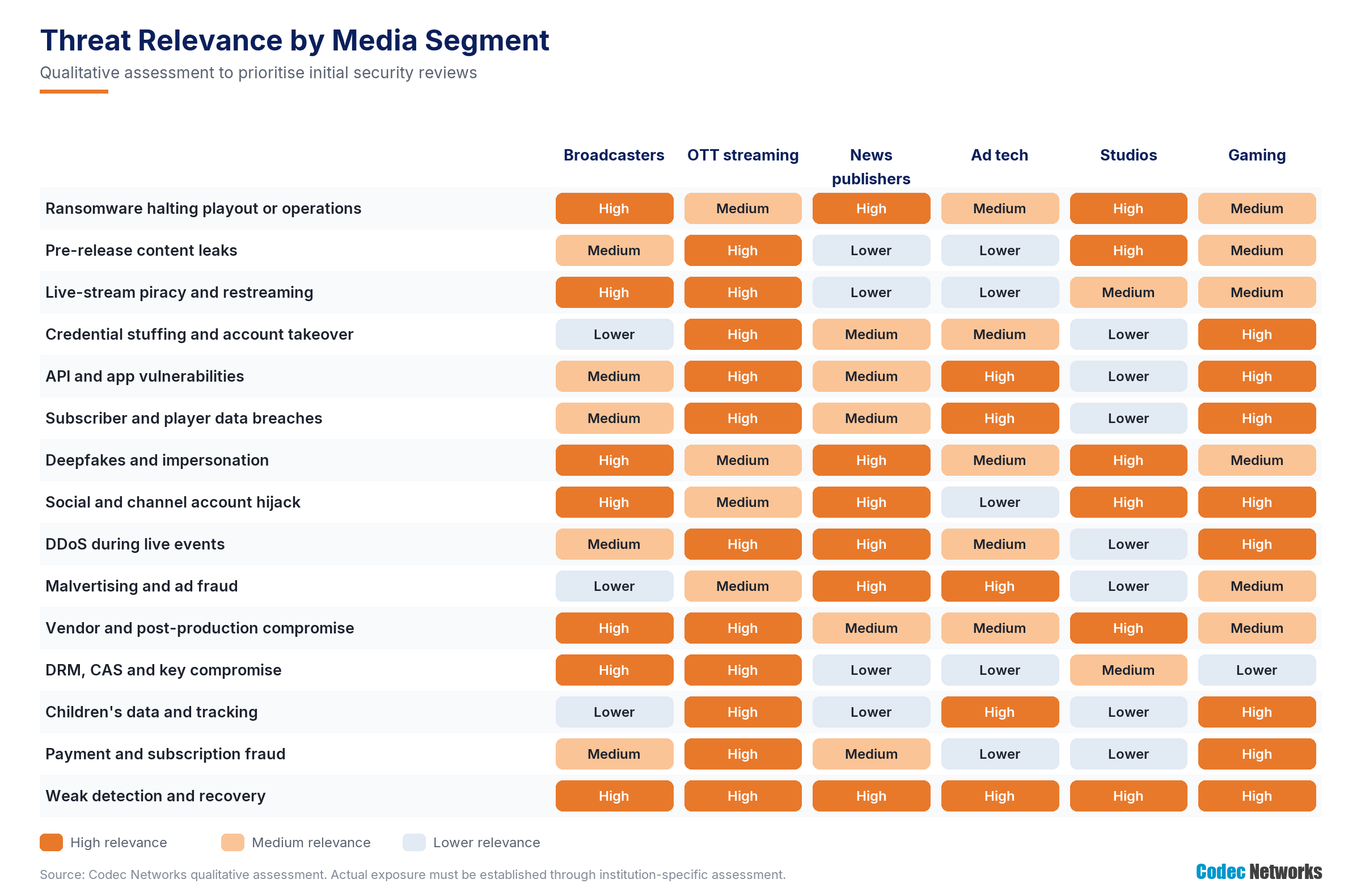
Figure 5: Qualitative threat relevance by media segment (Codec Networks assessment).
4. Five priority threats in depth
4.1 Account takeover at live-event scale
OTT, gaming and paywalled news platforms hold millions of accounts protected by passwords that users reuse elsewhere. Attackers replay leaked credentials through login APIs, often timing campaigns for finals and premieres when traffic hides them, and resell the accounts or use saved payment methods. Roku's two 2024 incidents show how quickly this scales even without a breach of the platform itself.
- Questions to test: Can our login and account APIs tell a person from a bot at peak load? Are rate limits, step-up checks and device signals in place? Is MFA available and promoted? Would the SOC see a takeover wave within minutes, not days?
- Relevant services: login and API testing with credential-stuffing scenarios, bot-defence review, MFA and recovery design, managed SOC with surge cover.
4.2 Content leaks through the supply chain
A single film or series passes through editors, VFX houses, dubbing and subtitling studios, marketing agencies and platform partners, each with a copy. Leaks usually come from a vendor's weak account, a shared drive without MFA or a screener link that never expires, and pirated copies reach apps and Telegram channels within hours. The Cinematograph (Amendment) Act, 2023 and MIB's nodal officers give owners faster remedies, but only with evidence.
- Questions to test: Do we know every vendor that holds our pre-release content and how they protect it? Are screeners watermarked, expiring and logged? Are bulk downloads monitored? Could we trace a leak to its source and file a takedown within hours?
- Relevant services: vendor assessments, asset-store access control, forensic watermarking review, download monitoring, leak tracing and takedown evidence.
4.3 Ransomware off air
Broadcast networks were designed for uptime and are often flat, with playout, traffic and scheduling, graphics and newsroom systems reachable from corporate IT and vendor remote-access tools. Attackers time encryption for weekends and big nights; Sinclair's 2021 incident disrupted local news, sport and advertising across many stations.
- Questions to test: Can an attacker move from corporate email to playout? Is every remote-access path protected by MFA? Are playout and asset backups offline and tested? Is there a rehearsed plan to stay on air from a clean system?
- Relevant services: external attack-surface review, broadcast network segmentation, EDR validation, backup and recovery testing, managed SOC, off-air crisis exercises.
4.4 Deepfakes, impersonation and hijacked channels
Synthetic video and cloned voices of anchors, actors and executives now promote fake investments, betting apps and products, and stolen session tokens let attackers seize channels and pages without a password. Since February 2026 the IT Rules require platforms to label synthetic content and act on lawful takedown orders within three hours, and courts have protected personality rights, but publishers still need to find fakes and prove them quickly.
- Questions to test: Who monitors for impersonation of our talent and brand? Are channel and social accounts protected by phishing-resistant MFA and session controls? Do we have named contacts and evidence packs ready for platforms? Do producers and talent know the lures?
- Relevant services: brand and deepfake monitoring, account hardening, awareness for newsroom and talent teams, takedown playbooks and crisis exercises.
4.5 Detection, reporting and the 6-hour clock
CERT-In requires reporting within six hours of noticing an incident, DPDP will require breach intimation and listed media companies disclose quarterly. Many broadcasters, studios and publishers monitor only their corporate IT, so incidents in playout, apps, vendors or social accounts are discovered by viewers, journalists or pirates first.
- Questions to test: Are broadcast, platform, cloud and vendor systems monitored 24x7? Do we see takeover waves, scraping, bulk downloads and DDoS? Is there a playbook covering containment, audience and advertiser communication, CERT-In reporting and disclosure?
- Relevant services: managed SOC, playbooks, incident records, tabletop exercises with leadership, broadcast and product teams.
5. Impact on broadcasters, platforms, audiences, talent and partners
|
Player type |
Threats to prioritise |
Main impact |
|
Broadcasters and DPOs |
Ransomware, CAS compromise, signal and account hijack |
Off-air time, advertiser make-goods, TRAI and regulator scrutiny |
|
OTT streaming services |
Account takeover, restreaming, API exposure, DDoS |
Churn, lost rights value, refunds, DPDP consequences |
|
News publishers |
Deepfakes, account hijack, defacement, DDoS |
Loss of credibility, audience harm, legal exposure |
|
Ad-tech firms and advertisers |
Malvertising, ad fraud, unlawful data use |
Lost spend, brand-safety incidents, privacy enforcement |
|
Studios, labels and gaming companies |
Pre-release leaks, vendor ransomware, source code theft |
Spoiled releases, partner disputes, cheating and clones |
|
Audiences, players, creators and talent |
Scams, account takeover, data exposure, impersonation |
Financial loss, harassment, reputational harm |
6. How regulation turns incidents into business events
- CERT-In: incidents reported within six hours of noticing them; logs available for investigation.
- IT Rules: intermediaries and publishers must act on lawful orders within the amended timelines, handle grievances and, from February 2026, label synthetic content; failures can affect safe-harbour protection.
- DPDP: breaches of viewer, subscriber, player or children's data trigger intimation to affected persons and the Data Protection Board once provisions commence in May 2027.
- TRAI and MIB: CAS and SMS weaknesses surface in mandatory audits; content and broadcast incidents draw ministry scrutiny.
- SEBI LODR: listed media companies disclose cyber incidents and data loss in the quarterly corporate governance report.
- Partners, licensors and advertisers: content-security clauses, sports-rights agreements and advertiser contracts require notification and may trigger penalties or termination.
|
Insight The most damaging media incidents happen in public—during a final, a premiere or breaking news—and cross company boundaries, from a vendor's drive to a pirate channel, from a leaked password to lakhs of accounts, from a stolen token to a hijacked channel. Tested platforms, controlled supply chains, monitored accounts and rehearsed responses are the best defence. |
7. Questions every leadership team should ask
- Could our login, payment and streaming stack survive the next record audience without a takeover wave?
- Do we know every vendor holding our next release, and could we trace a leak to its source?
- Can an attacker move from corporate email into playout, CAS or asset stores?
- Would we spot a deepfake of our anchor or a hijacked channel within hours?
- Are backups of playout, archives and platforms immutable, tested and separate?
- Could we detect, contain and report an incident within six hours while keeping audiences and advertisers informed?
Talk to Codec Networks
|
Contact Codec Networks Pvt. Ltd. New Delhi: 507, 5th Floor, New Delhi House, Barakhamba Road, Connaught Place, New Delhi – 110001 Gurugram: 707, 7th Floor, Silverton Tower, Golf Course Extension Road, Sector 50, Gurugram – 122018, Haryana Landline: 011 430 496 96 | 011 437 522 99 Mobile: +91 99716 76124 | +91 88007 88220 | +91 88003 31124 Email: mktg@codecnetworks.com Web: www.codecnetworks.com |
Note: Threat descriptions and relevance ratings are general guidance, not findings about any specific organisation. Public incident references are summarised from widely reported events, company statements and official sources.