

Resources Categories
INDUSTRY FACT FILE · MEDICAL DEVICES & MEDTECH
Market Landscape and the Drivers of Cybersecurity Demand in Medtech
The business, technology, regulatory, legal and statutory forces that create product security, testing and assurance work for medical device and medtech companies.
|
In this document 1. Market landscape 2. Business drivers 3. Technology drivers 4. Regulatory drivers: CDSCO, FDA 524B, EU MDR and standards 5. Legal and statutory drivers 6. How the drivers differ by product type 7. What this means for buyers and for Codec Networks |
1. Market landscape
India's medtech sector includes multinational OEM operations, fast-growing domestic manufacturers, start-ups building wearables and software, and platform providers enabling remote care. Export ambitions and hospital procurement requirements are making product cybersecurity a competitive necessity rather than an afterthought.
|
Mar 2023 FDA cyber-device requirements in effect |
Oct 2023 All device classes licensed in India |
2026 CDSCO software guidance finalised (as reported) |
May 2027 Most DPDP obligations take effect |
|
Market segment |
Landscape and buying behaviour |
Cybersecurity opportunity |
|
Global OEM operations |
Mature programmes, global standards |
Testing capacity, supplier assurance |
|
Domestic manufacturers |
Scaling exports and hospital sales |
Threat modelling, testing, submission evidence |
|
Start-ups and wearables |
Fast product cycles |
Firmware, BLE and app testing, SBOM |
|
Platforms and SaMD |
Cloud and software-led |
Cloud, API and AI security, SOC |
2. Business drivers
|
Business driver |
Buying trigger |
Relevant services |
|
Export approvals |
FDA and EU submissions need cyber evidence |
Threat models, SBOMs, test reports |
|
Hospital procurement |
Security questionnaires and requirements |
Product security documentation |
|
Patient safety and liability |
Exploits could harm patients |
Safety-focused security testing |
|
Recall costs |
Field actions are expensive |
Pre-release testing and secure updates |
|
Partner due diligence |
Distributors and investors assess security |
Assurance evidence |
3. Technology drivers
|
Technology driver |
Exposure created |
Codec Networks opportunity |
|
Embedded firmware |
Vulnerabilities in every unit |
Firmware analysis and testing |
|
Wireless connectivity |
Pairing and protocol attacks |
Wireless testing |
|
Cloud platforms |
Patient data exposure |
Cloud and API testing |
|
Update mechanisms |
Malicious updates |
Secure update reviews |
|
Third-party components |
Hidden functions and flaws |
SBOM and component analysis |
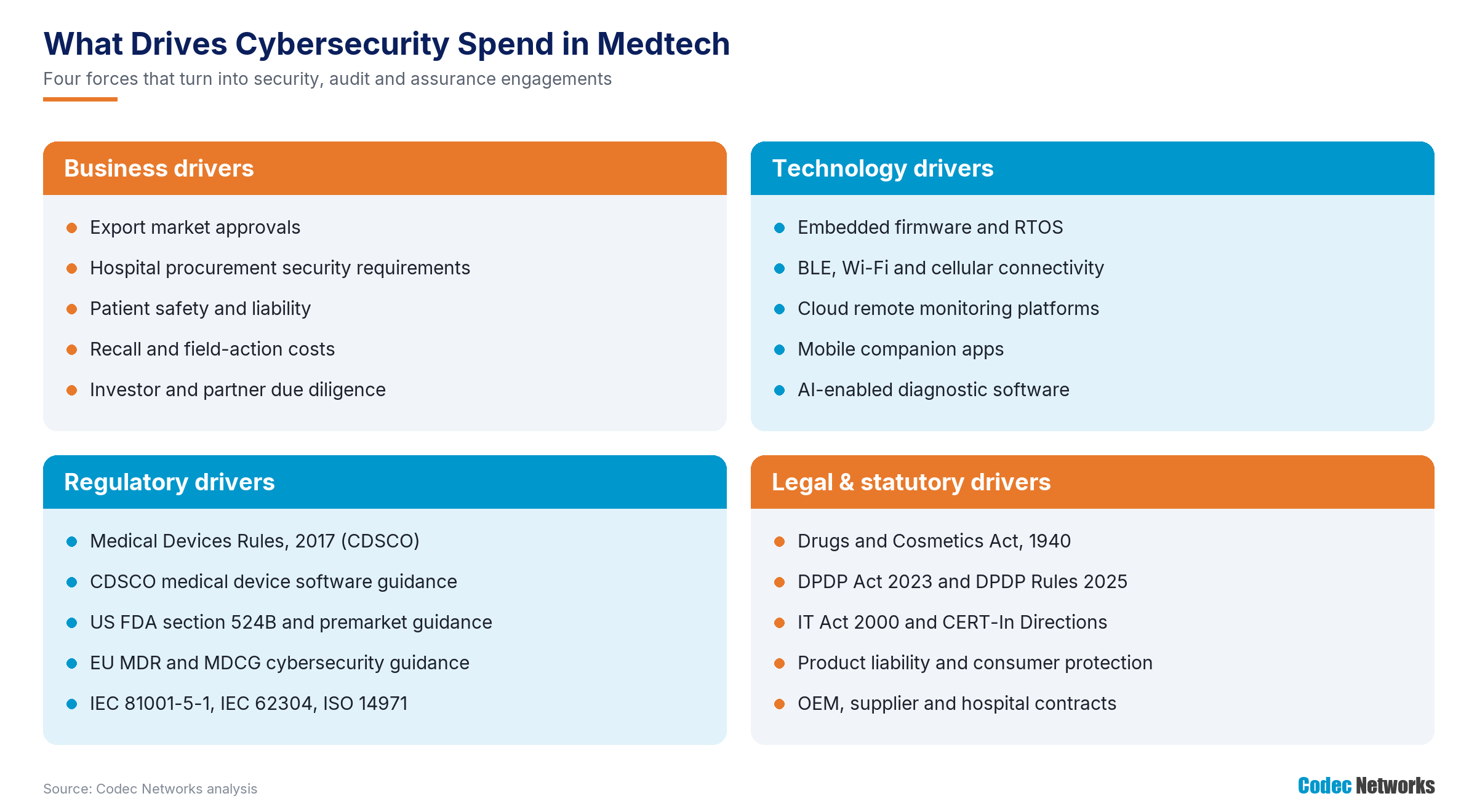
Figure 3: The four groups of drivers behind product security spending in medtech.
4. Regulatory drivers: CDSCO, FDA 524B, EU MDR and standards
|
Instrument |
Key requirements |
|
Medical Devices Rules, 2017 |
Risk-based classification and licensing; all classes licensed by October 2023 |
|
CDSCO medical device software guidance |
Finalised 2026 after an October 2025 draft; addresses cybersecurity and component transparency (as reported) |
|
US FDA section 524B |
Cybersecurity plan, SBOM, vulnerability management and design controls for cyber devices |
|
EU MDR and MDCG guidance |
IT security within general safety and performance requirements |
|
IEC 81001-5-1, IEC 62304, ISO 14971 |
Secure lifecycle, software lifecycle and risk management standards |
|
Confirm per product and market Requirements depend on device class, software role and target markets. Confirm against the official texts. |
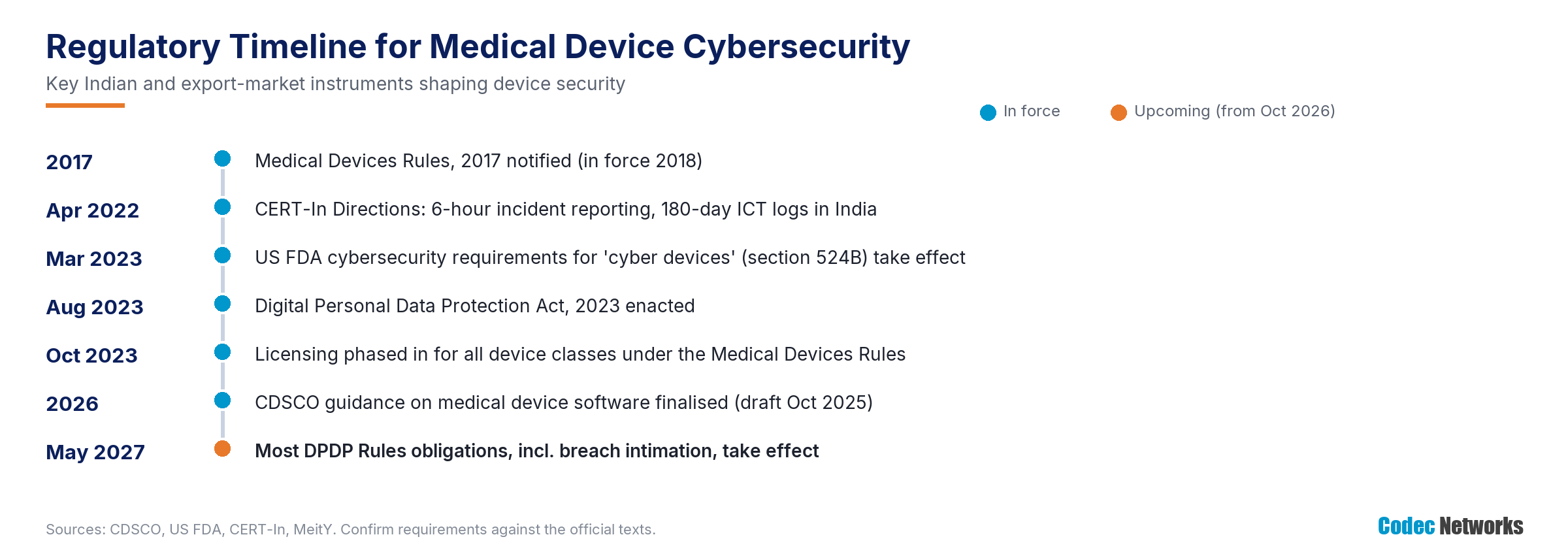
Figure 4: Regulatory timeline for medical device cybersecurity, as of October 2026.
5. Legal and statutory drivers
|
Law or obligation |
Relevance |
Demand created |
|
Drugs and Cosmetics Act, 1940 and Medical Devices Rules, 2017 |
Licensing and quality |
Security evidence in quality documentation |
|
IT Act, 2000 and CERT-In Directions |
Incident reporting for platforms |
SOC and IR readiness |
|
DPDP Act, 2023 and Rules, 2025 |
Patient data from devices and apps |
Privacy programmes |
|
Product liability and consumer protection |
Harm from defective products |
Testing and secure design |
|
Contracts |
OEM, supplier, distributor and hospital agreements |
Assurance evidence |
6. How the drivers differ by product type
|
Product type |
Dominant business drivers |
Dominant technology drivers |
Principal regulatory drivers |
|
Bedside and imaging |
Hospital sales, exports |
Firmware, OS, networks |
Medical Devices Rules, FDA, EU MDR |
|
Wearables and home |
Consumer trust, scale |
BLE, apps, cloud |
Medical Devices Rules, DPDP |
|
Implantables |
Safety, approvals |
Wireless, updates |
Highest-class device rules, FDA, EU MDR |
|
SaMD and platforms |
Growth, partnerships |
Cloud, APIs, AI |
CDSCO software guidance, DPDP, CERT-In |
7. What this means for buyers and for Codec Networks
|
Customer buying need |
Recommended offering |
Natural recurring engagement |
|
“We need a threat model for our submission.” |
Product threat modelling |
Per-release updates |
|
“Is our firmware secure?” |
Firmware and hardware testing |
Release-linked testing |
|
“Could someone fake an update?” |
Secure update review |
Annual reviews |
|
“Regulators want an SBOM.” |
SBOM and component analysis |
Per-release SBOMs |
|
“Our platform holds patient data.” |
Cloud and API testing, SOC |
Continuous monitoring |
Talk to Codec Networks
|
Contact Codec Networks Pvt. Ltd. New Delhi: 507, 5th Floor, New Delhi House, Barakhamba Road, Connaught Place, New Delhi – 110001 Gurugram: 707, 7th Floor, Silverton Tower, Golf Course Extension Road, Sector 50, Gurugram – 122018, Haryana Landline: 011 430 496 96 | 011 437 522 99 Mobile: +91 99716 76124 | +91 88007 88220 | +91 88003 31124 Email: mktg@codecnetworks.com Web: www.codecnetworks.com |
Note: This document is general industry guidance based on public information available as of October 2026. It is not regulatory advice. CDSCO guidance details are summarised from public sources; confirm requirements against the official CDSCO, US FDA, EU and CERT-In texts.