

Resources Categories

INDUSTRY FACT FILE · PHARMACEUTICALS & LIFE SCIENCES
Industry Overview: Pharmaceuticals and Life Sciences in India
Who researches, tests and manufactures medicines, how they are regulated, who buys cybersecurity inside them and why each needs a distinct approach.
|
In this document 1. Why pharma cybersecurity matters now 2. The ecosystem at a glance 3. Categories of pharma and life sciences organisations 4. The regulatory framework at a glance 5. Government, regulator and private participants 6. Who buys cybersecurity inside a pharma company 7. Why each organisation type needs a different approach 8. How Codec Networks works with pharma and life sciences |
|
Sector scope Sector: pharmaceuticals and life sciences — drug manufacturers, biotechnology firms, CROs and clinical research and laboratory businesses. Primary service proposition: research and IP protection, clinical data privacy, OT security and cloud and vendor assessments. Hospitals and medical device manufacturers are covered in separate fact files. |
1. Why pharma cybersecurity matters now
India is a leading global supplier of generic medicines and vaccines, with a large base of API and formulation manufacturers, a growing biotech sector and an expanding clinical research industry. These organisations hold valuable research IP, regulated quality data and clinical trial data, and run plants whose downtime affects patients worldwide.
|
Dec 2025 Revised Schedule M deadline for MSME manufacturers |
2019 New Drugs and Clinical Trials Rules notified |
6 hours To report cyber incidents to CERT-In |
May 2027 Most DPDP obligations take effect |
Pharma is a proven target. The 2017 NotPetya malware disrupted manufacturing and research at a major global drugmaker; in October 2020 a leading Indian pharmaceutical company isolated data centre services after a cyberattack; and during the pandemic, governments warned that state-backed groups were targeting vaccine research.
Revised Schedule M modernises good manufacturing practices, with MSME manufacturers required to comply by 31 December 2025 under an extension. Export markets enforce data integrity through rules such as US FDA 21 CFR Part 11 and EU GMP Annex 11, while CERT-In's Directions and the DPDP framework add incident reporting and data protection duties.
|
Key takeaway In pharma, a cyber incident can become a quality incident. Protecting research, keeping plants running and proving data integrity are one combined objective. |
2. The ecosystem at a glance
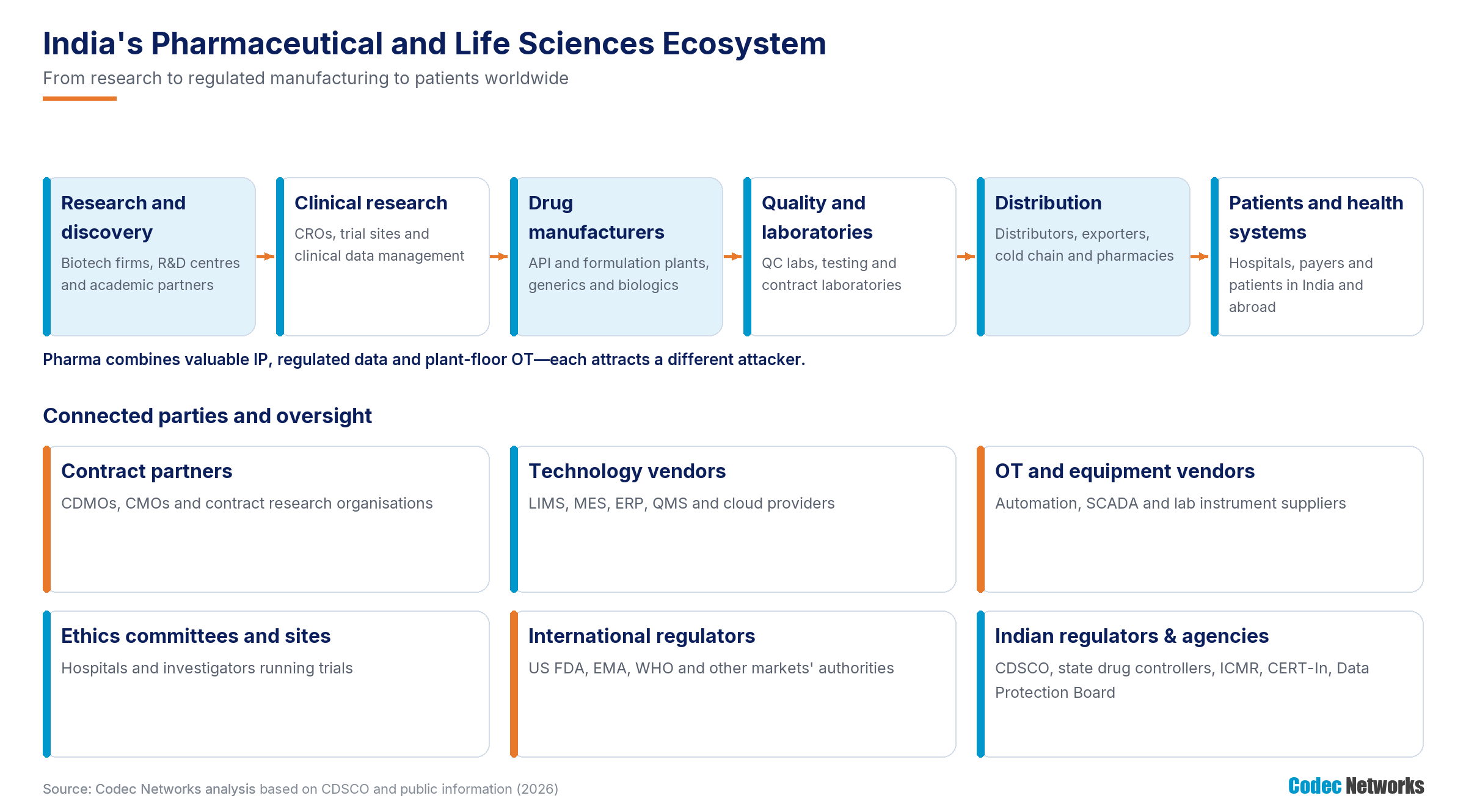
Figure 1: India's pharmaceutical and life sciences ecosystem.
3. Categories of pharma and life sciences organisations
|
Category |
Who they are |
Typical ownership |
Key regulatory basis |
|
Formulation manufacturers |
Tablets, injectables and other finished dosage forms |
Listed companies, MSMEs and multinationals |
Drugs and Cosmetics Act; Revised Schedule M; export GMP |
|
API manufacturers |
Active pharmaceutical ingredients |
Indian manufacturers and exporters |
Drugs and Cosmetics Act; Revised Schedule M; export GMP |
|
Biologics and biotechnology firms |
Vaccines, biosimilars and novel therapies |
Indian and global biotech companies |
CDSCO approvals; biosafety rules; export GMP |
|
Contract research organisations |
Clinical trial management, data management and biostatistics |
Indian and global CROs |
NDCT Rules 2019; ICMR guidelines; sponsor contracts |
|
Clinical sites and laboratories |
Trial sites, bioequivalence centres and contract labs |
Hospitals, research centres, private labs |
NDCT Rules; laboratory accreditation |
|
CDMOs and CMOs |
Contract development and manufacturing for other companies |
Specialist manufacturers |
Revised Schedule M; client quality agreements |
|
Distributors and exporters |
Wholesale, cold chain and export logistics |
Distributors and logistics firms |
Drug licensing; export regulations |
4. The regulatory framework at a glance
|
Instrument |
Key requirements |
|
Drugs and Cosmetics Act, 1940 and Rules |
Licensing and quality regulation of drug manufacture, sale and distribution by CDSCO and state drug controllers |
|
Revised Schedule M (Good Manufacturing Practices) |
Modernised GMP covering quality systems, quality risk management and computerised systems; MSME manufacturers required to comply by 31 December 2025 under an extension |
|
New Drugs and Clinical Trials Rules, 2019 and ICMR guidelines |
Rules for clinical trial approval, conduct, records and participant protection; ethical guidelines for biomedical research |
|
Export-market data integrity rules |
US FDA 21 CFR Part 11 on electronic records and signatures; EU GMP Annex 11 on computerised systems; WHO and PIC/S data integrity guidance |
|
CERT-In Directions (28 April 2022) |
Cyber incidents reported within six hours; ICT logs kept for a rolling 180 days in India |
|
DPDP Act 2023 and DPDP Rules 2025 |
Safeguards for trial participant, patient and employee personal data; most obligations from May 2027 |
|
Verify requirements Schedule M timelines and requirements are summarised from public sources. Confirm against the official CDSCO and MoHFW notifications and each export market's rules. |
5. Government, regulator and private participants
- CDSCO and state drug controllers license and inspect manufacturers and approve clinical trials.
- ICMR sets ethical guidelines for biomedical and health research.
- Export-market regulators such as the US FDA and European authorities inspect Indian sites supplying their markets.
- CERT-In handles cyber incident reporting; NCIIPC protects notified critical infrastructure.
- Private manufacturers, CROs and CDMOs form one of the world's largest pharma supply bases.
6. Who buys cybersecurity inside a pharma company
|
Stakeholder |
What they care about |
What they buy |
|
Board and CEO |
Supply continuity, IP, regulatory standing |
Board advisory, crisis exercises |
|
CIO / CISO |
IT and OT security, incidents |
VAPT, SOC, OT programmes |
|
Head of quality and compliance |
Data integrity and inspections |
Computerised system and data integrity reviews |
|
Plant and engineering heads |
OT uptime and safety |
OT assessments and segmentation |
|
R&D leadership |
Protection of research and IP |
IP protection and insider programmes |
|
Clinical operations |
Trial data and participant privacy |
Clinical platform testing, CRO assessments |
|
Procurement and alliances |
CRO, CDMO and vendor risk |
Third-party assessments |
7. Why each organisation type needs a different approach
|
Organisation type |
Highest-consequence risk |
Starting point for assurance |
|
Formulation / API manufacturer |
Ransomware into plant OT; data integrity |
OT segmentation, data integrity review, SOC |
|
Biologics and biotech |
IP theft and espionage |
IP protection, threat hunting, insider monitoring |
|
CRO |
Clinical data leakage and sponsor audits |
Clinical platform testing, privacy programme |
|
Clinical site or lab |
Legacy instruments and audit trail gaps |
Lab system and data integrity reviews |
|
CDMO / CMO |
Client data and multi-client OT |
Segmentation, client data isolation, audits |
|
Distributor / exporter |
BEC, counterfeit and logistics fraud |
Email security, supply-chain controls |
8. How Codec Networks works with pharma and life sciences
Codec Networks is a CERT-In empanelled information security auditing organisation certified to ISO 9001:2015, ISO/IEC 27001:2022 and ISO/IEC 20000-1:2018. For pharma and life sciences we deliver research and IP protection programmes, clinical data privacy, OT security assessments, computerised system and data integrity reviews, cloud and vendor assessments and managed SOC.
Talk to Codec Networks
|
Contact Codec Networks Pvt. Ltd. New Delhi: 507, 5th Floor, New Delhi House, Barakhamba Road, Connaught Place, New Delhi – 110001 Gurugram: 707, 7th Floor, Silverton Tower, Golf Course Extension Road, Sector 50, Gurugram – 122018, Haryana Landline: 011 430 496 96 | 011 437 522 99 Mobile: +91 99716 76124 | +91 88007 88220 | +91 88003 31124 Email: mktg@codecnetworks.com Web: www.codecnetworks.com |
Note: This document is general industry guidance based on public information available as of October 2026. It is not legal or regulatory advice. Schedule M and clinical trial requirements are summarised; confirm obligations against the official CDSCO, MoHFW, ICMR, CERT-In and export-market regulator texts.