

Resources Categories
INDUSTRY FACT FILE · RAILWAYS, METRO & SURFACE TRANSPORT
Main Products and Services in Railways, Metro and Surface Transport
What India's rail, metro, bus, tolling and transit technology organisations deliver, the operational, ticketing, enterprise and supplier systems behind each service, and where those systems create cybersecurity, safety and compliance exposure.
|
In this document 1. How transport organisations earn and fund their services 2. Products and services by organisation type 3. The operational layer: signalling, control, communications and fleets 4. The commercial layer: ticketing, fare collection, tolling and passenger platforms 5. The systems behind the products and services 6. Trends that change the attack surface 7. Mapping operations to Codec Networks engagements |
1. How transport organisations earn and fund their services
|
Revenue stream |
How it works |
Security relevance |
|
Passenger fares |
Reserved and unreserved rail tickets, metro fares, bus tickets through counters, apps, cards and agents |
Platform uptime at peak, bot and fraud resistance, payment security, passenger data |
|
Freight and parcel |
Freight contracts, terminals and the freight operations information system |
FOIS integrity, customer portals, e-way bill and GST integrations |
|
Toll and user fees |
FASTag/NETC collection at plazas, annual passes, concession revenue |
Plaza system availability, settlement integrity, acquiring and issuing rules |
|
Non-fare revenue |
Advertising, retail, property development, catering, station facilities |
Partner integrations, digital signage, PoS and Wi-Fi |
|
Government funding and viability support |
Budgetary support, Centre–state equity, viability gap funding |
Project data, procurement integrity, audit and parliamentary scrutiny |
|
Technology and services |
Ticketing commissions, AFC, telematics, ITS and app services sold to operators |
Customer contracts, secure SDLC, data processing obligations |
2. Products and services by organisation type
|
Organisation type |
Main products and services |
Key systems |
|
Indian Railways |
Passenger and freight trains, stations, parcel, suburban services |
Interlocking, Kavach, traffic management, traction SCADA, crew and train management, station systems |
|
Railway PSUs |
Ticketing and catering (IRCTC), core applications (CRIS), telecom and Wi-Fi (RailTel), corridors and construction |
PRS, UTS, FOIS, NTES, IRCTC web and app, railway data centres, telecom backbone |
|
Metro and RRTS corporations |
Urban and regional rail services, stations, property |
CBTC, OCC, SCADA, AFC gates and NCMC, passenger information, CCTV, depot systems |
|
State transport undertakings |
Inter-city and city buses, depots, passes |
Electronic ticketing machines, online booking, vehicle tracking, depot ERP |
|
Tolling operators |
Toll collection, plaza operations, annual passes |
Plaza lane systems, RFID readers, NETC acquiring, settlement and reconciliation |
|
Ticketing and transit technology |
Booking apps, AFC, ITS, telematics, MaaS |
Customer-facing apps and APIs, payment gateways, cloud back ends, device fleets |
3. The operational layer: signalling, control, communications and fleets
Trains are kept apart and moving by signalling and control systems: electronic and relay interlocking at stations, the indigenous Kavach automatic train protection system approved by RDSO (version 4.0 in July 2024 and now being commissioned corridor by corridor), communications-based train control on metro lines, centralised traffic control and operations control centres, and SCADA for traction power and station services. These systems have safety cases, long lives and specialist OEMs who maintain them, often through remote diagnostic connections and maintenance laptops. Train radio and telecom networks, GPS-based tracking, passenger information displays, public address and CCTV connect the control room to drivers, stations and crowds.
Fleets add another layer. Rolling stock carries on-board control and diagnostic networks; depots run maintenance management and SCADA; state transport buses carry AIS 140 tracking devices and electronic ticketing machines reporting to state monitoring centres; and crew, driver and loco pilot apps carry operational information such as speed restrictions, work zones and rosters. Denmark's 2022 stoppage showed that when a supplier's driver app fails, the operator's safety rules can stop the service even though the signalling is untouched.
4. The commercial layer: ticketing, fare collection, tolling and passenger platforms
The commercial layer is where most passengers meet the operator. The passenger reservation system and unreserved ticketing system built by CRIS serve counters, IRCTC's website and app and authorised partners; around 89 per cent of reserved tickets are now booked online, with launch-time demand for popular trains creating the conditions for bots and scalping. Metros run automatic fare collection with tokens, cards, QR tickets and the RuPay National Common Mobility Card; buses sell through ticketing machines and apps; and highway tolling runs through FASTag on the NPCI NETC network, with acquiring banks, issuers and concessionaires settling daily.
Behind these sit payment gateways, tokenisation services, loyalty and refund workflows, call centres, enterprise ERP, HR and email, cloud hosting and a growing set of passenger data—identity documents for reserved travel, card and wallet tokens, travel histories and CCTV footage—that the DPDP Act and Rules will govern from May 2027.
|
Highest-risk moments Launch-time ticket sales and festive peaks, OEM remote sessions into interlocking, Kavach or CBTC maintenance systems, contractor laptops in relay rooms and depots, changes to passenger information and PA content, settlement bank-detail changes at toll operators, supplier app outages and the first minutes of a station network incident are where transport incidents typically begin or escalate. |
5. The systems behind the products and services
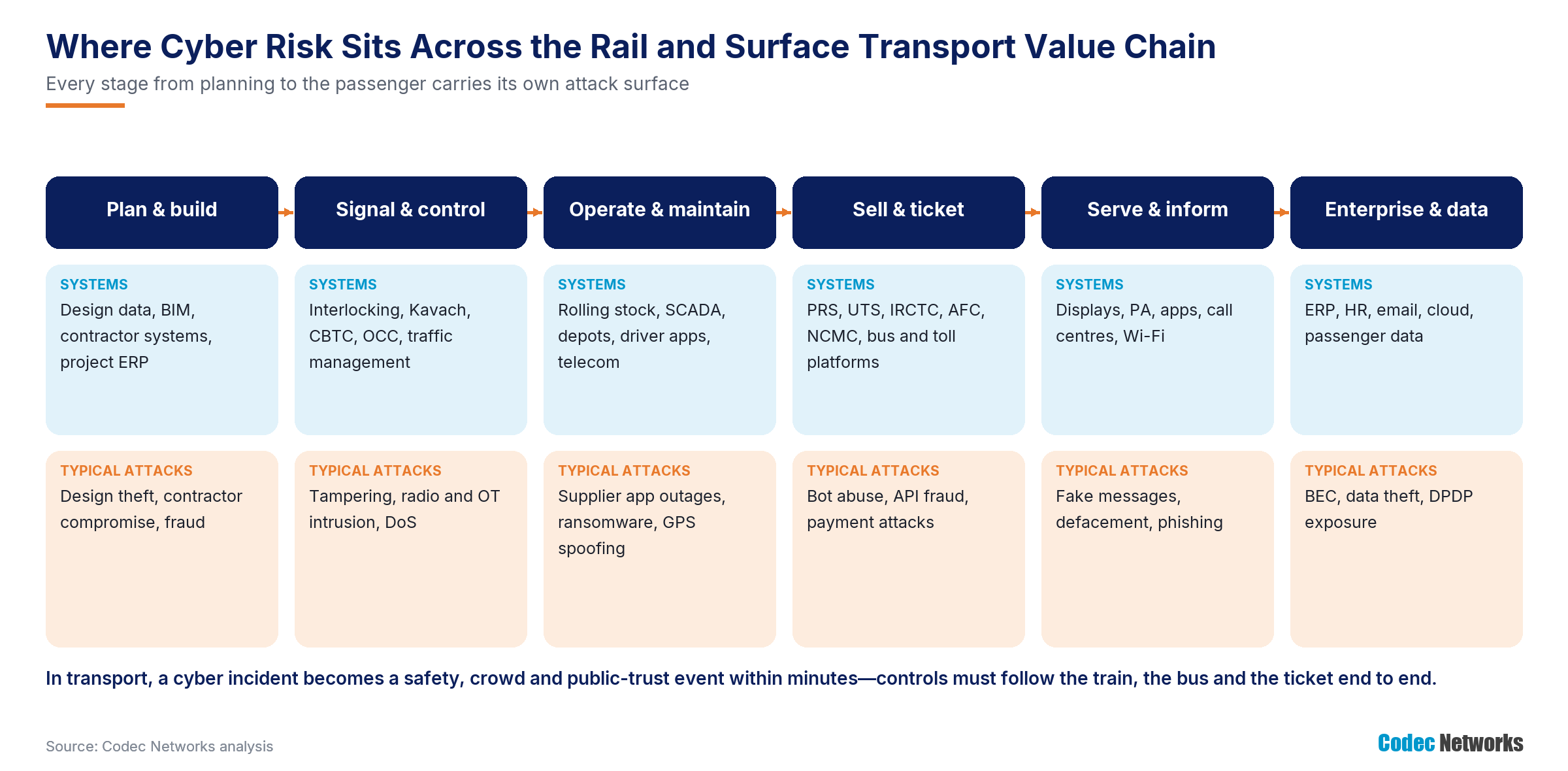
Figure 2: Where cyber risk sits across the rail and surface transport value chain.
|
Product / service |
Systems that deliver it |
Key cyber and compliance touchpoints |
|
Plan and build |
Design and BIM data, contractor systems, project ERP |
Data protection, contractor security, payment fraud controls |
|
Signal and control |
Interlocking, Kavach, CBTC, OCC, traffic management, traction SCADA |
OT assessment, segmentation, OEM access, OT monitoring |
|
Operate and maintain |
Rolling stock networks, depots, driver and crew apps, telecom, GPS |
Supplier criticality, fallbacks, radio and telecom security |
|
Sell and ticket |
PRS, UTS, IRCTC, AFC, NCMC, bus ticketing, FASTag/NETC |
API and app testing, bot and fraud controls, PCI DSS, tokenisation |
|
Serve and inform |
Displays, PA, apps, call centres, station Wi-Fi, CCTV |
Content control, segregation, privacy, crisis communication |
|
Enterprise and data |
ERP, HR, email, cloud, passenger data stores |
EDR, backups, identity, SOC, DPDP |
6. Trends that change the attack surface
|
Trend |
What is changing |
Security implication |
|
Kavach and signalling modernisation |
Nationwide Kavach 4.0 rollout, electronic interlocking, CBTC on new metro lines |
More networked safety systems and OEM connections to secure |
|
Platform-scale ticketing |
Online share rising; apps, QR and NCMC replacing counters |
Bot, fraud and availability risk at national scale |
|
Electronic tolling and passes |
FASTag on all lanes, annual passes, moves towards barrier-free tolling |
Settlement integrity and roadside device exposure |
|
Connected fleets |
AIS 140 tracking, telematics, electric bus charging and depot systems |
Fleet IoT and state monitoring centres as targets |
|
Supplier-delivered operations |
Driver apps, AFC, telecom and maintenance run by vendors |
Supplier outages and access as operational risk |
|
Regulatory formalisation |
CERT-In audit guidelines, NCIIPC notifications, DPDP |
Independent audits that include OT and privacy |
7. Mapping operations to Codec Networks engagements
|
If the organisation operates… |
Recommended starting engagement |
|
Signalling, Kavach, CBTC or an operations control centre |
OT architecture assessment, segmentation design, OEM access controls |
|
Ticketing, AFC, toll or passenger apps and APIs |
Application and API security testing, bot and fraud resistance, PCI DSS readiness |
|
Train radio, telecom, passenger information and station networks |
Communications and station network security review |
|
Fleets with telematics, ticketing machines or depot systems |
Fleet IoT and depot security assessment, backups |
|
Critical suppliers holding remote access or hosting operational apps |
Third-party access programme, supplier criticality mapping, joint exercises |
|
Passenger data across apps, cards and CCTV |
DPDP programme, data mapping, breach readiness |
Talk to Codec Networks
|
Contact Codec Networks Pvt. Ltd. New Delhi: 507, 5th Floor, New Delhi House, Barakhamba Road, Connaught Place, New Delhi – 110001 Gurugram: 707, 7th Floor, Silverton Tower, Golf Course Extension Road, Sector 50, Gurugram – 122018, Haryana Landline: 011 430 496 96 | 011 437 522 99 Mobile: +91 99716 76124 | +91 88007 88220 | +91 88003 31124 Email: mktg@codecnetworks.com Web: www.codecnetworks.com |
Note: Descriptions are general and based on public information available as of October 2026. Systems and exposures differ by operator and line.